







The Deceptive Power of the Health Halo
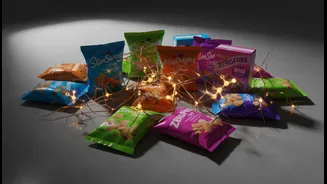
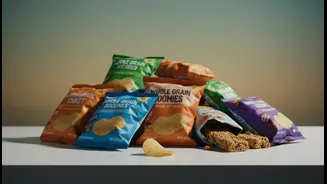
One of the primary psychological traps is known as the "health halo" effect. When a package is covered in claims like “low-fat,” “baked, not fried,” “organic,” or “high-protein,” our brains tend to label the entire product as “good.” This perception gives
us an unconscious permission to indulge more than we otherwise would. Research shows that people consistently serve themselves larger portions of foods they believe are healthier, underestimating the calorie count and ignoring the actual nutrition label on the back. The marketing on the front of the package does its job so well that we relax our guard, making portion control feel less necessary.
When Flavour and Calories Don't Align
Our brains have learned over millennia to associate certain sensory cues with caloric content. A rich flavour and a satisfying crunch typically signal energy-dense food. Baked chips and other diet snacks are engineered to provide this hyper-palatable experience—that irresistible salty, savoury taste—but with fewer calories and fat. This creates a disconnect. Your mouth is telling your brain you’re getting a high-energy reward, but the calories delivered are lower than expected. This mismatch can confuse your body’s satiety signals, the complex system of hormones that tells you when you’re full. The result is that your brain doesn't get the 'full' signal it expects, prompting you to keep eating to find the missing energy.
The Science of the Vanishing Snack
Many processed snacks, from puffed corn bites to certain baked crisps, are masters of a phenomenon food scientists call “vanishing caloric density.” This refers to foods that dissolve or melt in your mouth almost instantly. Because the food disappears so quickly, it requires minimal chewing. Your brain interprets this lack of oral processing time as a sign that you haven't eaten very many calories. It essentially tricks your mind into thinking the calories have vanished along with the food. This bypasses the body's natural mechanisms for gauging fullness, which rely partly on the time food spends in your mouth. Consequently, the brain doesn't register that it's receiving energy and fails to send the signal to stop eating.
Training Your Brain to Crave More
Regularly eating these kinds of ultra-processed snacks can disrupt your body's innate ability to regulate hunger over the long term. When the link between taste and nutritional value is consistently broken, your brain can become less reliable at predicting the energy content of food. This can lead to what some experts call “food noise”—constant, intrusive thoughts about eating. The intense but ultimately unsatisfying reward from these snacks can create a craving cycle; your body gets a hit of flavour, expects a corresponding energy boost that never fully arrives, and then signals for you to eat more to get it. This isn't a failure of willpower; it's a predictable biological response to foods engineered to keep you coming back.
How to Outsmart the Snack Aisle
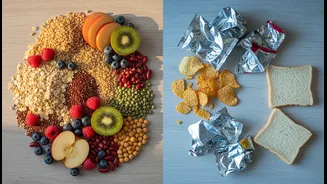
Breaking free from this cycle involves becoming a more mindful consumer. Instead of relying on front-of-package claims, turn the bag over and read the ingredient list and the nutrition facts panel. A better strategy is to focus on snacks made from whole foods. Options like an apple with peanut butter, a handful of almonds, plain yogurt, or vegetables with hummus provide a combination of protein, healthy fats, and fiber. These nutrients are digested more slowly and send clear satiety signals to your brain, helping you feel genuinely full and satisfied. They provide the volume and nutrients that processed snacks lack, helping to retrain your brain's expectations and reduce cravings.