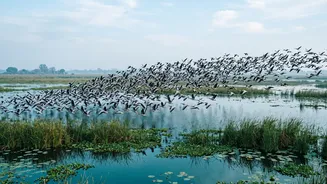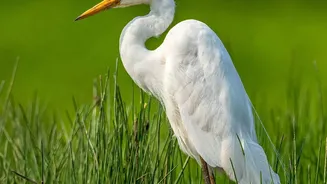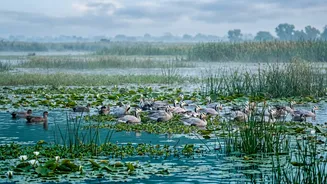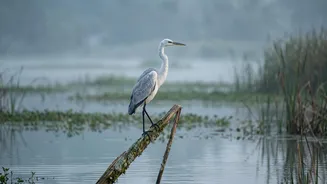







The skies over India’s wetlands are alive with the flutter of countless wings. Migratory birds, the annual guests from distant lands, have begun arriving early and in impressive numbers, raising hopes for a season of vibrant ecological activity.
An Early and Eager Arrival
Across
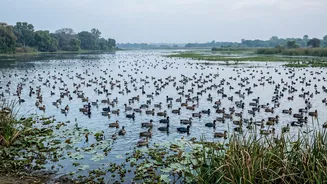
the country, from the famed wetlands of Chilika Lake in Odisha to smaller sanctuaries in West Bengal, the first flocks of migratory waterfowl have made their presence known earlier than usual. Typically, the peak arrival of these birds, which journey thousands of kilometres from breeding grounds in Siberia, Central Asia, and Europe, occurs in mid-November. This year, however, species like the Northern Pintail, Eurasian Wigeon, and Gadwall were spotted as early as October, transforming the quiet waters into bustling avian hubs ahead of schedule. This early congregation is stirring excitement among conservationists and birdwatchers, who are hopeful it signals a robust migratory season.
A Potential Record-Breaking Season
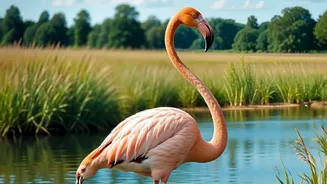
While final counts are months away, initial observations suggest this could be a landmark year. Bird lovers and officials have noted that the sheer number of early arrivals is encouraging. In places like Chilika, the early appearance of flamingos, which have been sparse in recent years, is seen as a particularly positive sign. In Jalpaiguri, West Bengal, the premature arrival of Ruddy Shelducks and various pochards has similarly raised expectations for a higher-than-average turnout, potentially reversing a trend of declining numbers seen in the past few years. This influx is a welcome sight for sanctuaries that serve as crucial wintering grounds along the Central Asian Flyway, a vital migratory route.
Why Are They Arriving Now?
The timing of migration is a complex phenomenon influenced by a host of factors, including conditions at the birds' northern breeding grounds and along their arduous flight path. Experts suggest that changes in global weather patterns may be prompting an earlier departure from their summer homes. As the climate in their native regions shifts, the ecological cues that trigger their journey south may be occurring sooner. At the same time, conservation efforts within India are playing a critical role. The health and readiness of India’s wetlands are paramount; these sanctuaries must provide adequate water levels, food sources, and safe roosting grounds for the exhausted arrivals.
India's Growing Network of Safe Havens
The potential for a record-breaking season rests on years of dedicated conservation work. India has significantly expanded its network of protected wetlands, with the number of designated Ramsar Sites—wetlands of international importance—growing from 26 in 2014 to 103 by October 2026. This expansion, which ranks India first in Asia for the number of such sites, demonstrates a national commitment to preserving these vital ecosystems. Success stories are found across the nation, from community-led initiatives that turned poachers into protectors at Mangalajodi to the restoration of degraded wetlands. These efforts ensure that when the birds arrive, they find healthy, thriving habitats ready to support them through the winter.
A Barometer of Environmental Health
The arrival of migratory birds is more than just a beautiful spectacle; it is a key indicator of environmental health. Wetlands are among the planet's most productive ecosystems, crucial for storing freshwater, recharging groundwater, and protecting against floods. A large and diverse population of visiting birds signals that these habitats are functioning well. Their presence supports local ecotourism and provides invaluable data for scientists studying the impacts of climate change. The birds are telling us something important about the state of our environment, and this season, the message appears to be one of cautious optimism.