



A Sweet Offering for Krishna
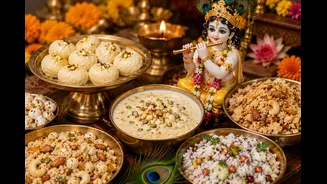
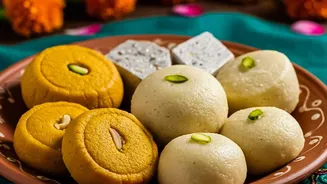
Mathura, the sacred city on the banks of the Yamuna, is not just the birthplace of Lord Krishna but also the origin of his favourite sweet: the Mathura Peda. This iconic delicacy is more than just a dessert; it's a timeless offering, or 'bhog', steeped
in devotion. The celebration of Janmashtami is considered incomplete without these rich, caramelised milk sweets. Traditionally made from mawa (milk solids), sugar, and ghee, their unique granular texture and deep brown colour come from patiently roasting the mawa. Making this prasad at home is a beautiful way to connect with the festive spirit and offer something truly special to the deity.
Gathering Your Ingredients
This recipe simplifies the process while preserving the authentic taste. While traditional recipes can be complex, this version is designed for home cooks. You can use either store-bought mawa (khoya) or make it instantly with milk powder. Here’s what you'll need: Mawa (Khoya): 250 grams, grated. This is the heart of the peda. Ghee: 2 to 3 tablespoons. Sugar: 1/2 cup of 'tagar' or 'boora' is traditional for the best texture. If unavailable, you can use finely powdered sugar. Milk: 2 to 3 tablespoons, as needed to adjust moisture. Cardamom Powder (Elaichi): 1/4 to 1/2 teaspoon for a fragrant aroma. Extra Sugar: For coating the finished pedas.
The Crucial Step: Roasting the Mawa
The signature taste and colour of Mathura Peda come from perfectly roasted mawa. This step requires patience. In a heavy-bottomed, non-stick pan, add the grated mawa and begin to roast it on a low to medium flame, stirring continuously. As it heats, it will melt and then start to thicken again. After about 5 minutes, add a tablespoon of ghee and continue to stir. Keep roasting for 15-20 minutes, scraping the sides and bottom of the pan to prevent burning. The mawa will gradually change from white to a light golden and finally to a deep, fragrant golden-brown. If the mixture seems too dry, you can add a tablespoon or two of milk. Once it's aromatic and evenly browned, turn off the heat.
Perfecting the Sweetness and Texture
Once the mawa is roasted, let it cool down slightly until it's just warm enough to touch. If it's too hot, the sugar will melt and make the mixture sticky. If it cools completely, it will be difficult to shape. While it's still warm, transfer the roasted mawa to a bowl. Add the cardamom powder and the tagar or powdered sugar. Mix everything together with your hands, breaking down any lumps until you have a uniform, crumbly dough-like mixture. The use of tagar (a type of porous, crystallised sugar) is a secret of many professional sweet-makers (halwais), as it gives sweets a superior texture compared to regular powdered sugar.
Shaping and Finishing Your Pedas
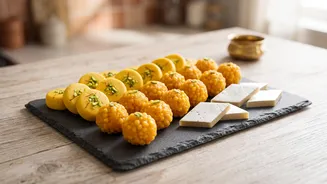
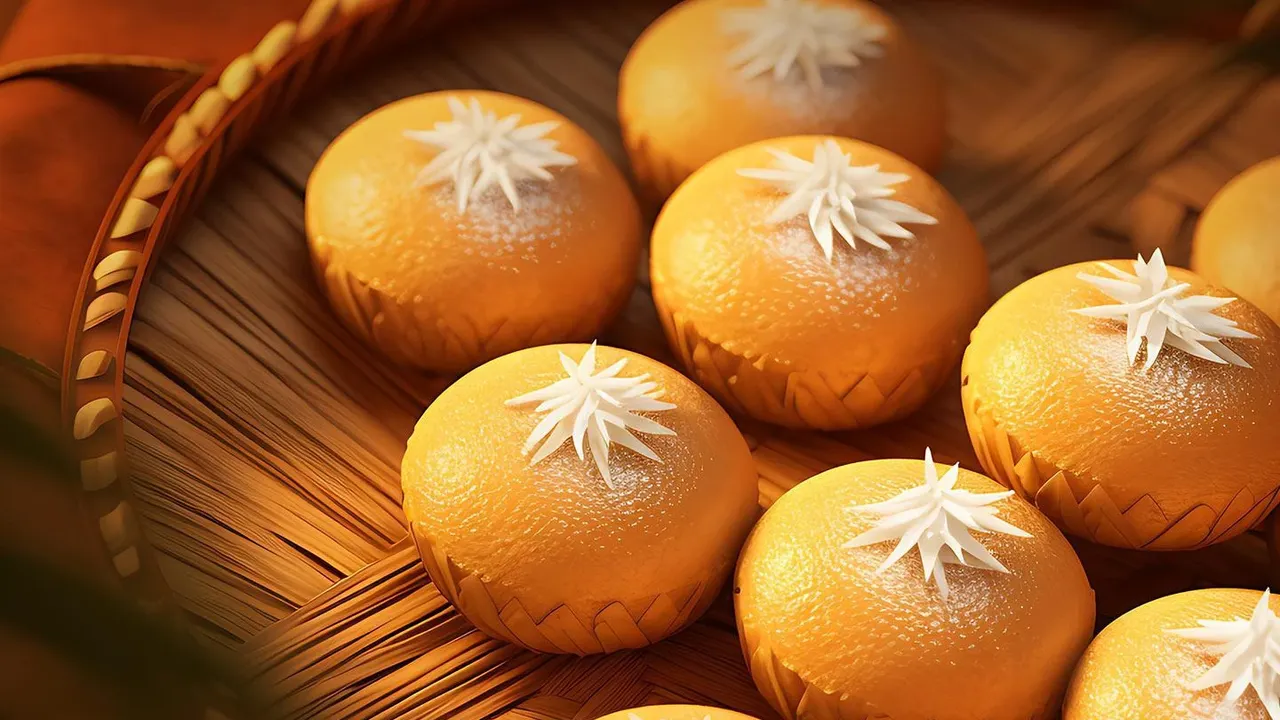
Now for the final, rewarding step. Take a small portion of the warm mixture and roll it between your palms to form a smooth, crack-free ball. Gently flatten it to create the classic peda shape. You can also use peda stamps to create beautiful designs. Once shaped, roll each peda in a little extra powdered sugar or tagar to give it its characteristic coating. Arrange the finished pedas on a plate and let them air dry for an hour or two; this helps them set properly. Your homemade Mathura Pedas are now ready to be offered as bhog or shared with family and friends. They can be stored in an airtight container for up to a week.