







The Fermentation Puzzle
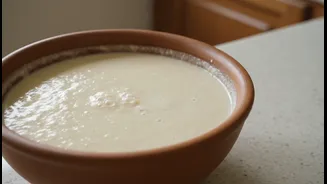
At its heart, dosa and idli batter is a living ecosystem. The magic begins when you mix ground rice and urad dal with water. This creates a welcoming home for naturally occurring microorganisms, primarily lactic acid bacteria (like Leuconostoc) and yeasts,
that live on the grains themselves. These microbes get to work, consuming the carbohydrates in the batter and producing lactic acid and carbon dioxide. The lactic acid gives the batter its characteristic tangy flavour, while the carbon dioxide gas creates bubbles, causing the batter to rise and resulting in the light, airy texture of a perfect idli or the porous nature of a crisp dosa.
Why Monsoon Changes Everything
The fermentation process is highly sensitive to its environment, especially temperature and humidity. During dry, cooler months, you might leave your batter out for 8 to 12 hours. However, the monsoon ushers in a combination of warmth and high humidity, creating a supercharged environment for microbial activity. The ideal temperature for fermentation is between 25–32°C. Monsoon weather often sits squarely in this range. The high humidity further accelerates the process, acting like a natural proofing box. This combination means the microbes work much faster, breaking down sugars and producing gas at an accelerated rate. Your standard fermentation window can suddenly become far too long.
Your New Monsoon Timetable
So, how much should you shorten the window? While a typical 8-12 hour fermentation might be standard, in the high humidity of monsoon, this can often be halved to just 4-6 hours. However, it is crucial to move away from strictly watching the clock and start observing the batter itself. Kitchen temperatures can vary, so visual and olfactory cues are your most reliable guides. In extremely humid and warm conditions, check your batter as early as 4 hours after you’ve set it out. The goal is to catch it at its peak, not let it go past its prime.
Signs of Perfect Fermentation
Instead of relying on time, learn to read the signs of a perfectly fermented batter. First, look for a noticeable increase in volume; it should nearly double. Second, the texture should be light, airy, and bubbly, almost like a mousse. You'll see tiny air pockets throughout the batter. Third, give it a gentle sniff. A perfectly fermented batter will have a pleasant, clean, and mildly sour aroma, similar to fresh yogurt. When you stir it, it should feel beautifully aerated. Once you see these signs, your batter is ready. Don't wait any longer—move it to the refrigerator immediately to slow down the fermentation process.
The Dangers of Over-Fermentation
If you miss the perfect window, the microbial party quickly gets out of hand. The batter will develop a sharply sour, almost alcoholic or vinegary smell, which is a clear red flag. The taste will be unpleasantly acidic, and the texture may become overly sticky or watery. Cooking with over-fermented batter is a frustrating experience. It often results in idlis that are flat and dense instead of fluffy, and dosas that are reddish, stick to the pan, and are difficult to spread or fold. While slightly over-fermented batter can sometimes be salvaged for uttapam, truly spoiled batter with off-odours should be discarded.
Pro-Tips for Monsoon Batter
To gain more control during the monsoon, consider a few adjustments. First, use lukewarm water when grinding your dal and rice to give the fermentation a gentle start, but be prepared for a faster process. Some cooks also find that adding salt after fermentation, rather than before, gives them a little more control, as salt can sometimes retard the initial microbial growth. Finally, consider making smaller batches more frequently. This reduces the risk of spoilage and ensures you’re always working with fresh, perfectly fermented batter, even when the weather is working against you.