





The Problem with All-Day Sitting
Our bodies are not designed for the prolonged sitting that defines many desk jobs. Research links a sedentary lifestyle to a host of health problems, including an increased risk for heart disease, high blood pressure, and even certain cancers. When you
sit for hours, your muscles, particularly in your legs and glutes, become inactive, which can lead to weakening over time. This inactivity also affects your posture, often causing slouching, which can strain your neck and back. Even if you exercise regularly, studies show that spending 10 or more hours a day sitting still carries significant health risks. The issue isn’t just physical; a sedentary day can also negatively impact mental health, with links to increased anxiety and depression.
The Power of the Micro-Break
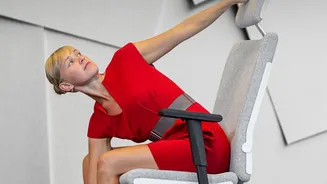
The solution doesn't have to be a complete overhaul of your workday. Enter the 'micro-break'—a short, intentional pause from work lasting anywhere from a few seconds to a few minutes. Research shows these brief respites are incredibly effective. Taking short breaks to stand, stretch, or walk around can reduce muscle fatigue, alleviate mental strain, and improve focus. These small interruptions in sedentary time boost circulation and can help prevent the physical discomfort and stiffness that build up from sitting. They also act as a mental reset, helping to prevent burnout and even spark creativity by giving your brain a moment to rest and recharge.
Spotlight On: The Standing Torso Twist
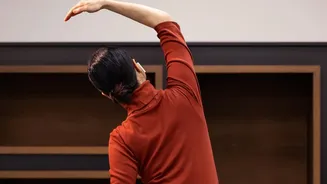
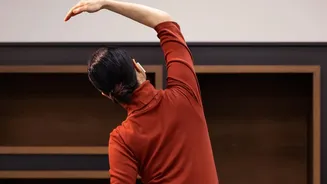
If you're wondering what to do during a micro-break, the standing torso twist is a perfect candidate. It requires no equipment and can be done right at your desk. This simple exercise offers a surprisingly wide range of benefits. Twisting motions help to improve spinal mobility and flexibility, reducing the stiffness that comes from being hunched over a keyboard. They also engage and strengthen your core muscles, including your obliques, which are crucial for good posture and a healthy back. Furthermore, the twisting action stimulates circulation; as you release the twist, fresh, oxygenated blood flows back into the area, helping to nourish your muscles and organs.
How to Do a Standing Torso Twist Correctly
Proper form is key to getting the benefits without risking injury. Start by standing with your feet shoulder-width apart and your knees slightly bent. Raise your arms to shoulder height, bending your elbows at a 90-degree angle. Engage your core muscles to stabilize your spine. Now, slowly and with control, rotate your torso from one side to the other. As you twist, allow your opposite foot to pivot slightly; for example, as you twist right, let your left heel lift off the ground. The movement should come from your core, not from swinging your arms. Keep your movements smooth and controlled, breathing steadily throughout the exercise.
Making Movement a Daily Habit
The biggest challenge is often remembering to take breaks in the first place. One effective strategy is 'habit stacking'—linking a new habit to an existing one. For example, decide to do a few torso twists every time you finish a phone call or right before you break for lunch. You can also set a timer or use an app to remind you to get up and move every 30 to 60 minutes. Start small; even one or two short movement breaks a day is a great first step. The goal isn't perfection, but consistency. By linking movement to regular parts of your day, you reduce the mental energy needed to get started, making it more likely to become a lasting routine.