








A Universe of Data
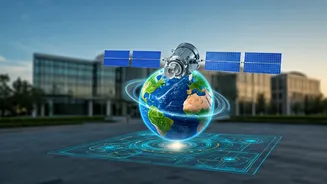
For any AI model to be effective, it needs vast amounts of high-quality data. This is precisely where ISRO provides an unparalleled advantage. The space agency operates a large fleet of earth observation satellites that generate petabytes of geospatial
data, capturing everything from weather patterns and crop health to urban expansion and forest cover. Through platforms like its 'Bhuvan' geo-portal, ISRO makes a significant portion of this data accessible, creating a treasure trove for AI startups and researchers. Instead of relying on generic datasets, developers can now train their algorithms on high-resolution, India-specific satellite imagery. This access is crucial for creating AI solutions tailored to local needs, such as predicting crop yields with greater accuracy, monitoring infrastructure projects, or tracking the impact of climate change on water bodies.
From Pixels to Predictions
The collaboration goes beyond just providing raw data; it involves solving real-world problems. ISRO has been actively integrating AI into its own missions for years, using it for everything from spacecraft health monitoring to enabling the historic soft landing of Chandrayaan-3. The lander used AI-powered sensors and cameras to analyse the lunar surface in real-time and select a safe landing spot without ground intervention. This expertise is now being channelled to solve problems on Earth. For example, ISRO's Space Applications Centre is partnering with Andhra University to develop an AI-powered system to detect deadly rip currents, aiming to enhance beach safety. These projects provide a clear 'hook'—a well-defined problem and a high-impact application—that allows AI companies to prove their capabilities in critical sectors like disaster management and public safety.
The Ultimate Proving Ground
For an AI startup, having ISRO as a partner or client is a significant badge of honour. It validates their technology and provides a level of credibility that is hard to achieve otherwise. To foster this ecosystem, ISRO, in collaboration with NITI Aayog's Atal Innovation Mission, has launched initiatives like the Aatmanirbhar Bharat ARISE program. These challenges invite startups to develop solutions for specific problems in areas like geospatial information using AI, with the promise of funding up to ₹50 lakhs and potential buy-back arrangements from the government. This framework not only provides crucial seed funding but also a clear path from prototype to deployment. It creates a symbiotic relationship where startups get to work on cutting-edge space applications, and ISRO gains access to innovative and agile solutions for its complex operational needs, from space traffic management to robotics.
An Eye on the Future
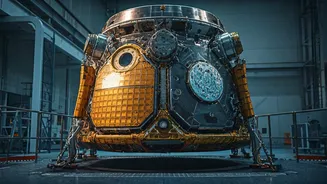
The synergy between AI and ISRO is set to deepen with ambitious future missions. The upcoming Gaganyaan human spaceflight programme will heavily rely on AI for everything from mission trajectory design to crew health monitoring and autonomous operations. The development of humanoid robots like Vyommitra showcases how AI will assist astronauts in complex tasks. Furthermore, ISRO is exploring futuristic concepts like in-orbit AI data centres, which would process data on the satellite itself. This 'edge computing' in space would reduce the massive data load transmitted to Earth, enabling real-time insights for disaster alerts or security surveillance. By actively encouraging private sector participation in these advanced domains, ISRO is not just building rockets; it's building an entire ecosystem that could position India as a leader in the next generation of AI-powered space technology.