



A New Blueprint for the Red Planet
NASA's approach to Mars exploration is undergoing a significant strategic shift. Instead of designing, building, owning, and operating entire missions from the ground up, the agency is increasingly looking to buy services from commercial partners. This
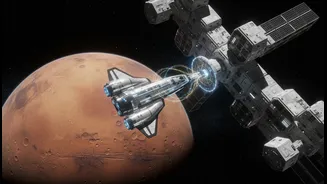
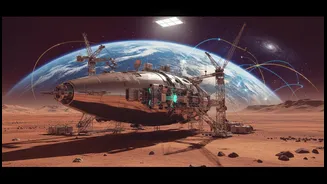
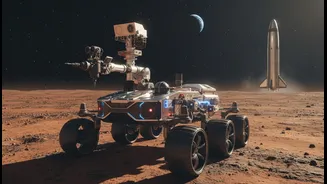
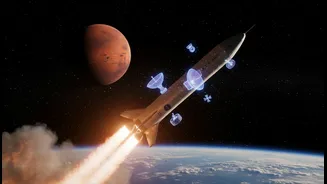
model was successfully pioneered for delivering cargo and crew to the International Space Station, but applying it to deep space is a new frontier. A prime example is the recently announced Aeolus mission, slated for 2028. Under this partnership, NASA will provide its world-class scientific instruments, while a private company, Relativity Space, will be responsible for providing the spacecraft, the launch, and the flight operations to get it to Mars. This division of labour is key: NASA focuses its resources on the science, while the private sector handles the complex logistics of space transportation.
The Quest for 'More Science, More Often'
The primary driver behind this shift is the desire to conduct more science without a proportionally massive budget increase. Traditional, government-led interplanetary missions are incredibly expensive and can take over a decade to develop. By leveraging the innovation and efficiency of the private sector, NASA aims to dramatically lower costs and increase the frequency of missions. As NASA Administrator Jared Isaacman stated, these partnerships act as a "force multiplier for science." The goal is to create a regular cadence of smaller, more focused missions that can launch at nearly every two-year Mars opportunity. This could allow scientists to get more instruments into space, gather more diverse data, and answer pressing questions about the Martian environment much faster than before.
What Changes for Planetary Scientists?
For the scientific community, this new model presents both exciting opportunities and new challenges. The prospect of more frequent and affordable access to Mars means that a wider range of experiments could become feasible. Instead of competing for a spot on a single, massive flagship mission once a decade, research teams might have more chances to fly their instruments. The Aeolus mission, for instance, will provide the first daily, global view of Martian weather, including winds, dust, and clouds—data considered essential for planning future robotic and human landings. However, it also means scientists may increasingly become customers of commercial service providers, adapting their experiments to fit the specifications of privately built spacecraft and rockets.
Navigating the Risks of a Commercial Frontier
Handing over critical mission elements to the private sector is not without risk. Deep-space missions face longer timelines, tighter communication constraints, and fewer rescue options than Earth-orbiting flights. While private companies like SpaceX have proven incredibly capable, NASA has historically maintained rigorous oversight and a deeply ingrained safety culture that can be challenging to replicate in a purely commercial, profit-driven environment. A failure by a commercial partner could have significant consequences for NASA's scientific objectives. The agency must strike a careful balance, ensuring that the push for speed and cost-efficiency doesn't compromise the reliability required for multi-million-dollar scientific payloads traveling millions of miles from Earth.
Building a Sustainable Deep-Space Economy
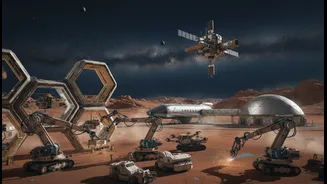
Ultimately, NASA's strategy is about more than just its own missions; it's about catalysing a self-sustaining economic ecosystem in deep space. By acting as a reliable first customer for services like payload delivery and communications, NASA helps companies build the expensive capabilities needed for interplanetary travel. Once established, these companies can sell their services to other national space agencies, research institutions, and potentially other commercial customers in the future. This could transform planetary science from a series of bespoke government projects into a dynamic marketplace. The long-term vision is a future where science is just one of many activities—alongside resource utilisation, infrastructure development, and eventually human settlement—taking place on and around the Red Planet.