

The End of an Era, the Dawn of a Market
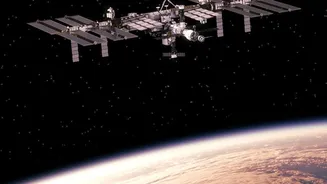
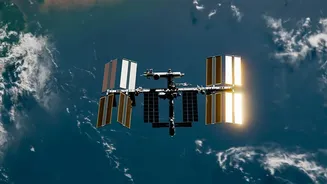
The International Space Station, a marvel of global cooperation and engineering, is approaching the end of its operational life. NASA and its international partners plan to deorbit the 420,000-kilogram structure around 2030, bringing it down over a remote
part of the Pacific Ocean. This isn't an end to human presence in orbit, but rather a strategic handover. Instead of owning and operating the next generation of space stations, NASA is transitioning to become a customer. Through its Commercial Low-Earth Orbit Destinations (CLD) program, the agency is fostering a private-sector ecosystem, funding companies to design, build, and operate their own orbital outposts. The goal is to ensure an uninterrupted American presence in space while sparking a robust LEO economy, where NASA is just one of many clients.
The Key Contenders in the Orbital Race
Several well-funded companies are leading the charge to build these commercial habitats. Axiom Space, already experienced in flying private astronaut missions to the ISS, plans to first attach its own modules to the existing station starting around 2027. These modules will later detach to form a free-flying independent station. California-based Vast is taking a different approach, aiming to launch the first fully private, single-module station called Haven-1 as early as the first quarter of 2027. This will be followed by a crewed mission, Vast-1, carrying four astronauts for a 30-day stay. Another major player is Starlab, a joint venture between Voyager Space and Airbus, which is developing a station with a planned 2029 launch. Meanwhile, a partnership between Blue Origin and Sierra Space is developing Orbital Reef, envisioned as a "mixed-use business park" in space. Though the collaboration has faced challenges, both companies continue to develop key hardware.
More Than Just a Science Lab
These new orbital platforms are being designed with a much broader purpose than pure scientific research. The business model for commercial stations extends to in-space manufacturing, technology development, and space tourism. Companies see potential in producing unique materials in microgravity, such as flawless fiber optics or complex protein crystals for new pharmaceuticals. Axiom Space has even launched a prototype for an orbital data center. Vast's Haven-1, while a proof of concept, will feature a microgravity research lab with slots for commercial and government payloads. Some designs incorporate futuristic concepts; for instance, Vast plans to test artificial gravity on Haven-1 by spinning the station, a feat not attempted on a crewed vehicle since the Gemini program in 1966. Sierra Space's LIFE (Large Integrated Flexible Environment) habitat is an inflatable module that launches in a compact form and expands to the size of a three-story building in orbit, offering spacious living and working quarters.
Funding, Feasibility, and the Path Forward
The road to a commercialized low-Earth orbit is not without significant hurdles. The primary challenge is financial; building and operating a space station is immensely expensive, and the market beyond NASA is still developing. In early 2026, NASA itself expressed doubts about whether the business case for purely commercial stations was ready, proposing a government-owned core module as an interim step. However, after strong pushback from the industry, which argued that private investment covers the majority of costs, NASA recommitted to its original plan of supporting free-flying commercial stations. Proposed congressional funding for fiscal year 2027 has given developers confidence that at least two commercial station concepts can be supported. Ultimately, the success of these ventures will depend on their ability to create sustainable demand from a diverse customer base, proving that orbit is open for business.