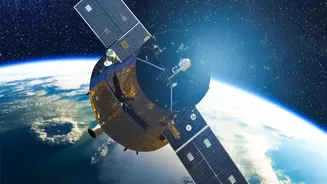








A Strategic Pivot, Not Privatisation
The core idea behind India's new space policy is not to privatise ISRO, but to unleash it. For decades, ISRO did everything from research and design to manufacturing and launching. Now, the government's vision is for an 'ISRO-led national space ecosystem'.
This means ISRO is moving into a new, more advanced role, while handing over routine, mature operations to the burgeoning private sector. The goal is to expand the entire pie, not just slice it differently. By allowing private firms to handle established tasks, ISRO is freed to focus on the next great leap for India in space. It's a move designed to multiply the nation's capabilities, not diminish its premier space agency.
ISRO’s New Mission: Pushing the Frontiers
So, what does ISRO do now? It focuses on the high-risk, high-reward projects that are foundational to a nation's space power but are often too expensive or not immediately profitable for private companies. This includes frontier R&D, deep space exploration missions to the Moon and other planets, the Gaganyaan human spaceflight program, and developing next-generation launch systems. In short, ISRO is doubling down on its identity as a scientific and research organisation, tasked with answering the big questions and developing the technologies that will define the future. The agency's role is strengthening in areas where its unique scientific expertise matters most.
The Rise of the Private Space Engine
While ISRO charts new cosmic territories, the private sector is being primed to become the powerful engine of India's space economy. Companies are now encouraged to take on end-to-end activities, from building workhorse rockets like the Polar Satellite Launch Vehicle (PSLV) to manufacturing entire satellites and providing commercial launch services. This has been enabled by two new entities. NewSpace India Limited (NSIL) acts as the commercial arm, marketing ISRO's technologies and procuring services from industry. The Indian National Space Promotion and Authorisation Centre (IN-SPACe) is a single-window agency to authorise and supervise private players, even giving them access to ISRO's world-class facilities to kickstart their journey.
The Economic and Strategic Imperative
This dual-structure model carries a powerful logic. Economically, the global space market is worth hundreds of billions of dollars. To capture a larger share—with a target of growing India's slice to $44 billion—requires an industrial scale and speed that ISRO alone cannot provide. It needs the capital, agility, and entrepreneurial energy of the private sector. Strategically, space is a critical domain for national security. Essential assets for communication, reconnaissance, and navigation must remain under sovereign control. Keeping ISRO as a government entity ensures that India’s strategic capabilities are secure and always aligned with the national interest, independent of commercial pressures.