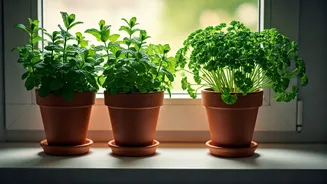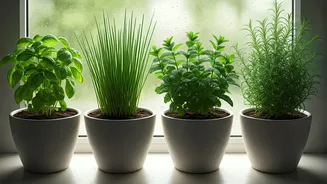

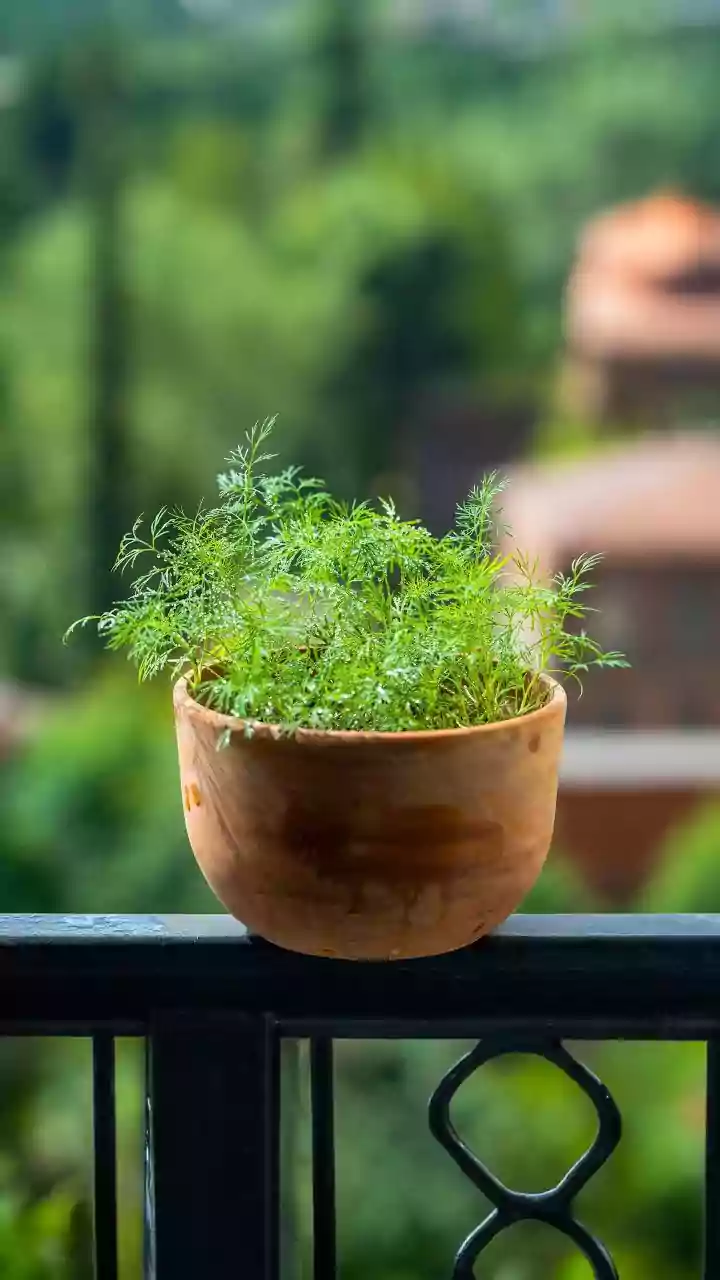
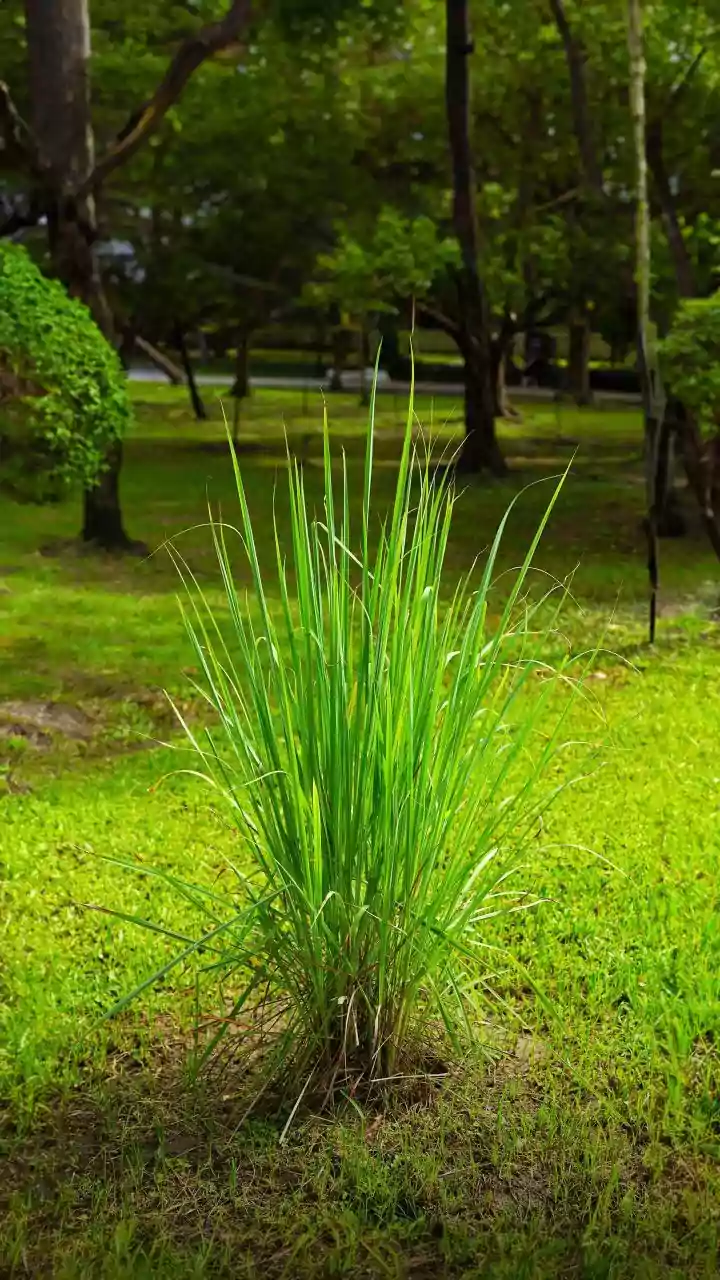
Mint (Mentha)
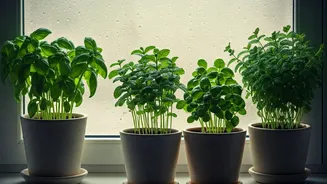
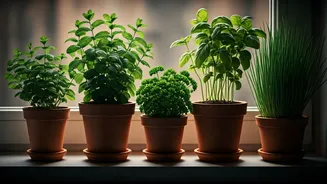
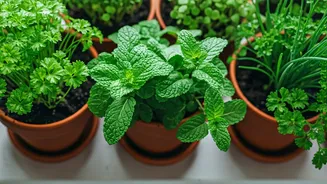
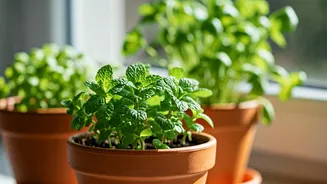
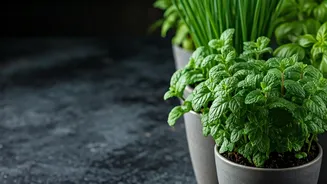
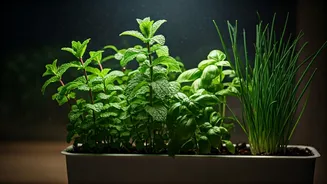
Famous for its invigorating and refreshing scent, mint is one of the most forgiving herbs for indoor gardeners. It's famously adaptable and can flourish in indirect light or partially shaded spots, making it ideal for less-than-sunny rooms. Varieties
like spearmint and peppermint are popular choices, releasing a crisp aroma whenever their leaves are touched. For the best results, plant mint in its own pot, as its roots spread aggressively. Keep the soil consistently moist but ensure good drainage to prevent the roots from becoming waterlogged. Regularly trimming the tips will encourage a fuller, bushier plant and provide you with a steady supply of fresh leaves for teas, mojitos, or simply to crush between your fingers for a burst of fragrance.
Parsley (Petroselinum crispum)
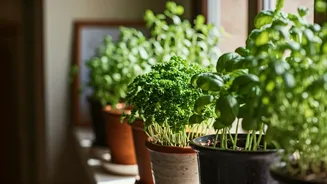
Often underestimated as a mere garnish, parsley has a clean, green, and slightly peppery scent that can freshen up any space. While it does best with several hours of sun, it is known to tolerate light shade and can grow quite well indoors, though it might appear a bit more slender than its outdoor counterparts. Both curly-leaf and the more flavourful flat-leaf (Italian) varieties are good options. Parsley is an easy herb to grow inside as long as the pot has excellent drainage. It prefers its soil to be kept evenly moist. Snip the outer stalks near the base to harvest, which allows the inner stems to continue growing, ensuring a continuous supply for your kitchen creations.
Chives (Allium schoenoprasum)
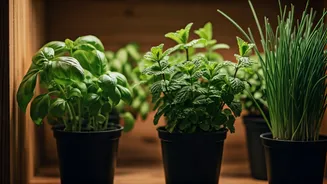
If you enjoy a subtle, mild onion aroma, chives are an excellent and low-maintenance choice. These relatives of the onion family are hardy and can tolerate lower light conditions, making them a reliable option for indoor growing year-round. Their slender, grass-like leaves add a lovely touch of green to a kitchen windowsill. Chives are not demanding; they grow well in standard potting mix and prefer the soil to be kept slightly moist. One of the best things about chives is how quickly they regrow after being trimmed. To harvest, simply snip the leaves about two inches from the soil. This encourages the plant to produce new shoots, providing an endless supply for flavouring salads, eggs, and soups.
Lemon Balm (Melissa officinalis)
A member of the mint family, lemon balm is treasured for its delightful, citrusy fragrance that is known for its calming qualities. Brushing against its leaves releases a fresh, lemony scent that can brighten any room. Lemon balm adapts well to container life and can thrive in partial shade, making it well-suited for indoor environments with indirect light. It’s a fast-growing plant, so regular pruning is a good idea to keep it from becoming leggy and to promote bushier growth. Like its mint cousins, it prefers consistently moist, well-draining soil. The fresh leaves are perfect for making a soothing herbal tea or adding a zesty note to water, providing both a pleasant aroma and a tasty treat on a dreary day.