






How Do Hydrogen Trains Work?
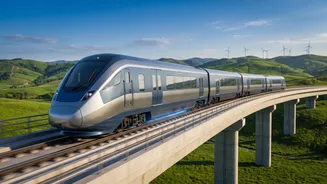
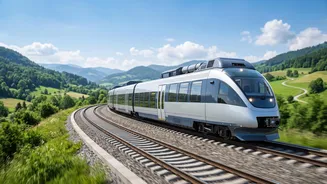
At its heart, a hydrogen train is an electric train that generates its own power onboard. Instead of drawing electricity from overhead lines, it uses a fuel cell. Inside the fuel cell, hydrogen stored in tanks reacts with oxygen from the air in a chemical
process. This reaction produces electricity to power the motors, with the only by-products being heat and water vapour. This process means zero tailpipe emissions, making it a much cleaner alternative to traditional diesel locomotives that burn fossil fuels. Some trains also have batteries to store excess electricity, which can be used for acceleration or climbing hills.
India's Hydrogen Pilot Project
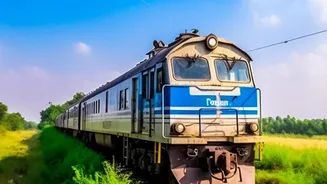
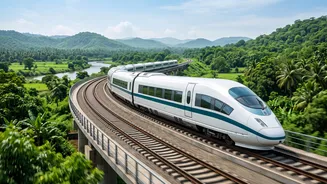
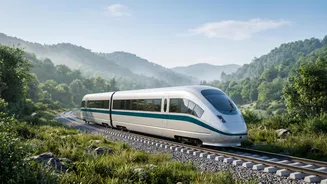
Indian Railways has launched its first indigenous hydrogen-powered train, which began operations on July 17, 2026, on the 89-km Jind-Sonipat section in Haryana. Developed as a pilot project, the 10-car train was designed and built in India, demonstrating the 'Atmanirbhar Bharat' vision. It can reach speeds of up to 75 km/h and has a capacity of around 2,600 passengers. The project also involved creating a complete ecosystem, including the country's largest railway hydrogen storage and refuelling facility in Jind. This initial phase is crucial for gathering data on performance and safety under real-world Indian conditions.
The 'Hydrogen for Heritage' Vision
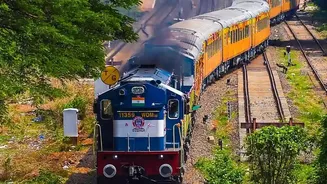
Beyond the Jind-Sonipat pilot, the broader strategy is known as the 'Hydrogen for Heritage' initiative. The plan involves deploying around 35 hydrogen trains on heritage, hill, and other low-traffic routes where electrification is difficult or not cost-effective. The Kalka-Shimla route is one of the heritage lines being considered for this technology. The approach focuses on retrofitting existing Diesel Electric Multiple Unit (DEMU) trains with hydrogen fuel cell systems, which is expected to be more economical than purchasing new, custom-built hydrogen trains.
The True Meaning of 'Zero Emissions'
While the train itself is emission-free at the point of use, the project's overall green credentials depend on how the hydrogen is produced. Hydrogen can be created in several ways. 'Grey hydrogen' is produced from fossil fuels and still generates carbon emissions. 'Green hydrogen', on the other hand, is produced using renewable energy, like solar or wind power, to split water into hydrogen and oxygen through a process called electrolysis. For the project to be truly zero-carbon, the entire supply chain must rely on green hydrogen. This is a key focus of India's National Green Hydrogen Mission, which aims to make the country a hub for producing and using this clean fuel.
Challenges on the Track Ahead
Despite the promise, several challenges remain. The primary hurdle is cost. Green hydrogen is currently more expensive than diesel or electricity from the grid. Building the necessary infrastructure for production, storage, and refuelling requires significant capital investment. Safety is another critical consideration, as hydrogen is highly flammable and requires robust, multi-layered safety systems to handle. Furthermore, early operations on the Jind-Sonipat route have seen low passenger numbers, prompting officials to consider extending the route to Delhi to improve utilisation. As the technology is still in its infancy globally, long-term operational reliability under India's demanding conditions is yet to be fully proven.