




Why Your Spine Dislikes Your Desk Job
The human body is designed for movement. When you sit for extended periods, your spine faces significant stress. Sitting increases pressure on your spinal discs by nearly 40% compared to standing. This constant compression can lead to stiffness, muscle
fatigue, and reduced mobility in the spine. Over time, this sedentary behaviour can contribute to more serious issues like disc bulges and chronic pain. Slouching, a common habit when focused on a screen, only makes matters worse by placing uneven pressure on the spinal ligaments and joints, which can weaken them over time. This prolonged static posture reduces blood flow and lubrication to spinal joints, making even simple movements feel strenuous.
Your At-Desk Solution: Chair Yoga
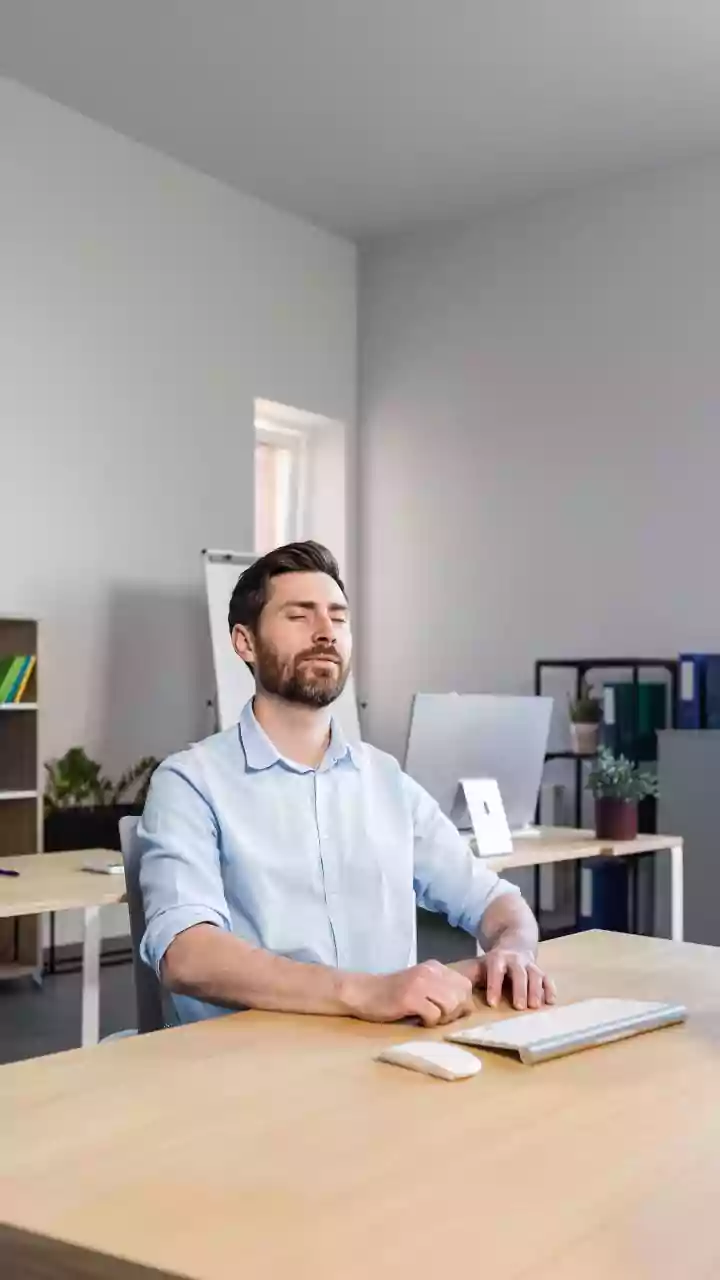
Chair yoga is a gentle and accessible form of yoga that adapts traditional poses so they can be performed while seated or using a chair for support. It’s an ideal solution for office workers because it requires no special equipment and can be done in short bursts throughout the day. By incorporating these movements, you can counteract the negative effects of sitting. The stretches help to gently mobilise the spine, improve circulation to stiff muscles and joints, and retrain your body to maintain better posture. Research shows that even brief movement breaks can significantly improve physical comfort and cognitive function, helping you stay focused and productive.
Seated Cat-Cow for Spinal Flexibility
This foundational yoga movement is excellent for waking up the spine and relieving tension. To perform it, sit tall at the edge of your chair with your feet flat on the floor and your hands on your knees. As you inhale, gently arch your back, push your chest forward, and look slightly upward toward the ceiling (Cow pose). As you exhale, round your spine, tuck your chin toward your chest, and draw your belly button inward (Cat pose). Flow between these two positions for 5-8 slow, controlled breaths, feeling the wave-like motion through your entire spine.
Seated Spinal Twist for Mobility and Relief
Twisting poses are fantastic for improving spinal mobility, massaging your internal organs, and relieving lower back pain. Sit tall with both feet on the floor. Turn your upper body to the right, placing your left hand on the outside of your right knee and your right hand on the back or armrest of your chair for gentle leverage. Inhale to lengthen your spine, and exhale to gently deepen the twist. Be sure to keep your hips facing forward to protect your spine. Hold for 3-5 deep breaths before slowly returning to the center and repeating on the other side.
Eagle Arms to Release Shoulder Tension
Hours of typing can create significant tension in the shoulders and upper back. The Eagle Arms stretch provides a deep opening for this area. While seated, extend your arms straight out in front of you. Cross your right arm over your left, then bend your elbows. You can either press the backs of your hands together or wrap your right hand around to press your palms together. Lift your elbows to shoulder height and gently press your hands away from your face to deepen the stretch. Hold for several breaths, feeling the space created between your shoulder blades, then unwind and repeat with the left arm on top.
Seated Forward Fold to Stretch the Back
This pose helps to release tension in the entire back body, from the neck down to the hamstrings. Sit at the edge of your chair with your feet hip-width apart and flat on the floor. Keeping your spine long, hinge forward from your hips and let your torso rest on your thighs. Allow your head and neck to hang heavy, reaching your hands towards the floor if comfortable. This gentle stretch decompresses the spine and can help alleviate stiffness in the lower back. Hold for five slow breaths before slowly rolling back up to a seated position, one vertebra at a time.
Integrating Stretches into Your Workday
The key to reaping the benefits of chair yoga is consistency. You don't need to block out an hour; even a few minutes can make a difference. Try setting a recurring reminder to take a 'stretch break' every hour or two. You could perform one or two poses during a long phone call or while waiting for a document to load. Linking the movements to existing habits, such as doing a Seated Cat-Cow after finishing a major task, can help you build a sustainable routine. The goal is to make small, frequent movements a natural part of your workday to keep your spine healthy and your mind clear.