







The New Era of Pet Travel in India
For years, flying with a pet in India felt like a complicated puzzle with most animals relegated to the cargo hold. That's changing. A growing number of pet parents, especially young professionals who consider pets family, has pushed airlines to rethink
their rules. In response, carriers like Air India and Akasa Air have introduced clearer, more accommodating policies, particularly for smaller pets who can now join their owners in the cabin on many domestic routes. This shift acknowledges a simple truth: for many, travel is only complete when their four-legged companions can come along. The result is a more structured, yet complex, set of rules that every pet owner needs to understand.
In-Cabin vs. Cargo: Know The Difference
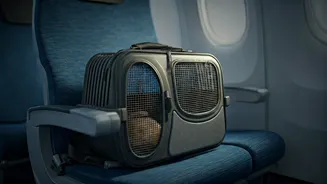
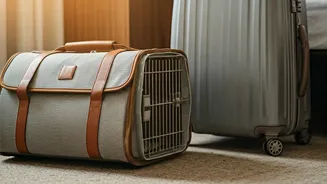
The biggest change in recent policy updates is the expanded access to in-cabin travel for small pets. Air India's 'Paws on Board' program, for example, now permits pets (dog or cat) and their soft carrier weighing up to 10 kg in the cabin on many domestic and international flights. Similarly, Akasa Air allows pets up to 7 kg in the cabin. IndiGo, which previously did not allow pets, now offers in-cabin domestic travel for pets under 7 kg, including the carrier. However, for larger animals, the cargo hold remains the only option. Pets weighing between 10 kg and 32 kg typically travel as checked baggage in a temperature-controlled, pressurized compartment on the same flight as you. Animals heavier than 32 kg must be booked as cargo, which is a separate, more complex process.
The All-Important Paperwork
No matter how your pet flies, proper documentation is non-negotiable. Airlines and the DGCA have standardized requirements to ensure animal safety and health. Before any flight, you will need to procure a 'Fit to Fly' or health certificate from a registered veterinarian, typically issued within 72 hours to 10 days of travel. You will also need up-to-date vaccination records, especially for rabies. For international journeys, the requirements become much more stringent, often involving microchips, import permits, and sometimes quarantine procedures depending on the destination country. It's critical to start the international paperwork process months in advance. Always keep both digital and printed copies of these documents.
Decoding the Fees and Fine Print
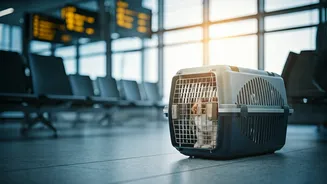
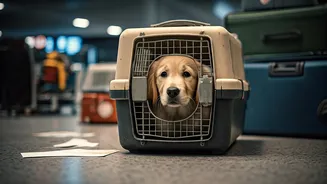
Bringing a pet on board comes with a fee, which varies by airline and whether the pet is in the cabin or cargo. For domestic in-cabin travel, expect to pay a flat fee per segment. Air India, for instance, has standardized its domestic in-cabin fee at around ₹7,500. International fees can be significantly higher. Airlines are also strict about carrier requirements. For cabin travel, a soft-sided, ventilated, leak-proof carrier that fits under the seat in front of you is mandatory. Hard-sided crates are required for cargo travel and must meet IATA (International Air Transport Association) standards. Furthermore, most airlines limit the number of pets per flight—often just two—so it is essential to book your pet's spot well in advance, usually by calling the airline directly at least 48 hours before your flight.
Breed and Temperature Restrictions
Not all pets can fly, even with the right paperwork. Most airlines restrict brachycephalic or 'snub-nosed' breeds, such as Pugs, Bulldogs, and Persian cats, from flying in the cargo hold due to their increased risk of respiratory issues at high altitudes. Some may be allowed in the cabin, but policies vary. Additionally, airlines impose seasonal embargoes during hot summer months (like May-July) when it is unsafe for animals to be on the tarmac or in the cargo hold. If you are planning to travel during these months, your options may be severely limited. Always check the specific airline’s policy regarding your pet's breed and your travel dates before making any plans.