






Your Garment's First Line of Defence
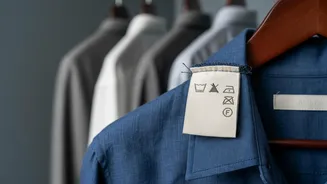
Before you even think about sorting by colour, the single most important step is to read the garment’s care label. This small tag is your personalised instruction manual, written by the people who made the fabric and know its limits. Ignoring it is one
of the most common laundry mistakes, leading to irreversible damage like shrinking, stretching, or colour loss. That tag tells you the ideal water temperature, the correct wash cycle, and whether the item can handle bleaching or machine drying. Think of it as the clothing’s constitution; violating its rules almost always ends badly.
Cracking the Laundry Symbol Code
Those hieroglyphic-like symbols are actually a universal language designed to be understood across countries. The main symbols you need to know are for washing, bleaching, drying, and ironing. The wash tub symbol indicates water temperature (dots) and cycle type (lines underneath). A tub with one dot is for cold water, while one line underneath signifies a permanent press cycle. A triangle tells you about bleaching: an empty triangle means any bleach is fine, while one with diagonal lines means only non-chlorine bleach should be used. A square symbol relates to drying; a circle inside means it's safe for a tumble dryer. An 'X' through any symbol means 'Do Not Do This'.
Not All Detergents Are Created Equal
Once you know what your garment needs, you have to choose your cleaning product. This is where the second half of the headline comes in. Detergents are complex chemical formulations, and different types are designed for different jobs. The primary cleaning agents are called surfactants, which lift dirt and oil from fabric so water can wash them away. However, many detergents also contain other ingredients like enzymes to break down specific stains (like protein or starch), builders to soften water, and brighteners or bleaches. A heavy-duty detergent might be great for sturdy cottons but disastrous for delicate wool or silk.
When Chemicals and Fabrics Clash
This is where laundry disasters happen. Using the wrong product on the wrong fabric can cause permanent damage. For example, detergents with enzymes that are excellent for breaking down food stains can degrade the natural protein fibres in wool and silk over time. Chlorine bleach is another major culprit; it can weaken and yellow cotton fibres and should never be used on colours unless the label explicitly allows it. Synthetic fabrics like polyester or nylon, often found in sportswear, require detergents that can effectively remove oils and odours without leaving a residue that can trap bacteria. Using a mild, pH-neutral detergent is often the safest bet for delicates.
A Word on Fabric Softeners
Fabric softeners are also not a one-size-fits-all product. They work by coating fabric fibres with a thin layer of lubricating chemicals to make them feel softer. However, this coating can build up over time, reducing the absorbency of materials like towels and sportswear. The residue can also trap dirt and odours, making clothes less clean over time. For certain items, especially moisture-wicking activewear, flame-resistant children's clothing, and towels, it's best to avoid fabric softener altogether. High-quality cottons will naturally soften with repeated washing anyway.
Your Simple Pre-Wash Checklist
It sounds complicated, but developing a good routine takes only a few extra seconds per load. First, sort your laundry not just by colour, but also by fabric type (e.g., heavy cottons, synthetics, delicates). Check the care label on a few items in each pile to determine the correct temperature and cycle. Then, choose a detergent that matches those needs. If you have a mixed load, always default to the care instructions for the most delicate item in the wash. Following this simple process protects your investment, keeps your clothes looking their best, and prevents that all-too-common laundry-day regret.