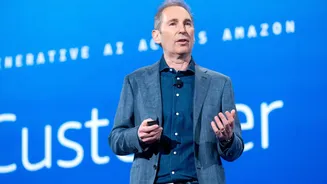





Could cancer, Alzheimer's, and heart disease become 'relics of the past' in under a decade? That’s the audacious claim from Dario Amodei, the CEO of AI-powerhouse Anthropic, tying the prediction to the rapid advancement of artificial intelligence.
The Ten-Year Promise
During
an investor presentation for his company's initial public offering, Anthropic CEO Dario Amodei made a stunning prediction: diseases like cancer could be resolved in less than ten years, thanks to AI. He argued that artificial intelligence has the power to compress what would have been 50 to 100 years of medical progress into a mere five or ten. This isn't a new idea for Amodei, who has previously written about AI's potential to dramatically accelerate scientific discovery. The claim comes as Anthropic, creator of the AI model Claude, deepens its partnerships with biotechnology and pharmaceutical companies to speed up drug discovery for cancer and other illnesses. Amodei is not alone in his optimism; leaders at Google DeepMind and other tech firms have echoed similar sentiments about AI's transformative potential for medicine.
AI on the Front Lines Today
Beyond the headlines, AI is already making a tangible impact on cancer research and treatment. The technology is being used to accelerate nearly every stage of the process, from identifying new drug targets to designing novel treatments. For example, AI models can analyze vast amounts of scientific literature and biological data to pinpoint promising drug combinations that might overcome treatment resistance. In one project with Generate Biomedicines, Anthropic's AI helped redesign a part of a CAR T-cell therapy, making immune cells ten times more effective at killing tumour cells in lab tests. AI is also proving invaluable in diagnostics, with machine learning models trained to spot subtle patterns in CT scans and other medical images that might be imperceptible to the human eye, enabling earlier detection. These systems are not just about speed; they are also about improving the quality and probability of success for new drug candidates.
A Necessary Reality Check
Despite the excitement, many medical experts and scientists urge caution, highlighting a significant gap between technological promise and biological reality. A primary objection is that 'cancer' is not one single disease but a complex and diverse collection of hundreds of diseases, each with unique genetic and environmental factors. An effective treatment for one type of cancer may not work for another, and cures are often highly individualized. Critics also point out that AI models are only as good as the data they are trained on. Biases in datasets, such as the underrepresentation of certain populations, can lead to skewed and unequal outcomes. Furthermore, even if an AI discovers a promising new drug candidate, the journey to a proven, safe, and regulated treatment is incredibly long and complex, involving years of human clinical trials and regulatory hurdles that AI cannot bypass.
The Verdict: Powerful Tool, Not a Panacea
The consensus among many oncologists and researchers is that while AI will undoubtedly revolutionise cancer care, a 'cure' for all cancers within a decade is highly unlikely. The enthusiasm from tech leaders often overlooks the sheer complexity of human biology and the rigorous, time-consuming nature of clinical validation. Emilia Javorsky, a physician and researcher at the Future of Life Institute, argues that the main bottlenecks in curing cancer are not a lack of computational power but issues like data infrastructure and the irreducible complexity of individual biology. Therefore, the most realistic outcome is that AI will act as a powerful 'co-scientist', augmenting the work of human researchers, improving diagnostics, and personalising treatments to make them more effective. It will accelerate progress significantly, but it is a powerful tool in the fight, not a silver bullet.