






The Crucible of India's Space Ambitions
Nestled in the Mahendragiri hills, the IPRC is one of ISRO's most critical centres, functioning as the primary site for testing, assembling, and integrating the liquid and cryogenic propulsion systems that power India's rockets. Think of it as a rigorous
boot camp for rocket engines. Before an engine is ever cleared for flight, it must first prove its mettle here on the ground. This facility is where ISRO ensures that every component, from the smallest valve to the most powerful engine, can withstand the violent extremes of a space launch. Its mandate covers everything from the venerable Vikas engine, which powers the PSLV and LVM3, to the advanced cryogenic engines essential for heavy-lift and interplanetary missions.
What is Ground Testing?
Ground testing, also known as static testing, involves firing a rocket engine or a full stage while it is securely bolted to a massive test stand. This allows engineers to run the engine exactly as it would operate during a real flight, but in a controlled environment where thousands of sensors can monitor its performance. These instruments measure critical parameters like thrust, pressure, temperature, and vibration. There are different types of tests. 'Cold flow' tests use non-combustible fluids to check the plumbing, while 'hot-fire' tests involve the actual ignition and sustained firing of the engine with propellants like liquid hydrogen and oxygen. Each engine destined for flight undergoes an 'acceptance test' to confirm it performs to specification, while new designs undergo grueling 'qualification tests' where they are pushed beyond their limits to validate their reliability.
Simulating the Void of Space
A rocket's journey involves dramatic changes in environment, from sea-level atmospheric pressure to the vacuum of space. The facilities at Mahendragiri are designed to replicate these conditions. The High Altitude Test Facility (HATF), for instance, can simulate the vacuum of space, allowing engineers to test upper-stage engines that are designed to fire only after the rocket has left the dense lower atmosphere. This is especially crucial for cryogenic engines, which operate at extremely low temperatures and are notoriously complex. At IPRC, ISRO not only tests these engines but also produces the cryogenic propellants they need, making it a cornerstone of India's self-reliance in this advanced technology.
The Powerhouse Behind Chandrayaan and Gaganyaan
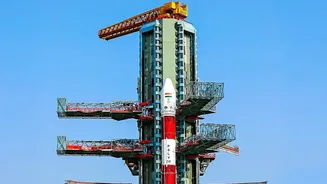
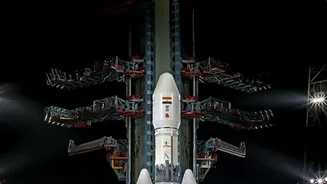
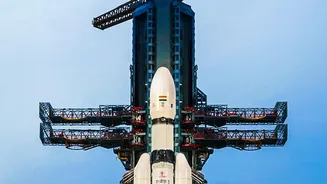
The success of India's most celebrated missions is directly linked to the exhaustive testing at Mahendragiri. The CE-20 cryogenic engine, which powers the upper stage of the LVM3 rocket (India's 'Bahubali'), underwent extensive qualification here. This engine was pivotal for the Chandrayaan-3 mission's success. More recently, the human-rated versions of the LVM3's engines, including the CE-20 and the Vikas engine, are being rigorously tested at IPRC for the Gaganyaan programme. These tests are even more stringent, as astronauts' lives depend on the engine's flawless performance. Recent tests in September 2026 successfully demonstrated an uprated thrust for the CE-20, enhancing the LVM3's payload capacity for future missions.
Building for the Future
Mahendragiri is not just about testing current systems; it's also where the future of Indian rocketry is being forged. The facility is central to the development of the powerful semi-cryogenic engine (SCE-200), which will use a combination of liquid oxygen and refined kerosene ('Isrosene'). This new engine, designed to produce 2,000 kN of thrust, will power the booster stages of ISRO's next-generation heavy-lift vehicles, enabling even more ambitious missions like a future Indian space station and deeper planetary exploration. By proving these next-generation technologies on the ground, IPRC ensures that when they take to the skies, they do so with proven reliability.