





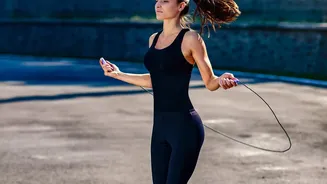

The Calorie-Burning Champion
If your main goal is to burn the maximum number of calories in the shortest amount of time, skipping is the undisputed winner. Skipping, or jumping rope, is a high-intensity exercise that elevates your heart rate rapidly. A person weighing around 70 kg
can burn approximately 600 calories in an hour of moderate skipping. In contrast, a brisk walk for the same duration would burn around 200-300 calories. This means skipping can burn two to three times more calories than walking in the same time frame, making it incredibly efficient for those with a packed schedule. Some studies suggest that just ten minutes of skipping can provide cardiovascular benefits comparable to a much longer jog.
Cardiovascular Health and Intensity
Both activities are excellent for your heart. Walking, especially at a brisk pace, improves circulation, helps lower blood pressure, and strengthens the heart muscle over time. It is considered a moderate-intensity activity. Skipping, however, is a vigorous-intensity workout. It pushes your heart rate into a higher zone, which can lead to more significant improvements in cardiovascular fitness and endurance in a shorter period. To get the most cardiovascular benefit from skipping, experts suggest aiming for an intensity level that is between 60-85% of your age-predicted maximum heart rate.
Impact on Joints and Injury Risk
This is where walking and skipping diverge significantly. Walking is a low-impact exercise, meaning it places minimal stress on your joints, particularly your knees, hips, and ankles. This makes it an ideal and safe choice for beginners, older adults, people recovering from injuries, or those with joint conditions like arthritis. Skipping is a high-impact activity. Every jump involves landing with force, which can stress the joints. While this impact can be beneficial for bone density, improper form or pre-existing joint issues can increase the risk of injury. It's crucial to learn the correct technique—staying on the balls of your feet and using small, controlled jumps—to minimise risk.
Building Bone Density
While high-impact exercises carry more risk, they also offer a unique benefit: building stronger bones. The stress placed on your bones during activities like skipping signals your body to increase bone mineral density. This is particularly important for preventing osteoporosis, a condition that weakens bones, especially as we age. Studies have shown that postmenopausal women, who are at a higher risk for bone density loss, can see improvements from performing impact exercises like jumping. Walking also contributes to bone health, but the high-impact nature of skipping provides a more powerful stimulus for bone remodeling.
Accessibility, Cost, and Skill
Both workouts are highly accessible. Walking is arguably the easiest exercise to start—all you need is a good pair of shoes, and you can do it almost anywhere. There is no learning curve. Skipping requires a jump rope, which is inexpensive, but there is a skill component. It takes coordination, rhythm, and practice to become proficient and avoid tripping. While walking can be done anywhere, skipping requires a flat surface with enough overhead clearance. For many, the cognitive engagement of learning to skip can also make the workout feel more engaging and less repetitive than walking.