








Your Smartphone, The Modern Compass
Gone are the days of relying solely on a paper map and compass. Today, our most powerful navigation tool is the smartphone in our pocket. With powerful GPS capabilities and apps like Google Maps, AllTrails, or ViewRanger, we can access detailed topographical
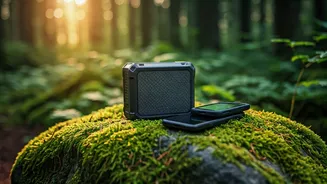
maps, track our routes, and pinpoint our location with incredible accuracy. These devices have made the outdoors more accessible than ever. However, this reliance comes with a critical vulnerability. GPS usage, a bright screen, and searching for a signal in remote areas drain a phone's battery at an alarming rate. A dead phone isn't just an inconvenience; in a navigation scenario, it can become a serious safety risk, turning a beautiful trek into a dangerous situation. This is where a reliable external power source becomes non-negotiable.
What Makes a Power Bank 'Heavy Duty'?
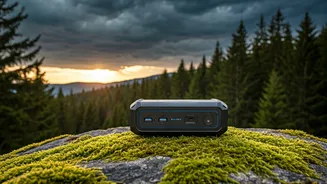
The term “heavy duty” isn’t just about size; it’s about resilience and capacity. A standard power bank designed for city commutes won't cut it in the wilderness. A true heavy-duty or rugged power bank is built with three core principles in mind: high capacity, durability, and smart features. High capacity ensures you have enough power for multiple recharges over several days. Durability means it can withstand the elements—rain, dust, and accidental drops are all part of the outdoor experience. Look for power banks with an IP (Ingress Protection) rating, like IP67, which indicates it is dust-tight and can survive being submerged in water. Finally, smart features are tailored for outdoor use, providing more than just a simple charge.
Decoding Capacity: How Much Power Do You Need?
The capacity of a power bank is measured in milliampere-hours (mAh). To choose the right one, you need to estimate your power needs. A typical modern smartphone has a battery between 3,000mAh and 5,000mAh. A 10,000mAh power bank, a good starting point for weekend trips or overnight camps, will reliably provide about two full phone charges. For multi-day treks, like those in the Himalayas or Western Ghats, you should consider 20,000mAh or more. A 20,000mAh unit can recharge a smartphone 4-5 times, providing peace of mind for a week-long adventure, especially if you're also charging a headlamp or a GPS watch. Always remember that the advertised capacity is a theoretical maximum; you'll typically get about 70-80% of that in real-world charging due to power conversion loss.
Essential Features for the Trail
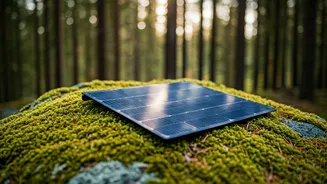
Beyond raw capacity, several features separate a great outdoor power bank from a good one. A rugged, rubberised casing protects against drops and impacts. Multiple output ports (a mix of USB-A and USB-C) are crucial for charging several devices at once. A USB-C port with Power Delivery (PD) is especially valuable for fast-charging compatible phones. Many outdoor models also include a built-in LED flashlight, which is incredibly useful in a tent or during an unexpected night hike. Some even feature a small, integrated solar panel. While these solar panels are not powerful enough to fully recharge the bank from empty in a reasonable time, they are excellent for trickle charging, helping to top off the bank on a sunny day and extend its life by a crucial margin.
Pro-Tips for Power Management Outdoors
Having a power bank is only half the battle; you also need to conserve your device’s battery. Before you leave, download offline maps for your entire route. While navigating, switch your phone to Airplane Mode. The GPS will still function, but the phone won't waste power searching for a cellular or Wi-Fi signal. Dim your screen to the lowest comfortable level and turn off unnecessary background apps. In cold weather, batteries drain faster, so keep your phone and power bank in an inside pocket close to your body heat. By pairing these power-saving habits with a robust power bank, you ensure your navigation tools are ready when you need them most.