




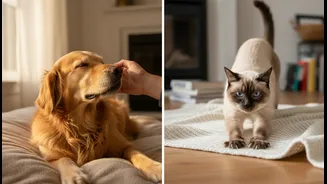




The Canine Connection: An Oxytocin Loop
Dogs often impact our mood through active engagement and social connection. Research has famously identified an “oxytocin loop” between humans and dogs. When a dog holds a mutual gaze with its owner, both parties experience a surge in oxytocin, a hormone
associated with bonding and well-being. This is the same hormone that plays a key role in the bond between a mother and her infant. This powerful chemical feedback loop, which isn't observed in the same way with human-raised wolves, suggests it's a unique trait developed during domestication. Beyond brain chemistry, dogs motivate us to be more active. Dog owners are often more likely to exercise, which is a known mood booster. Their need for walks and play gets us outdoors and facilitates social interactions with other people, combating feelings of isolation.
The Feline Factor: A Calming Presence
Cats, on the other hand, tend to influence our mood through a more subtle, calming presence. While they may not initiate the same oxytocin surge from eye contact, they offer other powerful benefits. The simple act of petting a cat has been shown to lower blood pressure and reduce levels of the stress hormone cortisol. Cat owners often cite the soothing, calming presence of their pets as a major benefit. A cat's purr itself may have therapeutic properties. The frequency of a typical purr (between 25 and 150 Hertz) is within a range that has been shown in some studies to promote bone healing and reduce inflammation. This low-frequency vibration can have a calming effect on the human nervous system, helping to reduce anxiety and create a sense of peace similar to meditation.
Two Different Paths to Happiness
The difference in their mood-boosting abilities seems to come down to their distinct interaction styles. Dogs often provide an overt, energetic lift. Their playful nature can increase our levels of serotonin and dopamine, neurotransmitters associated with happiness and pleasure. They are social catalysts, pushing us into activity and interaction. Cats offer a quieter form of companionship. Their independence is often valued by owners who want affection without constant demands. They provide comfort and reduce loneliness, but in a less intrusive way. A 2023 poll by the American Psychiatric Association found that while both dog and cat owners reported overwhelmingly positive mental health impacts, cat owners were slightly more likely to say their pets provide companionship and a calming presence.
What Happens During Stress?
Interestingly, recent research suggests that in moments of acute stress, neither pet may act as the immediate emotional buffer we expect. A 2026 study published in Frontiers in Psychology had owners report their feelings in real-time via a smartphone app. It found that while general interaction with a pet improves mood, this effect didn't necessarily hold up during stressful events. Intriguingly, for some cat owners, interacting with their cat during a moment of stress was associated with an increase in negative feelings. Researchers speculate this could be because the passive nature of cat interaction might not match a person's need for active support in a stressful moment. However, the study noted this finding was not conclusive and the sample size for cat owners was smaller.
It's Not a Competition, It's a Match
Ultimately, the science doesn't point to one pet being definitively 'better' for human mood. Instead, it highlights that the ideal pet is one that matches an owner's personality and lifestyle. An active person who thrives on routine and social engagement might find a dog to be a perfect companion. Someone who prefers a quiet, low-maintenance companion that reduces stress without demanding high levels of energy might be better suited to a cat. Both animals provide immense emotional benefits, from unconditional love to a comforting presence. The key is finding the furry friend whose style of affection and interaction best complements your own needs for well-being.