







The Balcony Watering Challenge
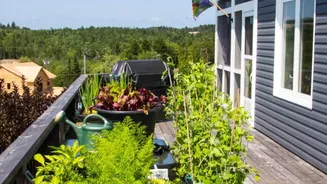
Gardening on a balcony is uniquely challenging. Unlike plants in the ground, which have a vast reservoir of earth to draw from, container plants are entirely dependent on you. A pot can go from perfectly moist to bone-dry in a single hot afternoon. The
limited soil volume means there is very little buffer for error. Overwatering is just as deadly, leading to root rot, which is the primary cause of death for many houseplants. Factors like wind, reflected heat from glass and concrete, and shifting sun exposure create a complex microclimate that makes rigid watering schedules ineffective. The classic 'finger test' only tells you about surface moisture, often missing dryness or saturation deeper in the pot where roots live.
Beyond the Basic Moisture Meter
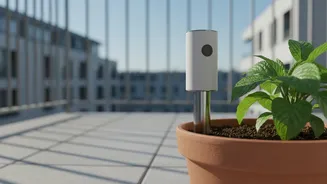
For years, gardeners have used simple, analog moisture meters—those little devices with a single metal probe and a needle that swings from 'Dry' to 'Wet'. While better than nothing, these tools are often imprecise. Most work by measuring electrical resistance, which can be thrown off by salts and minerals in the soil and can corrode over time. The term 'micro-engineered' or 'smart' probe refers to a significant technological leap forward. These modern devices provide a much more detailed and accurate picture of what is happening inside your planter.
What Makes a Probe 'Smart'?
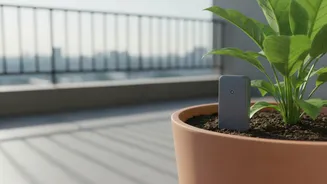
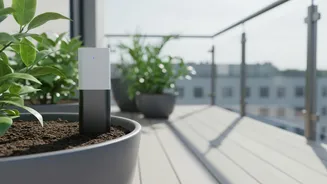
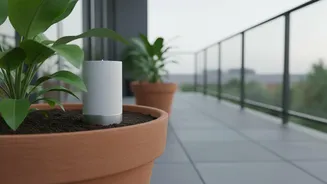
Today's advanced probes use capacitive sensing to measure the water content of the soil. This method is more accurate and durable because it measures the soil's ability to hold an electric charge, which is directly related to its moisture level, rather than just its conductivity. But the real intelligence comes from combining this data with other sensors. A single smart probe can often measure soil moisture, ambient light, air temperature, and even soil fertility by checking electrical conductivity (EC). Many of these devices use Bluetooth to connect to a smartphone app, turning your phone into a central command for your plant's health.
From Data to Thriving Plants
A smart probe doesn’t just tell you if the soil is wet or dry; it provides actionable intelligence. The companion app often contains a database of thousands of plants and their specific needs. You simply tell the app you are growing a tomato plant in a 10-litre pot, and it will interpret the sensor data in that context. Instead of a vague reading, you get a specific alert: “Moisture is at 28%. It’s time to water.” It can also warn you if your plant is getting too little sun or if the soil has an excess of fertiliser salts that could burn the roots. This technology compresses the learning curve for new gardeners and helps experienced ones fine-tune their care with precision.
Choosing the Right Tool for Your Balcony
When shopping for a smart soil sensor, look beyond the price. Consider the quality and ease of use of the companion app, as this is where you will interact with the data. Check the battery life; many modern probes can last a year or more on a single coin cell battery. For a typical balcony with several different plants, it might be worth starting with one or two probes for your most sensitive or valuable plants. You don’t need to equip every pot. The goal is to gain a deeper, data-driven understanding of your balcony's unique conditions, allowing you to care for all your plants more intuitively and effectively. Some systems even offer a central hub that can connect to multiple sensors, giving you a complete overview of your entire garden.