



The Smoky Flavour Secret: Dhungar
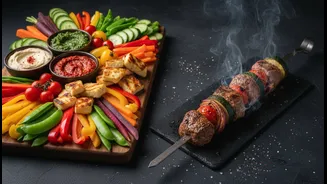
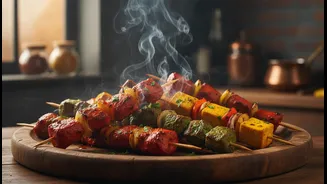
Before we dive into the kebabs, let's talk about what makes them so special: the smoke. While tandoors and charcoal grills impart a classic charred flavour, many Indian dishes get their signature smokiness from a technique called 'Dhungar'. This ancient
method, introduced during the Mughal era, involves placing a piece of red-hot charcoal in a small bowl within the main dish. A spoonful of ghee is drizzled over the coal, and the dish is immediately covered. The fragrant smoke gets trapped, infusing the food with an earthy, complex aroma that elevates it from simply cooked to truly special. This technique can be applied to many of these kebabs to enhance their smoky character.
Nadru Ke Kebab from Kashmir
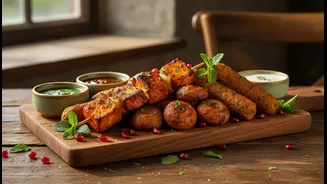
Straight from the valleys of Kashmir, Nadru Ke Kebab is a testament to the region's unique produce. 'Nadru' is the Kashmiri word for lotus stem, the star ingredient of this dish. The lotus stems are boiled until tender, then grated or minced and combined with boiled potatoes, fragrant spices like fennel powder and black cardamom, and fresh herbs. The mixture is shaped into patties and traditionally shallow-fried until crisp and golden brown on the outside, while remaining tender inside. The inherent flavour of the lotus stem is earthy and slightly sweet, providing a perfect canvas for the smoky finish from either pan-frying or an application of the Dhungar method.
Dahi Ke Kebab from Awadh
Originating from the royal kitchens of Awadhi cuisine in Lucknow, Dahi Ke Kebab is a melt-in-your-mouth delicacy. The primary ingredient is hung curd (yoghurt), which is strained for hours to achieve a thick, cheese-like consistency. This is then delicately mixed with roasted gram flour (besan), paneer, finely chopped nuts like cashews, and aromatic spices such as cardamom and ginger. The resulting patties are incredibly soft and creamy on the inside with a crisp, golden exterior from careful pan-frying. While not inherently smoky, their rich creaminess is beautifully complemented by a light Dhungar smoking, which cuts through the richness and adds an unexpected layer of flavour.
Jimikand Ke Kebab from North India
Jimikand, also known as 'suran' or elephant foot yam, is a root vegetable with a distinct nutty and earthy taste that makes it an excellent substitute for meat. To prepare these kebabs, the yam is boiled until soft, mashed, and mixed with a robust blend of spices like chaat masala, ginger, garlic, and fried onions. This mixture is formed into patties and shallow-fried or pan-grilled. The starchy texture of the yam helps create a wonderfully crisp crust when cooked, which provides a satisfying contrast to the soft interior. The hearty, almost meaty quality of the Jimikand kebab makes it a substantial and flavourful addition to any platter.
Hara Bhara Kebab for a Smoky Green Hit
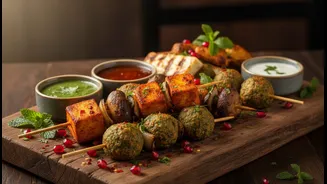
A popular choice across North India, the Hara Bhara Kebab gets its name and vibrant colour from its blend of leafy greens, primarily spinach, and green peas. These vegetables are blanched and blended with potatoes, paneer, and a host of spices. While many home versions are simply pan-fried, restaurant-style Hara Bhara Kebabs often get their signature smoky flavour from being cooked in a tandoor. At home, you can achieve a similar effect by grilling them on a barbecue or a grill pan until they are lightly charred. This cooking method adds a beautiful smokiness that pairs perfectly with the fresh, green flavours of the kebab.