





The Great Mango Paradox
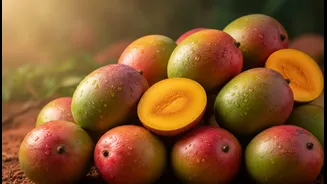
India is the world's largest producer of mangoes, accounting for about 40% of the global supply. From the legendary Alphonso to the sweet Dasheri, the country boasts an incredible diversity of over 1,000 varieties, each with a unique taste, texture, and
aroma. Despite this abundance, the mangoes available in major cities often represent a tiny fraction of what's out there. Varieties like Banganapalli, Alphonso, Kesar, and Langra dominate national supply chains, leaving hundreds of hyper-local gems as treasured secrets in their home districts. This isn't by accident. A complex set of factors determines which mangoes make the journey from a farm to a fruit basket hundreds of kilometres away, and which ones are destined to be enjoyed only by a lucky few near the orchard.
The Tyranny of a Short Shelf Life
Perhaps the single biggest hurdle is perishability. Many of the most delectable mangoes are also the most delicate. Varieties like the famed Imam Pasand of Southern India or the Himsagar of West Bengal are known for their incredibly thin skin and buttery, fiberless pulp. While this makes for a sublime eating experience, it’s a logistical nightmare. These fruits bruise easily and have a very short window between ripening and spoiling, sometimes just a few days. The long, bumpy journey in a truck from a village to a metropolitan mandi is simply too rough for them. In contrast, varieties like Banganapalli have thicker skin and a longer shelf life, making them robust enough to withstand the rigours of transport and storage. An attempt to ship mangoes by sea, a much cheaper option than air freight, once took 38 days—a timeframe far too long for such a perishable fruit.
The Farmer's Bottom Line
Farmers, like any business owners, must make pragmatic decisions. While a rare, flavourful mango might be a connoisseur's delight, it may not be economically viable to grow on a large scale. Profitability depends on yield, market price, and production costs. Some traditional varieties are 'alternate bearers,' meaning they produce a heavy crop one year and a very light one the next. This inconsistency makes financial planning difficult. Others may have a naturally lower yield per tree. Farmers often prefer to cultivate commercial varieties known for being regular, high-yield bearers, ensuring a more predictable income. Furthermore, the entire agricultural ecosystem, from fertilizers to pest management techniques, is often optimised for these widespread commercial types, making it easier and cheaper to cultivate them.
The Beauty Contest at the Market
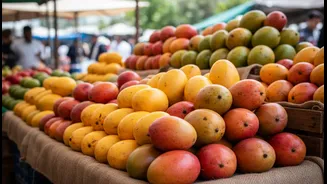
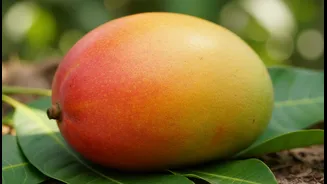
In large commercial markets, appearance matters—a lot. Wholesalers and retailers prefer fruits that are uniform in size, shape, and colour, with unblemished skin. This makes them easier to pack, transport, and display attractively. Varieties like the Alphonso and Kesar are prized not just for their taste but for their consistent good looks. Many local varieties, however, might be oddly shaped, have mottled skin, or vary greatly in size even when fully ripe. While these cosmetic issues have no bearing on their taste—and are often a sign of natural cultivation—they are filtered out by a supply chain that prioritizes standardization. This preference for uniformity trickles down, creating a market that self-selects for a handful of visually appealing, resilient mangoes over their more diverse, but less predictable, cousins.
The Powerful Pull of Local Love
Finally, some mangoes never leave their home region simply because there are none left to sell. The local demand is so immense that the entire crop is consumed within the district it's grown in. These varieties are deeply woven into the local culture and cuisine, and the harvest season is a major event. Farmers can often get a good price selling directly at local markets, bypassing the complexity and cost of dealing with national distributors, cold storage, and long-distance freight. This phenomenon is especially true for many GI (Geographical Indication) tagged mangoes, whose identity is intrinsically linked to their specific place of origin. The pride and demand within the community are often enough to ensure that these delicious fruits remain a special, local treat.