




Beyond Cringey Clipart
For decades, students have faced the same frustrating task: finding a decent image to illustrate a slide. The process usually involved a search for 'volcano diagram' or 'teamwork' that returned a sea of generic, often dated, and visually unappealing graphics.
Stock photo libraries offered a slight improvement, but the best images were often locked behind paywalls, and the free options felt impersonal and disconnected. The result was presentations filled with the same handful of overused images, which did little to engage the audience or accurately represent the student's specific topic. These visuals were often treated as decoration rather than a genuine tool for communication.
The Power of Perfect Specificity
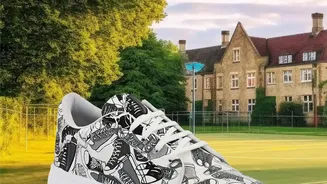
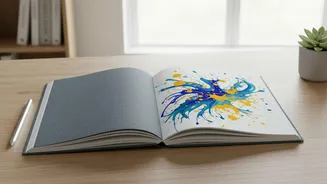
AI image generators have completely flipped the script. Instead of searching for a pre-existing image that's 'good enough,' students can now generate a custom visual that is precisely what they need. Instead of a generic picture of a scientist, a student can now create an image of 'an Indian female astrophysicist in the 1960s working on a chalkboard'. This level of specificity is a game-changer. It allows for visuals that are not only more accurate and relevant but also more inclusive and representative. For complex or abstract topics, especially in the sciences, students can generate diagrams and illustrations that visualize concepts in a way that stock photography never could.
From Hours of Searching to Minutes of Prompting
The efficiency gains are enormous. What used to take hours of frustrating searching can now be accomplished in minutes. Tools like Microsoft Designer, Ideogram, and those integrated into platforms like Canva have made AI image generation highly accessible. Many of these services offer generous free tiers, putting powerful creative capabilities directly into students' hands without cost. This automation of a once tedious task frees up students to focus less on the mechanics of finding a graphic and more on the story they are trying to tell and the clarity of their message.
A New Kind of Creative Skill
Far from being a tool for cheating, effective use of AI image generators requires a new form of creativity and critical thinking. Crafting a detailed text prompt that produces a useful, accurate image is a skill in itself, often called 'prompt engineering.' To get a good result, a student needs to use precise vocabulary and have a clear structural understanding of the subject they are trying to depict. This process encourages students to think more deeply and visually about their topics. It shifts the skill from a passive search for content to an active process of creation and iteration, where students can rapidly test and refine their visual ideas.
The Necessary Caveats and Concerns
Of course, this powerful technology is not without its challenges. The ease of creating realistic images brings the risk of misinformation and the creation of 'deepfakes'. There are also ongoing questions about copyright for AI-generated works and the potential for these tools to perpetuate biases present in their training data. Educators are now tasked with teaching digital literacy skills that go beyond spotting a fake website. They must help students critically evaluate the images they create and consume, understand the ethical implications of the technology, and vet AI-generated images for scientific or historical accuracy.