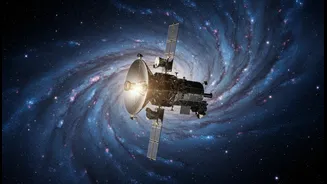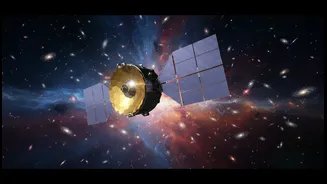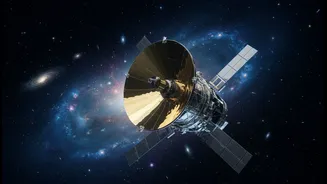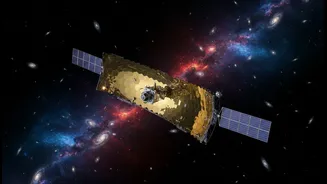





Meet the Habitable Worlds Observatory
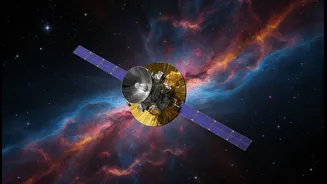
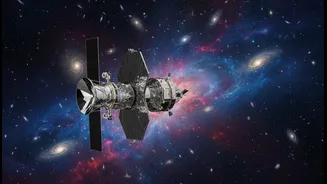
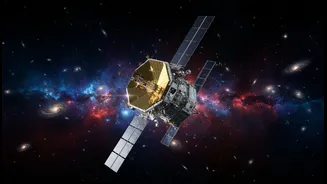
The mission at the heart of this vision is the Habitable Worlds Observatory (HWO). Recommended by the National Academies' Astro2020 Decadal Survey, HWO is NASA's next planned flagship space telescope, designed to be a successor to legends like the Hubble
and James Webb Space Telescopes. Its primary goal is breathtakingly ambitious: to be the first telescope specifically designed to directly image Earth-like planets orbiting stars similar to our sun and search their atmospheres for chemical signs of life, or biosignatures. Unlike its predecessors, which were largely one-and-done launches in terms of hardware, HWO is being developed from the ground up with a long and adaptable future in mind. It's a generational project, with a proposed launch in the 2040s, and it represents a major shift in how we approach cosmic exploration.
The Genius of a Fixable Telescope
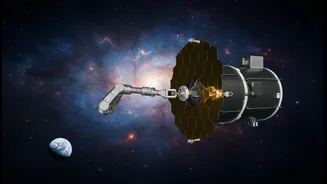
The Hubble Space Telescope proved the immense value of in-orbit servicing. Astronauts on Space Shuttle missions famously repaired its flawed mirror and later installed new, more advanced instruments, dramatically extending its life and scientific power. But HWO will orbit nearly 1.5 million kilometers from Earth, at a gravitationally stable location called Lagrange Point 2 (L2), the same region as the James Webb Space Telescope. At that distance, sending astronauts for repairs isn't feasible with current technology. The solution? Robots. NASA plans to make HWO serviceable by robotic spacecraft, which could perform maintenance, fix broken components, and even install next-generation scientific instruments developed long after the telescope's initial launch. This approach turns a multi-billion dollar observatory from a single-use instrument into a sustainable, upgradable platform for discovery.
The Search for Another Earth
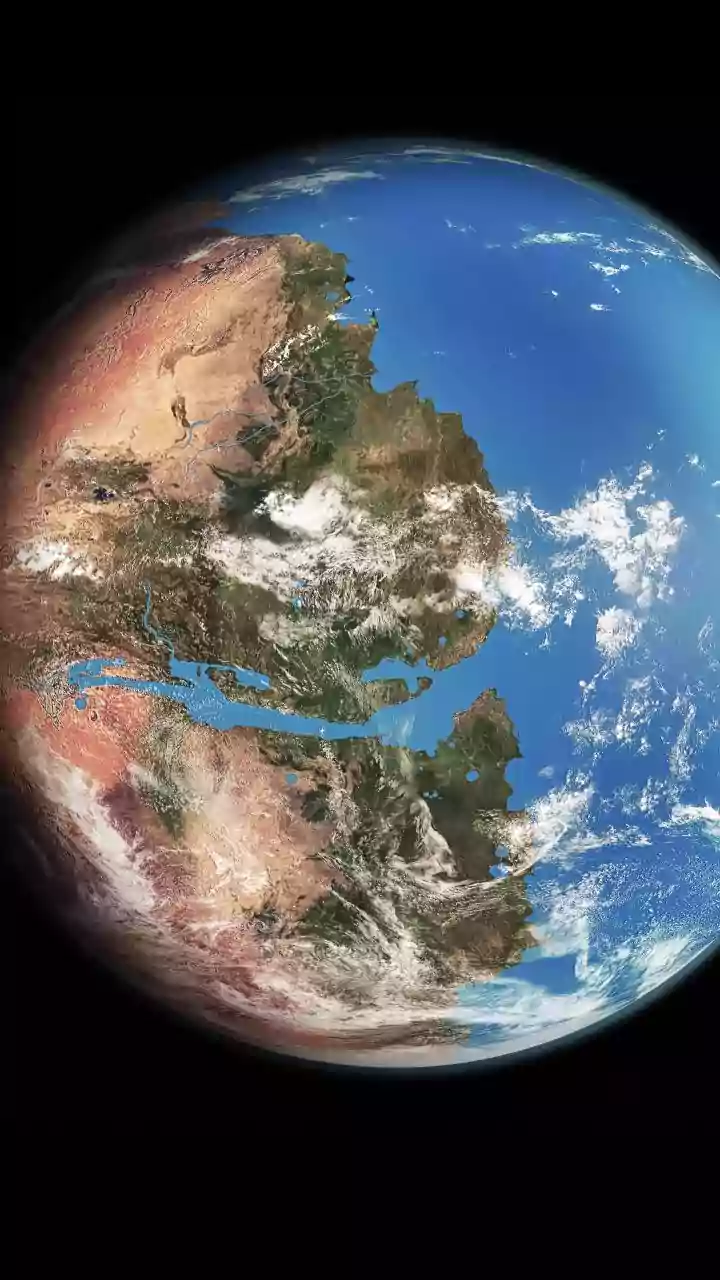
The 'wonder value' of HWO lies in its core mission. The telescope aims to directly image at least 25 potentially habitable exoplanets and analyze their atmospheres. To do this, it will need a coronagraph of unprecedented power, an instrument designed to block the overwhelming glare of a star so that the faint light of its orbiting planets can be seen. By studying this light, scientists can look for gases like oxygen, methane, and water vapor, which could be telltale signs of biological processes. While finding aliens isn't the direct goal, identifying a world with a life-sustaining atmosphere would be one of the most profound discoveries in human history. Beyond its planet-hunting duties, HWO will also be a powerful tool for general astrophysics, studying everything from the evolution of galaxies to the mysteries of our own solar system.
A Long Road and a New Philosophy
Developing a mission of this scale is a monumental undertaking, with an estimated cost of at least $11 billion and a launch date still nearly two decades away. Before HWO can fly, NASA is using other missions to test key technologies. The Nancy Grace Roman Space Telescope, set to launch by 2027, carries an advanced coronagraph that will serve as a crucial proving ground for the technology HWO will rely on. Moreover, the recent Swift Boost Mission, which used a commercial robotic spacecraft to save an aging observatory, is an early demonstration of the kind of in-space servicing that will be essential for HWO's success. By mandating serviceability from the start, NASA is not just building a telescope; it's fostering a new commercial industry for in-space servicing, assembly, and manufacturing (ISAM) that could support many future missions.