





What Exactly Are Making Charges?
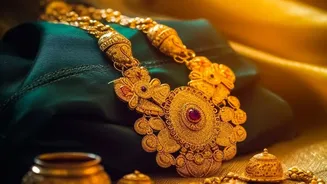
Making charges are simply the fee for the labour and craftsmanship required to transform raw gold into the beautiful jewellery you want to buy. Think of it as the jeweller's wage for the design, skill, and technology used in the creation process. This
cost is added to the base price of the gold itself. These charges can vary dramatically, typically ranging from as low as 5% for simple, machine-made items to over 25% for intricate, handcrafted designs. For gold coins and bars, which require minimal craftsmanship, making charges are significantly lower.
The Two Main Calculation Methods
Jewellers primarily use two methods to calculate making charges, and knowing the difference is key to understanding your bill. The first is a percentage-based charge, which is the most common method. Here, the charge is a set percentage of the total value of the gold in the item. For example, if a 10-gram chain has a gold value of ₹60,000 and a 12% making charge, you would pay an additional ₹7,200. The second method is a flat rate per gram. In this case, the jeweller sets a fixed amount for every gram of gold, regardless of the gold price. For that same 10-gram chain, if the flat making charge is ₹500 per gram, the total charge would be ₹5,000.
Calculating the Final Price: A Step-by-Step Guide
Let's break down how the final price is calculated with a clear example. Imagine you are buying a 10-gram gold bangle when the 22-karat gold rate is ₹6,800 per gram. The jeweller applies a 15% making charge.
1. Calculate the Gold Value: Start by multiplying the weight by the rate. (10 grams x ₹6,800/gram) = ₹68,000.
2. Calculate the Making Charge: Apply the percentage to the gold value. (15% of ₹68,000) = ₹10,200.
3. Determine the Taxable Value: Add the gold value and the making charges together. (₹68,000 + ₹10,200) = ₹78,200.
4. Add Goods and Services Tax (GST): A 3% GST is levied on the total value of the gold plus the making charges. (3% of ₹78,200) = ₹2,346.
5. Calculate the Final Bill: Add the taxable value and the GST. (₹78,200 + ₹2,346) = ₹80,546.
It's worth noting that if a jeweller lists the making charge as a separate service on the bill, it could attract a 5% GST on that component alone, though the total impact on the final bill is often minimal. Always ask for a detailed bill to see a clear breakdown.
Understanding Wastage Charges
Sometimes, you might hear the term 'wastage charge' or see it on your bill, often combined with making charges under a single heading like 'Value Addition' (VA). Wastage accounts for the small amount of gold that is lost during the manufacturing process—cutting, melting, and polishing. While modern technology has reduced wastage, it's still a factor, especially for intricate, handmade pieces. Wastage charges are typically expressed as a percentage, ranging from 3% to 7%, and can sometimes be a point of negotiation. It's always a good idea to ask the jeweller to separate wastage and making charges to understand exactly what you are paying for.
Smart Tips for a Better Deal
While you can't negotiate the price of gold, making charges often have room for discussion. The first step is to compare charges across different jewellers for similar items. Don't hesitate to negotiate, especially with independent jewellers or when making a large purchase. Opting for simpler, machine-made designs will almost always result in lower making charges compared to complex, handcrafted ones. Shopping during the off-season, when footfall is lower, may also give you more bargaining power. Finally, always ask for a detailed, itemised invoice to ensure transparency and check all calculations before you pay.