


India's Next Interplanetary Frontier
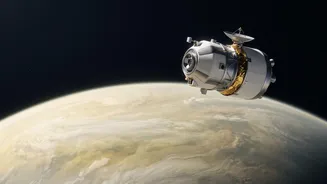
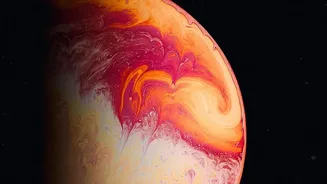
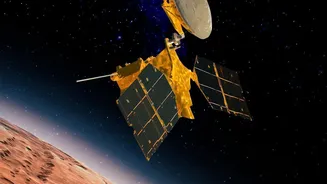
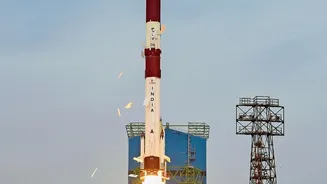
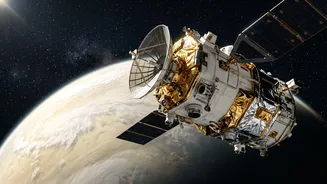
Following the historic successes of the Chandrayaan missions to the Moon and the Mangalyaan mission to Mars, ISRO is setting its sights on the second planet from the Sun. The Venus Orbiter Mission, named Shukrayaan-1, represents India's next great leap
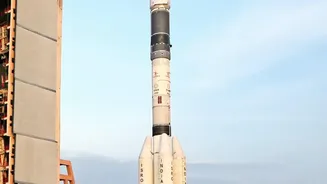
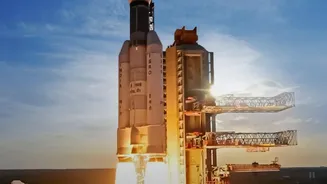
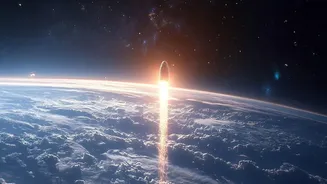
in planetary exploration. Officially approved in September 2024, the mission is scheduled for a March 2028 launch aboard the powerful LVM-3 rocket. This ambitious project is not just a scientific endeavour; it is a statement of India’s growing capabilities and its commitment to unravelling the biggest mysteries of our solar system. The goal is to place a state-of-the-art orbiter around Venus to study the planet for over four years, providing a wealth of data for scientists back on Earth.
The Challenge of a Hellish World
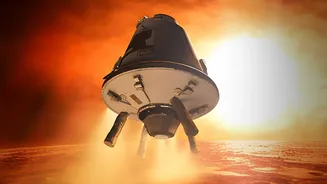
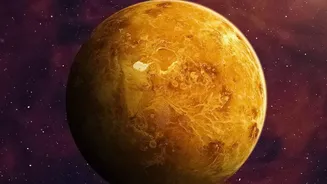
Exploring Venus is one of the greatest technological challenges in space exploration. The planet is a hostile environment, with surface temperatures hot enough to melt lead, reaching around 475°C. The atmospheric pressure is over 90 times that of Earth's at sea level, equivalent to being nearly a kilometre deep in our ocean. These conditions are capable of crushing a conventional spacecraft in moments. Above this unforgiving surface lies a dense blanket of clouds made not of water, but of corrosive sulphuric acid, which completely obscures the view from space. It is this impenetrable veil that Shukrayaan-1’s advanced sensors are designed to conquer, turning a formidable obstacle into a primary scientific target.
Piercing the Veil with Advanced Radar
The headline instrument for peering through the Venusian clouds is a high-resolution Synthetic Aperture Radar (SAR). Radar technology is crucial because it can create detailed surface maps regardless of cloud cover, day or night. ISRO plans to use a powerful S-band SAR, an improved version of the one used on the Chandrayaan-2 lunar orbiter. This instrument aims to map the Venusian surface at a resolution several times better than NASA's Magellan mission in the 1990s. But ISRO is going a step further. Shukrayaan-1 is also slated to carry a ground-penetrating radar, a world-first for Venus exploration. This will allow scientists to probe beneath the planet's surface, searching for geological structures, buried lava flows, and other clues to its volcanic past.
Decoding a Toxic Atmosphere
While the radar maps the ground, a suite of other instruments will focus on the atmosphere itself. The mission will carry spectrometers and analysers designed to study the chemical composition, dynamics, and structure of the dense atmosphere from the cloud tops down. One key objective is to understand Venus's runaway greenhouse effect, a process that turned a planet once thought to have had oceans into the inferno it is today. International collaboration enhances these capabilities. For instance, the Venusian Neutrals Analyzer (VNA), a contribution from Sweden, will study how the solar wind interacts with the upper atmosphere, helping scientists understand how Venus loses atmospheric particles to space. Another instrument, the Venus InfraRed Atmospheric Gases Linker (VIRAL), contributed by Russia, will look for specific chemical signatures that could provide clues about ongoing processes within the clouds.
The Ultimate Scientific Quest
Ultimately, the data from these sophisticated sensors will be pieced together to answer fundamental questions about Earth's twin. Scientists want to know why two planets that started so similarly evolved so differently. Did Venus truly have oceans, and if so, where did the water go? Is the planet still geologically active, with erupting volcanoes hidden beneath its clouds? By studying Venus’s extreme climate, scientists hope to gain valuable insights into climate change processes that are relevant to our own planet. The mission could also investigate tantalizing hints of phosphine gas detected in the clouds a few years ago, a chemical that on Earth is associated with life. Shukrayaan-1's findings will not only reveal the secrets of Venus but will also help us better understand Earth's past, present, and future.