



Your Body's Internal Clock
Deep within your brain, a master clock known as the suprachiasmatic nucleus (SCN) governs your body's 24-hour cycles, or circadian rhythms. This internal timer tells you when to feel sleepy and when to be alert. But its influence is far broader, orchestrating
a daily symphony of bodily functions, including hormone release, blood pressure, and, critically, metabolism. Think of your body as a highly efficient factory, with different departments—like the liver, pancreas, and muscles—operating on a synchronized schedule. During the day, in response to light, your metabolism is primed for activity: processing food, burning energy, and storing nutrients. At night, as darkness falls, the factory shifts to maintenance and repair, slowing down metabolic processes.
When Schedules and Biology Clash
Shift work, defined as any schedule outside the typical 7 a.m. to 6 p.m. window, throws a wrench in this finely tuned system. When you work, eat, and stay active at night, your body receives conflicting signals. Your brain sees darkness and prepares for rest, but your stomach receives food, forcing your metabolic organs to work overtime during their scheduled downtime. This chronic misalignment, or circadian disruption, is linked to a host of health issues. Studies show shift workers have an increased risk of obesity, type 2 diabetes, cardiovascular disease, and gastrointestinal problems. It's not just about willpower; it's a biological mismatch that can unbalance appetite hormones, disrupt blood sugar control, and promote fat storage.
The Power of 'When': Time-Restricted Eating
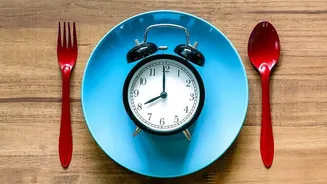
This is where the concept of circadian-aligned meal timing, also known as time-restricted eating (TRE), comes in. The idea is simple: by confining your food intake to a consistent window of time each day, you can help resynchronize your body's clocks. It's less about counting calories and more about counting hours. Research suggests that consuming all your meals and snacks within an 8- to 12-hour window gives your body a predictable daily period of fasting. This allows your digestive system to rest and repair, improves insulin sensitivity, and can lead to better metabolic health, even without other changes to diet or exercise.
Making 'Daylight' Eating Work for You
For shift workers, the term "daylight eating" might seem impossible. The key is to adapt the principle to your specific schedule. The goal is to create a consistent eating window during your main period of wakefulness and activity, while avoiding food during your body's biological night, which is generally between midnight and 6 a.m. For example, if you work a 10 p.m. to 6 a.m. shift, you wouldn't fast all night. Instead, you might have your main meal before your shift starts, a light, protein-rich snack early in your shift, and then stop eating several hours before you plan to go to sleep in the morning. This strategy supports your energy needs while still giving your metabolism a significant break.
Actionable Steps for Shift Workers
Implementing this can feel daunting, so start small. Try to establish a consistent 10- or 12-hour eating window. Have your largest, most balanced meal before your shift begins to fuel your work period. If you need to eat during your shift, opt for smaller, protein-rich snacks like Greek yogurt, hard-boiled eggs, or nuts, rather than a heavy meal. Try to avoid eating in the few hours before you go to sleep, as this can disrupt both sleep quality and metabolic function. Finally, stay hydrated with water throughout your shift, as dehydration can often be mistaken for hunger.