


The Sun’s Two-Part Threat
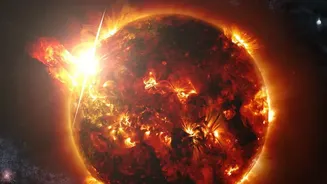
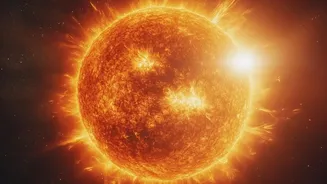
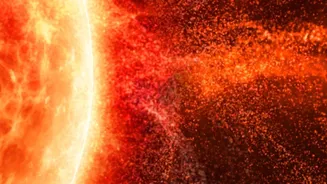
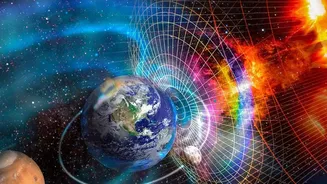
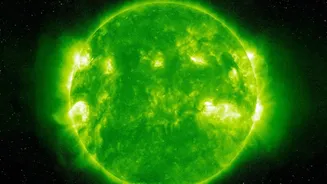
To understand our defense, we first need to know the adversary. Space weather threats from the sun primarily come in two forms: solar flares and coronal mass ejections (CMEs). Think of a solar flare as the muzzle flash of a cannon. It is an intense, localized
burst of radiation—mostly X-rays and extreme ultraviolet light. Travelling at the speed of light, the energy from a flare reaches Earth in just over eight minutes. This radiation can't penetrate our atmosphere to harm us on the ground, but it can disrupt the ionosphere, causing blackouts in high-frequency radio communications used by aircraft and mariners. A Coronal Mass Ejection, or CME, is the cannonball itself. It's a colossal cloud of magnetised plasma and charged particles blasted from the sun's corona. CMEs are much slower, travelling at speeds that can take anywhere from 15 hours to several days to reach Earth. It is these CMEs that cause the most severe geomagnetic storms, which have the potential to cripple power grids, damage satellites, and disrupt GPS signals.
Our Watchtowers in the Void
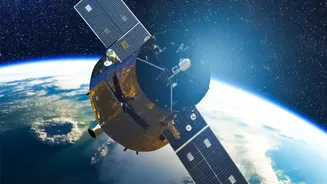
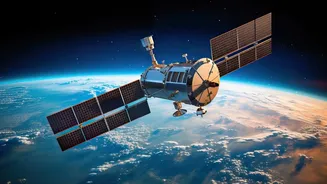
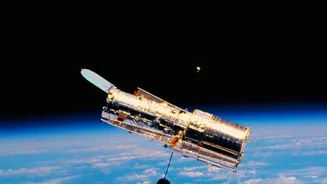
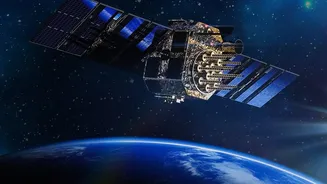
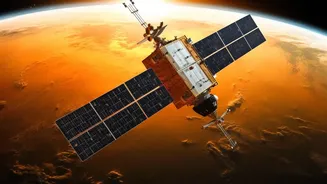
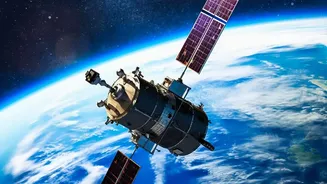
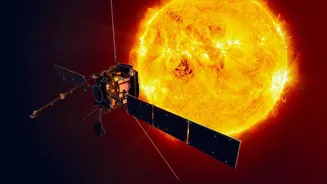
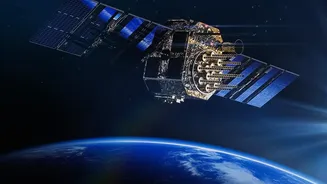
An international consortium of satellites works around the clock to give us a fighting chance. Key players include the American GOES (Geostationary Operational Environmental Satellite) series, which has been monitoring space weather for decades. These satellites are equipped with X-ray sensors that spot solar flares the moment they happen. For spotting the more dangerous CMEs, the joint NASA/ESA SOHO (Solar and Heliospheric Observatory) satellite is critical. It uses an instrument called a coronagraph, which is like creating an artificial eclipse by blocking the sun's bright face to see the fainter corona and any eruptions leaving it. More recently, India has become a major player with its Aditya-L1 mission. Positioned 1.5 million kilometres from Earth at a stable gravitational point called L1, Aditya-L1 has an unobstructed, continuous view of the sun. Its advanced instruments, like the Solar Ultraviolet Imaging Telescope (SUIT), provide unprecedented detail on solar flares and their origins.
From Detection to Warning
The detection process is a multi-step relay. First, satellites like GOES or SOHO see the initial blast—either the flash of a flare or a CME billowing out from the sun. This is our initial alert. For a flare, the warning is effectively zero, as the effects arrive at the same time we see it. For a CME, this initial detection gives space weather forecasters hours to days of lead time. They use the data to model the CME's speed and trajectory. If it's aimed at Earth, alerts are issued to power grid operators, satellite companies, and airlines so they can take protective measures. The second line of defense comes from satellites at the L1 point, like NASA's DSCOVR and India's Aditya-L1. These spacecraft act as buoys in the solar wind. When the CME passes them, their instruments directly measure its speed, density, and magnetic field orientation. This provides a final, high-confidence warning—typically 15 to 60 minutes—before the storm hits Earth's magnetic field, confirming its potential severity.
Why This Early Warning Matters
That window of a few hours to a few days is crucial. It allows critical infrastructure operators to prepare. Power companies can reroute power flows and take vulnerable transformers offline to prevent catastrophic failure from geomagnetically induced currents. Satellite operators can put their spacecraft into a protective safe mode and reorient them to protect sensitive electronics. Airlines can reroute flights away from polar regions where radiation exposure and communication blackouts are most severe. In our technology-dependent world, a powerful geomagnetic storm is not a minor inconvenience. It could disrupt GPS navigation for shipping and aviation, degrade satellite communications, and cause widespread power outages that impact everything from healthcare to finance. The advance warning provided by our satellite shield is the primary defense for a global economy that runs on electricity and data.