



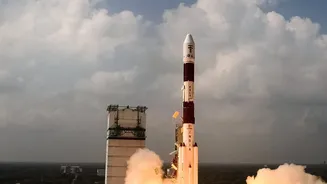
A New Space Race Begins
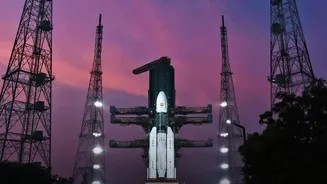
For decades, a career in India’s space sector meant one thing: working for the Indian Space Research Organisation (ISRO). But that reality is rapidly changing. The government's decision to open the sector to private enterprise has ignited a boom. Today,
with the Indian space economy valued at around $8.4 billion and projected to hit $44 billion by 2033, the field is expanding dramatically. This growth is powered by over 400 space-tech startups that have emerged, transforming the industry from a government-led initiative to a dynamic, commercial ecosystem. This shift is not just about building rockets; it's about creating a vast supply chain and a host of new services, all of which require a diverse and skilled workforce.
The Rise of the Space-Data Scientist
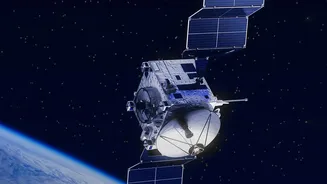
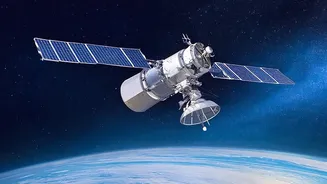
The most significant new frontier in space jobs has little to do with launchpads and everything to do with data. Modern satellites are powerful eyes in the sky, collecting immense volumes of information. This has created a surge in demand for data scientists, AI engineers, and software developers who can turn raw satellite imagery and signals into actionable intelligence. These professionals work on applications that impact everyday life, from providing farmers with crop health analysis to helping urban planners manage city growth and enabling insurance companies to assess damage after natural disasters. Companies are looking for people skilled in programming languages like Python and MATLAB, along with expertise in machine learning and geospatial information systems (GIS).
Engineers for a Robotic Future
As space missions become more complex, the need for robotics and automation is exploding. Future jobs in this domain involve designing robots for in-orbit satellite maintenance, developing autonomous rovers for planetary exploration, and creating smart manufacturing systems for building space hardware. This requires a new breed of engineer who blends mechanical, electronic, and software skills. Electronics hardware and software specialists are in high demand to design the complex circuits, embedded systems, and control systems that function as the nervous system for these advanced machines. Expertise in areas like power management, communication protocols, and PCB design is becoming just as crucial as traditional aerospace knowledge.
Beyond the Obvious Roles
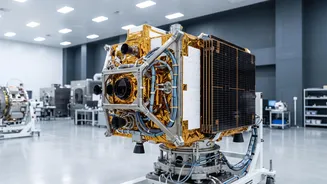
The expansion of India's space sector is also creating demand in less obvious but equally critical areas. The industry needs avionics engineers to develop the sophisticated electronic systems for navigation, communication, and radar. It requires materials scientists to invent the next generation of lightweight composites and alloys that can withstand the extreme conditions of space. Furthermore, the growth of private companies like Skyroot Aerospace and Agnikul Cosmos, many founded by former ISRO scientists, is creating a competitive environment for talent. This has led to a race for professionals with experience in propulsion, satellite systems, and mission architecture, with some companies even recruiting from adjacent industries like automotive and defence electronics to find transferable skills.
Preparing for Liftoff
The message to India's youth is clear: the country's space ambitions are creating a wide spectrum of career paths. While a strong foundation in science, technology, engineering, and mathematics (STEM) remains essential, the specific skills required are evolving. Aspiring professionals should focus on gaining practical knowledge in programming, data analytics, and embedded systems. The transition is not without its challenges. Concerns have been raised within ISRO about its future role as more manufacturing and operational work shifts to the private sector. However, the official stance is that ISRO will focus on advanced research and development, pushing the boundaries of science while the private industry helps India scale its capacity to meet its ambitious goals, such as launching 50 rockets per year.