




The Sunny Day Standard
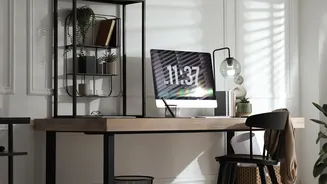
On a bright, sunny day, the rules for desk placement seem simple. Most experts agree that positioning your desk perpendicular to a window is the gold standard. This setup, often called side-lighting, provides ample natural light to boost your mood and regulate
your body's internal clock without causing the direct screen glare that comes from facing a window or the distracting backlighting that occurs when a window is behind you. Natural light is a known biological stimulant, helping your body produce serotonin, which improves focus and energy. This arrangement gives you the best of both worlds: the psychological benefits of a view and an evenly lit workspace that reduces eye fatigue.
Why Grey Skies Change Everything
The problem is, that perfect sunny-day setup can become your enemy during an overcast week. When the sky is a uniform sheet of grey, the light source is no longer a distinct sun but the entire sky itself. This diffuse, weak light often isn't strong enough to illuminate your workspace from the side. Suddenly, your screen can seem overly bright compared to the gloomy surroundings, creating harsh contrast that strains your eyes. This feeling of lethargy and low motivation on cloudy days is a real phenomenon; less sunlight can lead to lower serotonin levels and a disrupted circadian rhythm, contributing to what is sometimes called the "rainy day blues" or more clinically, Seasonal Affective Disorder (SAD).
The Overcast Day Pivot
When the skies are persistently grey, it’s time to rethink your position. Instead of keeping your desk to the side of the window, consider a temporary move. The new best position might be directly facing the window. On a sunny day, this would be a disaster of glare and distraction, but on an overcast day, it allows you to maximize the weak, non-direct light. Facing the window ensures your face is evenly lit for video calls and, more importantly, that your eyes are receiving as much natural light as possible, which can help combat feelings of sluggishness. Your goal is to balance the light between your screen and your surroundings to minimize eye strain.
When Moving Isn't an Option
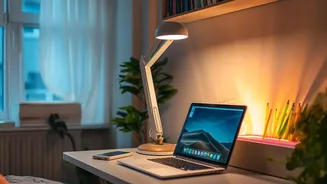
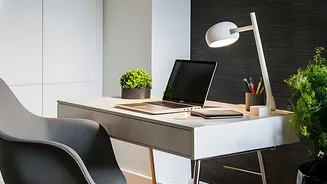
If rearranging your entire office for a few cloudy days feels impractical, you can use artificial lighting to simulate a better environment. This is where layered lighting comes in. Instead of relying on a single, harsh overhead light, combine multiple sources. Start with a good task lamp on your desk to illuminate your immediate work area. Look for one with adjustable brightness and color temperature. A cooler, bluer light (around 4000K-5000K) tends to mimic daylight and can enhance focus. Then, add ambient light with a floor or table lamp in a corner to brighten the rest of the room and reduce the gloomy contrast. This layering of light sources eliminates shadows and creates a more balanced, visually comfortable space.
Listen to Your Body and Eyes
Ultimately, the best desk position is the one that feels best for you. Your body often tells you when something is wrong. If you find yourself ending the day with headaches, itchy eyes, or blurred vision, your lighting and desk placement may be the culprits. Pay attention to the subtle cues. Are you squinting or leaning forward to see your screen? Do you feel drained and irritable by mid-afternoon? These are signs that your workspace is working against you. Don't be afraid to experiment. Try rotating your desk, adding a lamp, or even just taking a short break to look out the window every 20 minutes to give your eyes a rest.