





The Most Dangerous Minutes in Spaceflight
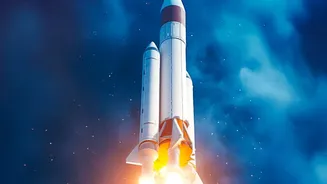
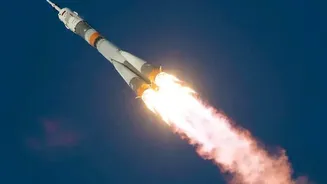
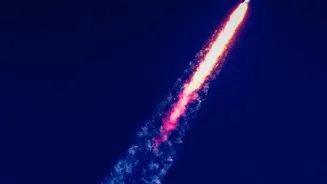
The journey from the ground to orbit is a violent, high-stakes race against gravity. In the initial minutes of a launch, the rocket is a controlled explosion, packed with tonnes of volatile propellant and subject to immense aerodynamic forces. If anything
goes wrong—a structural failure, an engine malfunction, or a guidance error—the consequences can be catastrophic. This ascent phase is statistically the most dangerous part of any human space mission. Recognizing this, space agencies across the world have developed launch abort systems. For India's landmark Gaganyaan mission, ensuring the crew can escape a failing rocket is not just an option; it is a non-negotiable cornerstone of the entire program.
ISRO's Lifeboat in the Sky: The CES
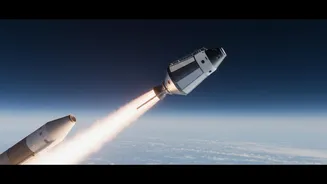
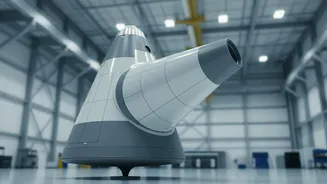
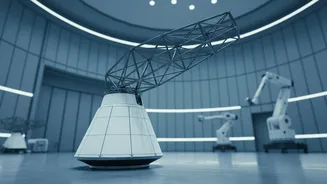
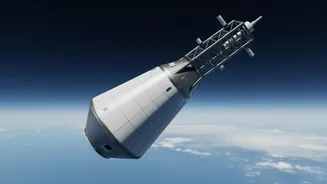
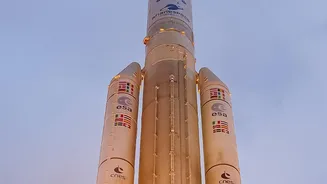
Enter the Crew Escape System (CES), a critical safety feature designed to act as a high-speed lifeboat for the astronauts. Positioned at the very top of the human-rated LVM3 rocket, the CES is essentially a small, powerful rocket of its own, attached to the Crew Module where the astronauts sit. Its sole purpose is to detect a critical failure, ignite its own powerful motors, and pull the Crew Module away from the malfunctioning launch vehicle in milliseconds. This 'puller' type system is designed with multiple high-burn-rate solid motors that fire with immense force, generating accelerations up to 10 times that of gravity to get the crew to a safe distance almost instantly.
Escape Scenarios: From Pad to Sky
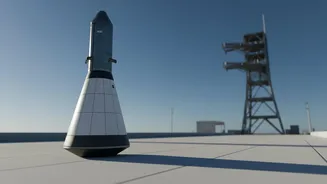
The Crew Escape System is engineered to handle emergencies at different stages of the launch. The first scenario is a 'pad abort,' where an issue is detected while the rocket is still on the launchpad. In this case, the CES would fire to lift the Crew Module up and away from the stationary rocket, carrying it to a safe altitude before deploying parachutes for a landing. The second, more complex scenario is a high-altitude abort. If the launch vehicle veers off course or an engine fails mid-flight, the Integrated Vehicle Health Management system detects the anomaly and triggers the abort. The CES then ignites its powerful escape motors, pulling the capsule away from the rocket as it travels at supersonic speeds.
Proven Through Rigorous Testing
A system this critical cannot be based on theory alone. ISRO has conducted a series of demanding tests to validate every aspect of the CES. A major milestone was the Pad Abort Test in 2018, which successfully demonstrated the system's ability to escape from the launch pad. More recently, the Test Vehicle Abort Mission-1 (TV-D1) in October 2023 simulated a high-altitude abort. In this test, a dedicated vehicle was launched to an altitude of about 17 km, where an abort was deliberately triggered. The CES performed perfectly, pulling the uncrewed Crew Module away from the booster. The module then stabilized, deployed its parachutes, and executed a gentle splashdown in the Bay of Bengal, where it was recovered. This successful test was a major validation of the entire escape sequence, proving the system works as intended in a real-world flight scenario.
The Path to a Safe Return
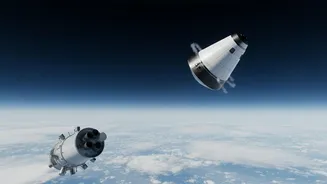
Once the Crew Escape System has done its job of pulling the module clear of danger, a precisely choreographed sequence ensures the crew's safe return. After separating from the escape motors, the capsule uses its own systems to orient itself for descent. A series of parachutes deploy to slow the module down from high speeds. Drogue parachutes are released first for initial deceleration, followed by the main parachutes which reduce the speed to less than 11 metres per second for a soft splashdown in the sea. From there, recovery teams from the Indian Navy are tasked with retrieving the module and its crew, completing the safety chain that began with the split-second decision to abort. This end-to-end testing gives ISRO the confidence that it can protect its astronauts, no matter what happens during launch.