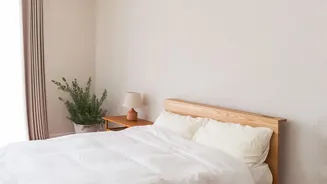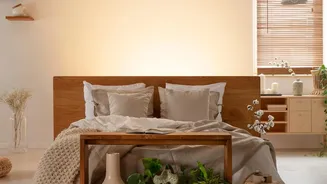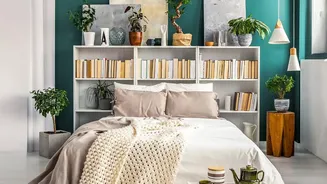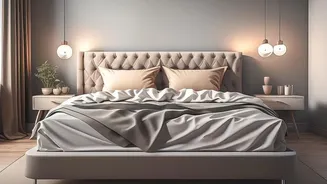

Treat the Window as a Focal Point
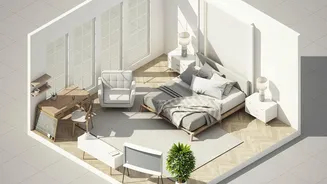
The first rule of designing for light is to respect your source. The window is the most important feature in the room. Avoid blocking it with bulky furniture at all costs. A layout that obstructs a window will instantly make a room feel darker and smaller.
Instead, arrange your furniture to either frame the window or leave a clear path for light to travel across the room. If possible, position your bed on the wall opposite the window to create a sense of balance. This arrangement allows you to wake up with soft, indirect light and keeps the main light source unobstructed.
Choose Low-Profile and Leggy Furniture
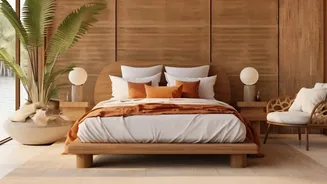
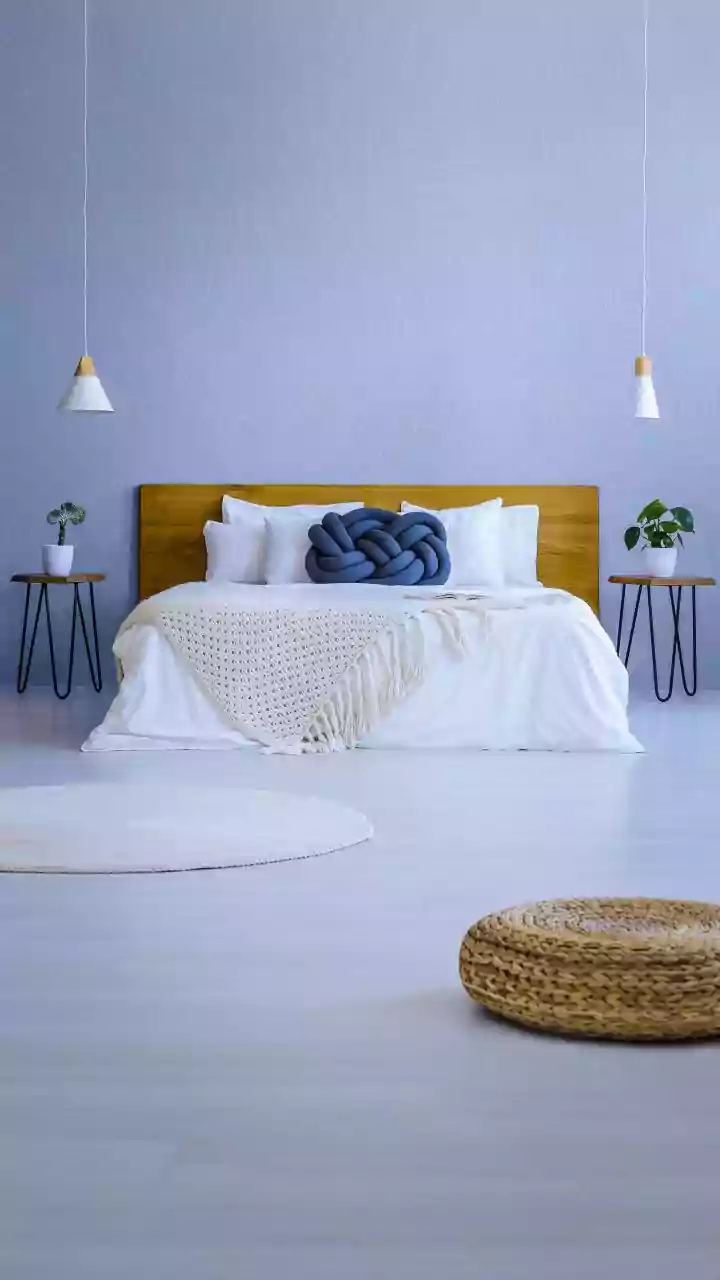
The physical volume of your furniture has a major impact on how light moves. Bulky pieces that sit flat on the floor act like dams, stopping light in its tracks and creating heavy shadows. To combat this, opt for furniture with a lighter visual footprint. Look for beds, nightstands, and dressers with exposed legs. This allows light and air to flow underneath, creating an illusion of more space by letting you see more of the floor. Similarly, low-profile furniture—pieces that are shorter in height—prevents the room from feeling weighed down and keeps sightlines clear, especially under windows.
The Strategic Power of a Mirror
It's a classic interior design trick for a reason: mirrors work wonders in small, light-starved spaces. To get the most significant impact, place a large mirror on the wall directly opposite your main window. This will capture the incoming sunlight and bounce it back into the room, effectively doubling your light source and creating a profound sense of depth. It can feel like adding a second window. Mirrored closet doors or a dresser with a reflective surface can achieve a similar, albeit more subtle, effect, helping to scatter light and reduce shadows.
Smart Storage to Reduce Visual Clutter
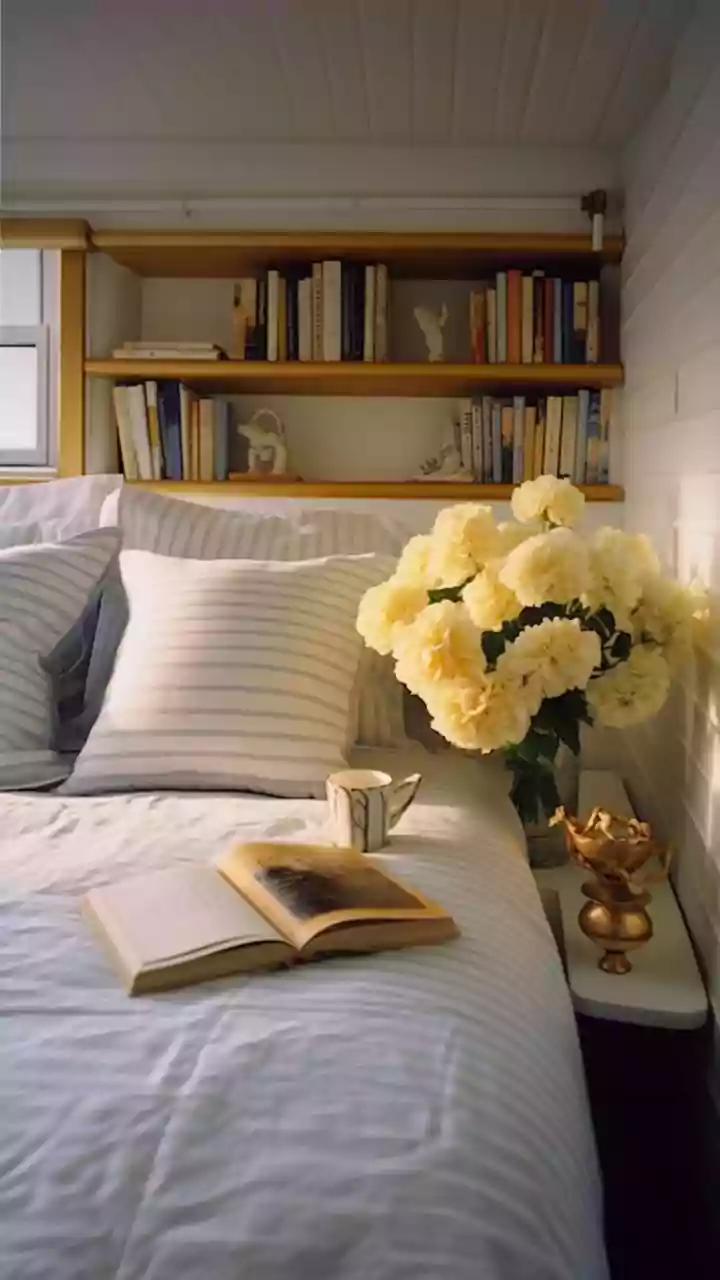
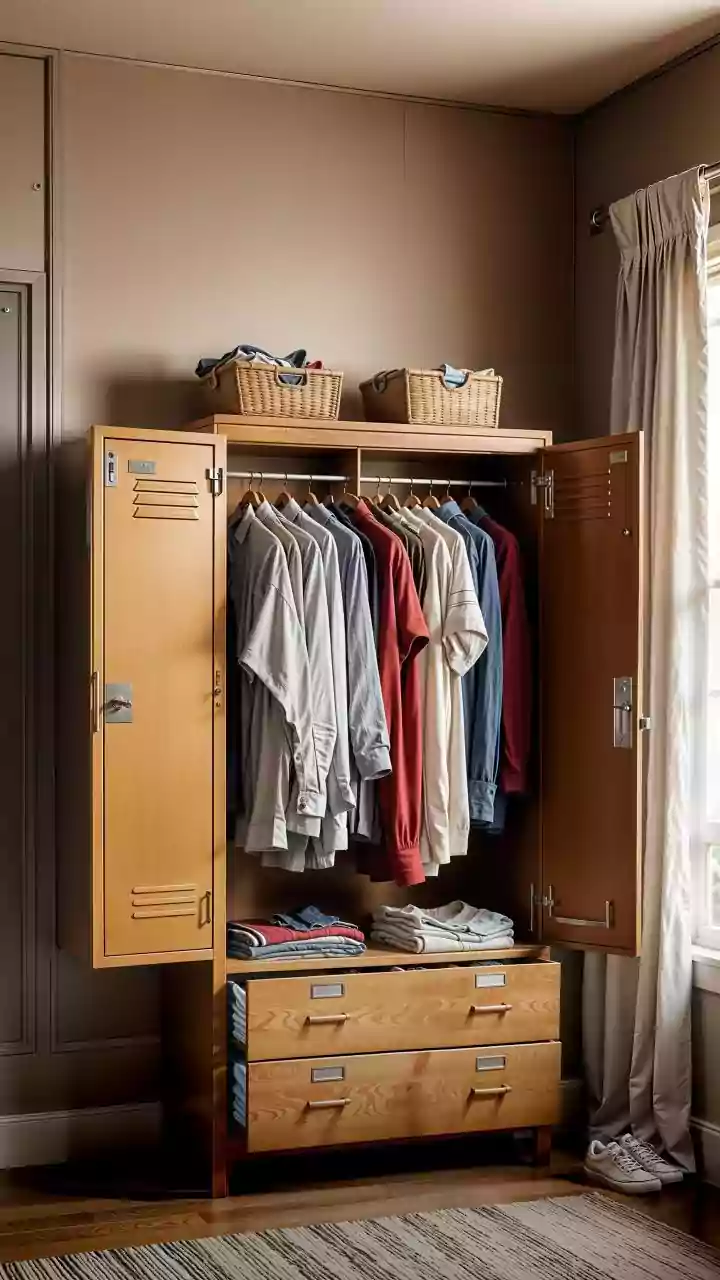
Clutter absorbs light and makes a room feel chaotic and cramped. But in a small bedroom, storage is a necessity. The key is to be clever about it. Go vertical with tall, narrow bookcases or floating shelves to draw the eye upward and free up valuable floor space. This makes the room feel taller. Multi-functional furniture is also your best friend. A bed with built-in drawers, a storage ottoman that doubles as a seat, or a slim console that can act as a desk and a vanity can all help you hide clutter without adding bulky furniture.
Use a Light and Cohesive Colour Palette
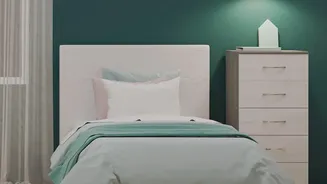
Your colour choices are critical for reflecting light. Dark colours absorb light, making a space feel smaller, while light colours do the opposite. Opt for a palette of soft whites, light greys, or pale pastels for your walls to create an airy, expansive feeling. To maximize this effect, consider 'colour drenching', where you paint the walls, trim, and even the ceiling in the same light shade. This technique blurs the boundaries of the room, making it feel more seamless and open. Keep bedding and large textiles light as well to complete the effect.
Keep Window Treatments Simple
Don't undo all your hard work by choosing heavy, dark window treatments. Thick drapes can block a significant amount of light even when open. Instead, opt for sheer or lightweight curtains that allow sunlight to filter through while still providing privacy. If you need blackout capabilities for sleeping, install a simple roller blind that can disappear during the day, and layer sheer curtains over it for a softer look. Hanging the curtain rod high and wide—well above and beyond the window frame—can also trick the eye into thinking the window is larger than it is.