


Ever wonder why your jeans feel so different from a crisp cotton shirt? The secret is in the weave. Understanding the two most common types, plain and twill, unlocks why your favourite clothes look, feel, and wear the way they do.
The Unseen Structure in Your Clothes
At its core, all woven
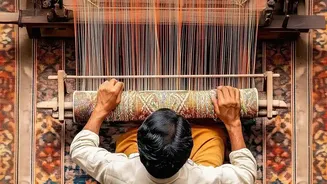
fabric is created by interlacing two sets of threads at right angles: the lengthwise 'warp' threads and the crosswise 'weft' threads. The specific pattern of this intersection is called the weave. While there are many complex weaves, the vast majority of fabrics in your wardrobe are made from just two fundamental types: plain weave and twill weave. The choice of weave is not just a technical detail; it fundamentally determines a fabric's texture, durability, drape, and even how it wrinkles, making it as important as the fibre itself.
Plain Weave: The Simple Staple
Plain weave is the most straightforward method of weaving. Each weft thread passes over one warp thread and then under the next, in a simple one-over, one-under criss-cross pattern. If you look very closely, it resembles a tiny checkerboard or a basket. This structure creates a strong, stable, and hard-wearing fabric. However, because the threads are tightly locked, plain weave fabrics tend to be crisp rather than drapey, have minimal stretch, and are more prone to wrinkling. The surface is flat and smooth, making it an excellent canvas for printed designs.
Finding Plain Weave in Your Wardrobe
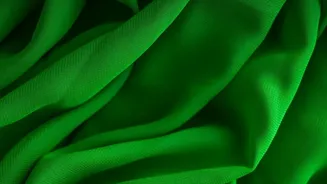
You encounter plain weave every day. That classic, crisp business shirt is likely a cotton poplin, a quintessential plain weave fabric. Lightweight and breathable summer garments like linen trousers, chiffon blouses, and seersucker jackets all rely on this weave for their structure and airy feel. Chambray, which often looks like a lighter version of denim, is another common plain weave. Its simple grid structure makes it perfect for garments that require a clean, flat finish and good breathability.
Twill Weave: The Durable Diagonal
The defining characteristic of a twill weave is its distinct diagonal pattern. This is created when the weft thread passes over one or more warp threads and then under two or more, with the pattern offset in each subsequent row. This 'step' in the weave creates the visible diagonal ribs or 'wales'. Because the yarns are packed more tightly and have fewer interlacings than a plain weave, twill fabrics are generally more durable, have a better drape, and are more resistant to wrinkles and stains. Many twills also have a different front and back side, with the diagonal pattern being more prominent on the face of the fabric.
Spotting Twill in Your Closet
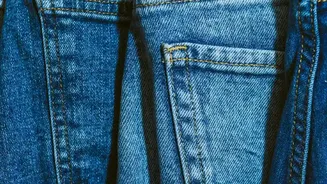
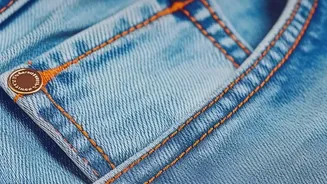
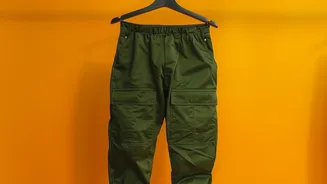
The most famous and recognizable twill fabric is denim. The diagonal lines on your jeans are the hallmark of a twill weave. This durable construction is why denim is the go-to for hard-wearing workwear and everyday trousers. Other common examples of twill include chinos, which are typically made from a lighter-weight cotton twill than denim. Gabardine, used for trench coats and trousers, is a tightly woven twill known for its smooth finish. Even patterns like herringbone and houndstooth are created using a twill weave structure with different coloured yarns.
At a Glance: Twill vs. Plain Weave
So, how do you tell them apart? Look for the lines. If you see a clear diagonal pattern, it’s a twill. If the surface looks like a flat, even grid with no directional pattern, it’s a plain weave. In terms of feel, plain weaves are often crisp and structured, while twills tend to be softer with more drape. For durability and hiding everyday wear, twill usually has the advantage, which is why it’s used for trousers, jackets, and upholstery. For lightweight, breathable garments like summer shirts, the simple structure of a plain weave is often preferred.