






The rise of artificial intelligence has sparked a major question: will it make the traditional office obsolete? A recent Colliers report on the Asia-Pacific workplace offers a surprising answer, suggesting AI is not killing the office but redefining it.
AI's Real Impact on the Workplace
Contrary to fears of widespread job losses and empty office buildings, the integration of AI is prompting a more nuanced evolution. According to the 'Asia Pacific Workplace Insights' report from Colliers, which surveyed over 300 corporate occupiers, the primary impact of AI is on the nature of work itself. The technology is expected to automate routine tasks, freeing up employees to focus on higher-value activities like collaboration, innovation, and strategic thinking. This elevates the importance of the physical workplace, transforming it from a mere place of production into a crucial hub for knowledge exchange and creative problem-solving. Every single respondent in the survey expects AI to create new, specialized roles that require different skills and new ways of working together.
A Shift from Footprint to Function
The research challenges the assumption that AI adoption will lead to a massive contraction in office space. Instead, it points to a significant shift in what companies want from their offices. Nearly half of the businesses surveyed (47%) expect AI to drive demand for different kinds of workplace formats and space types, rather than simply reducing their overall footprint. The focus is moving away from cost-cutting through consolidation and towards creating more collaborative, tech-enabled environments. In fact, while three-quarters of firms cite occupancy costs as a major factor, many are choosing to renew existing leases or maintain their footprint, signalling a focus on getting more value out of their current spaces.
The 'Flight to Quality' and India's Growth Story
This new approach is fuelling a 'flight to quality'. Businesses are increasingly willing to invest in premium, Grade A office buildings that can support a modern, AI-augmented workforce. India, alongside Southeast Asia, stands out as a major growth-oriented market in the Colliers report. Occupiers in this region are actively expanding their operations, prioritising portfolio resilience and creating future-ready workplaces. According to Arpit Mehrotra, Managing Director of Office Services for Colliers India, Indian companies view the office as a strategic tool for boosting business performance, attracting top talent, and fostering collaboration. The emphasis is on upgrading and reconfiguring spaces to meet these new demands, with less focus on downsizing.
The Human-Centric Office Emerges
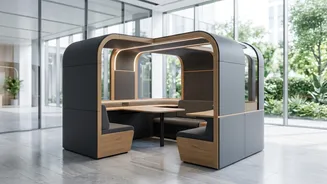
As AI handles more of the administrative and analytical heavy lifting, the purpose of the office is becoming more humancentric. The survey data shows that business performance and productivity are the office's primary mandate for 55% of occupiers, followed closely by collaboration and innovation at 52%. This means designing spaces that foster interaction, learning, and a strong company culture. The risk for companies is not AI itself, but failing to plan for its impact on their workforce and workplace strategy. Organizations that invest in creating dynamic, responsive environments where people can connect and create are the ones most likely to thrive in an AIdriven world.