



The Sun's Constant, Powerful Breath
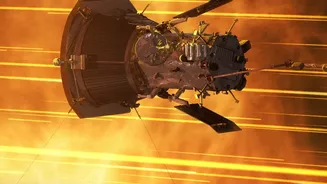
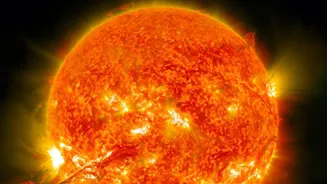
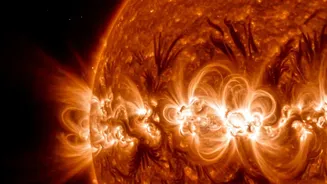
Imagine a constant, invisible river of particles flowing from the Sun in all directions. That's the solar wind. It's a stream of plasma—superheated gas made of charged particles like protons and electrons—that travels at incredible speeds. Most of the time,
this wind is a relatively gentle breeze, but sometimes, it becomes a gale. This 'fast' solar wind can travel at up to 800 kilometres per second. For decades, scientists have been trying to understand what accelerates this wind to such blistering speeds and where it comes from. Solving this mystery is a key objective for space agencies globally, as these high-speed streams can significantly impact our planet.
India's Sentinel at Lagrange Point 1
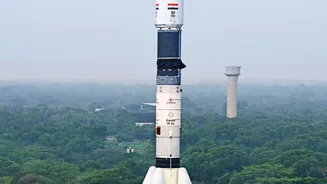
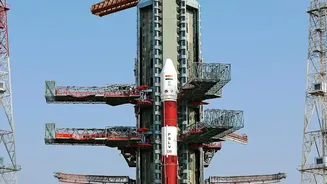
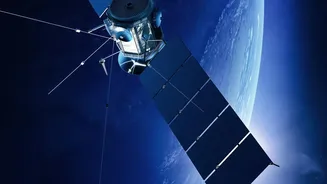
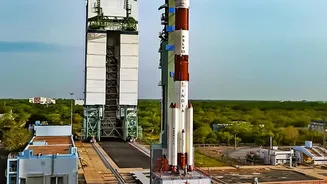
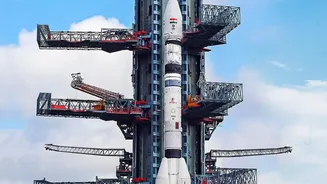
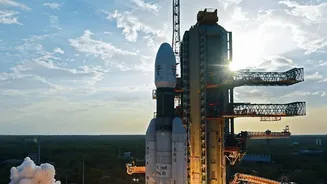
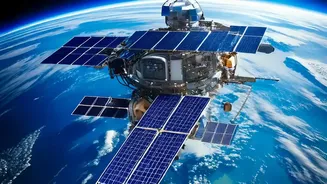
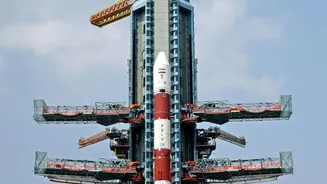
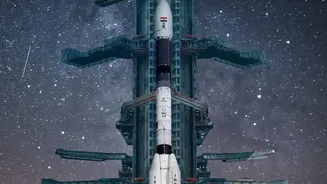
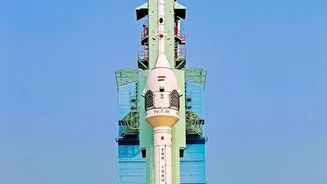
This is where ISRO's Aditya-L1 mission comes in. Launched in September 2023, the spacecraft is positioned at a special spot 1.5 million kilometres from Earth called Lagrange Point 1 (L1). Here, the gravitational pulls of the Sun and Earth balance out, allowing the observatory to have a continuous, uninterrupted view of the Sun. Aditya-L1 is equipped with seven sophisticated instruments, each designed to study a different aspect of our star. Two of these, the Aditya Solar wind Particle Experiment (ASPEX) and the Plasma Analyser Package for Aditya (PAPA), are specifically designed to 'taste' the solar wind directly, measuring its composition, speed, and direction.
What the First Findings Reveal
The data streaming back from Aditya-L1 is already painting a clearer picture. The ASPEX instrument, developed by the Physical Research Laboratory in Ahmedabad, has been successfully measuring solar wind ions, primarily protons and helium ions (alpha particles). Its two sensors provide a 360-degree view, allowing for precise measurements of the wind's direction and properties. Early data has shown distinct variations in the counts of these particles, offering a direct look at the solar wind's behaviour. Critically, scientists have noted that the ratio of alpha particles to protons can act as a key indicator for the arrival of Coronal Mass Ejections (CMEs)—massive eruptions of solar plasma that cause major space weather events. Observations from the PAPA payload have confirmed the impact of CMEs by detecting abrupt increases in electron and ion counts, aligning with data from other international satellites.
Connecting Wind to its Solar Source
The mission's findings are crucial for understanding the connection between phenomena on the Sun's surface and the space environment around Earth. High-speed solar wind is believed to originate from 'coronal holes'—cooler, less dense areas in the Sun's outer atmosphere, the corona, where the Sun's magnetic field lines open out into space. By combining Aditya-L1's direct particle measurements with imaging from its other instruments, scientists can trace these wind streams back to their specific source regions. During the intense geomagnetic storms of May and October 2024, data from Aditya-L1 was crucial. For instance, direct measurements from ASPEX confirmed that a sudden drop in solar wind pressure triggered unusual magnetic disturbances on the ground, particularly in the dawn sector. This provided new insights into how extreme solar conditions can alter Earth's magnetic field in unexpected ways.
Why Understanding Solar Wind Matters
This research isn't just academic. The solar wind and the CMEs it carries are the primary drivers of space weather. These solar outbursts can disrupt the satellites we rely on for communication and navigation, endanger astronauts, and even damage power grids on Earth. The May 2024 solar storm, the strongest in over two decades, provided a stark reminder of our vulnerability. Aditya-L1 played a key role, in collaboration with NASA spacecraft, in revealing why that storm was so powerful, discovering for the first time a massive magnetic reconnection event happening inside the CME itself. By improving our understanding of how the solar wind is accelerated and how it behaves, Aditya-L1 is helping to build more reliable models for forecasting space weather. This will give us better early warnings, allowing us to protect our critical technological infrastructure.