




The Red Planet’s Perfect Storm
Imagine a dust storm so vast it darkens the skies across an entire planet. On Mars, this isn't science fiction; it's a seasonal reality. While Martian winds aren't strong enough to tip a rover over, the dust they carry is the real killer. This fine particulate
matter can be lifted high into the thin atmosphere, blocking up to 99% of direct sunlight. For a machine that relies on solar panels for energy, this is a catastrophic scenario. The most famous victim was NASA's Opportunity rover. Designed for a 90-day mission, it explored Mars for nearly 15 years, surviving numerous smaller storms. But in 2018, a planet-encircling dust storm blotted out the sun for so long that Opportunity could no longer recharge its batteries. Its final communication on June 10, 2018, signalled a critical power loss before it fell silent forever, a stark lesson in the vulnerability of solar-powered exploration.
An Eye in the Sky
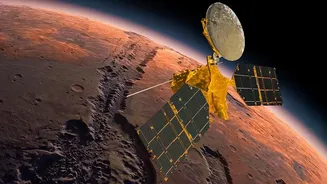
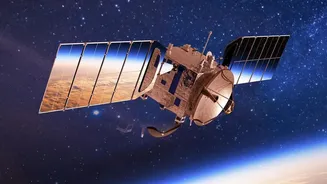
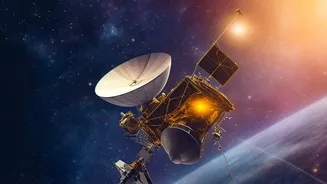
To prevent another loss like Opportunity, NASA relies on a team of robotic guardians in orbit around Mars. Spacecraft like the Mars Reconnaissance Orbiter (MRO), MAVEN, and Mars Odyssey act as an interplanetary weather service. The MRO, in particular, is the primary storm chaser. One of its key instruments, the Mars Color Imager (MARCI), functions like a weather satellite, capturing daily global maps of the planet. This allows scientists on Earth to spot dust storms as they begin and track their growth in near real-time. Another instrument, the Mars Climate Sounder, measures atmospheric temperatures, which helps predict how a storm might spread. Together, this orbital fleet provides a constant stream of data, offering the first line of defence for assets on the ground.
From Orbit to Action
The process is a remarkable example of interplanetary teamwork. When an orbiter like the MRO detects a burgeoning storm, the data is relayed back to Earth. Scientists at NASA's Jet Propulsion Laboratory (JPL) analyze the images and atmospheric data to forecast the storm's path and intensity. If a solar-powered asset, like the InSight lander was, is in the storm's path, the mission's operations team is alerted. They then develop a protection strategy and send new commands across millions of kilometers of space to the lander or rover. This early warning system is crucial; it gives the surface equipment precious time to prepare for the coming darkness. This system has been used multiple times, allowing rovers to hunker down and successfully ride out storms that could have otherwise been mission-ending events.
A Rover's Survival Guide
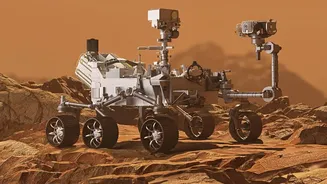
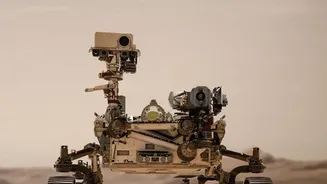
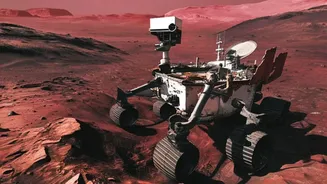
So what does a rover do when a dust storm is coming? The primary directive is to conserve energy. Mission controllers will command the rover to halt all non-essential activities. Scientific observations stop, and driving is suspended. The rover essentially goes into a low-power hibernation mode, using only enough energy to run its critical heaters and maintain core functions. The goal is to stretch the battery life for as long as possible until the sky clears. This is in contrast to nuclear-powered rovers like Curiosity and Perseverance, which are largely immune to dust storms because they don't rely on sunlight for power. While they still benefit from weather monitoring for planning operations, for solar-powered machines, these forecasts are a true lifeline, the key difference between survival and silence.