






Understanding Low-Impact Cardio
Low-impact cardio refers to any rhythmic physical activity that raises your heart rate while minimizing stress and shock on your joints. Unlike high-impact exercises such as running, these movements keep at least one foot on the ground or use water or a machine
for support. This makes them an ideal choice for people with joint pain, arthritis, or those recovering from an injury. But their benefits are universal; they allow for consistent, long-term training with a lower risk of injury, which is key to sustained cardiovascular health. These exercises strengthen your heart, improve circulation, and can help lower blood pressure, proving you don't need to endure jarring motions to achieve significant health benefits.
Swimming: The Ultimate Full-Body Workout
Swimming is often hailed as one of the best low-impact exercises, and for good reason. The buoyancy of water supports your body weight, removing almost all stress from your joints. This makes it an excellent option for people of all ages and physical abilities. As an aerobic exercise, swimming strengthens the heart muscle, improves circulation, and can lower blood pressure. It engages nearly every major muscle group, providing a comprehensive workout that builds both endurance and strength. Regular swimming not only boosts cardiovascular fitness but also increases lung capacity as your respiratory system works to meet the body's oxygen demands.
Cycling: A Powerful, Joint-Sparing Ride
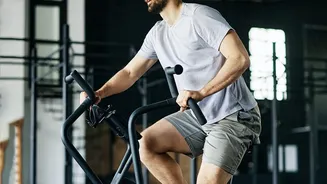
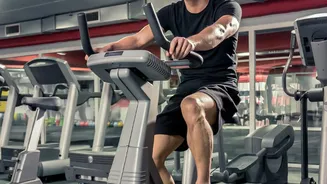
Whether you're on a stationary bike or cruising outdoors, cycling is a fantastic low-impact way to get your heart pumping. The smooth, circular motion of pedalling avoids the impact that can lead to knee and hip pain associated with running. Research shows that cycling can actually be protective, with studies linking it to a lower risk of developing knee arthritis. It effectively raises your heart rate to improve cardiovascular efficiency, builds lower body strength in your quadriceps and hamstrings, and can be easily adjusted to match your fitness level. For those with back concerns, a recumbent bike offers additional support while still delivering a great workout.
Elliptical Training: Glide to Good Health
The elliptical machine is a gym staple designed specifically for low-impact cardio. It mimics the motion of running but your feet remain on the pedals, eliminating jarring force on your joints. This fluid movement provides a great aerobic workout that strengthens your heart, lungs, and muscles, improving stamina and endurance. Many ellipticals have moveable handlebars, allowing you to engage your upper body for a full-body workout. This makes it an efficient tool for burning calories, improving circulation, and boosting overall heart health without the wear and tear.
Rowing: A Full-Body Cardio Challenge
Don't overlook the rowing machine. It delivers a high-intensity workout that's surprisingly low-impact. The rowing stroke engages about 86% of your body's muscles, including your legs, core, back, and arms, making it one of the most efficient exercises available. This comprehensive muscle engagement forces your heart to work hard to supply oxygenated blood throughout the body, significantly improving cardiovascular strength and function. Since the movement is seated and fluid, it places minimal stress on the ankles, knees, and hips, making it a safe yet powerful option for boosting heart health.
Brisk Walking: Simple, Accessible, and Effective
Never underestimate the power of a brisk walk. It is one of the most accessible forms of low-impact cardio, requiring nothing more than a good pair of shoes. To qualify as a cardiovascular workout, your pace needs to be brisk enough to raise your heart rate and make you breathe harder. Studies show that walking at a moderate intensity for at least 150 minutes per week can reduce the risk of cardiovascular disease. It strengthens muscles around the joints, improves circulation, and is a sustainable activity for all fitness levels.