






The Silent Crisis Beneath Our Cities
Beneath the concrete and steel of India's urban centres lies a vital, invisible resource: groundwater. For decades, this subterranean water has been the lifeline for homes, businesses, and industries, supplementing often-inadequate municipal supplies.
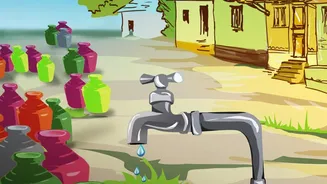
But this reliance has come at a steep cost. Rapid, unplanned urbanisation has created vast impermeable surfaces like roads and buildings, preventing rainwater from naturally seeping into the ground and replenishing the aquifers below. Simultaneously, the over-extraction of water to meet the demands of a booming population has caused water tables to plummet. Cities like Hyderabad and Delhi are already experiencing critical levels of depletion, with some areas having extracted more than their entire annual replenishable resource. This not only leads to water scarcity but also increases pumping costs and energy consumption, creating a vicious cycle of resource drain.
An Old Idea for a Modern Problem
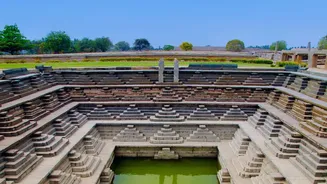
The solution, in principle, is simple and ancient: rainwater harvesting (RWH). The concept involves capturing the rain that falls on surfaces—primarily rooftops—and directing it either into storage tanks for immediate use or into recharge pits to replenish groundwater. In an urban context, this decentralised approach holds immense power. Capturing and managing rainwater where it falls helps reduce dependence on over-stressed municipal sources and distant reservoirs, mitigates urban flooding by easing the burden on stormwater drains, and directly counters the primary cause of depletion by recharging aquifers. Government bodies like the Central Ground Water Board and initiatives like the Jal Shakti Abhiyan have consistently promoted RWH as a key strategy for water security.
Why 'Low-Cost' is the Decisive Factor
While rainwater harvesting is not a new idea, its successful implementation on a national scale hinges on two crucial words: low cost. For widespread adoption to occur, the technology must be accessible, affordable, and easy to maintain for the average homeowner, residential society, and small business—not just for large new developments or government projects. High-end, complex systems with significant upfront investment create a barrier to entry. The most effective approach relies on simple, proven technologies: PVC pipes for channeling water from rooftops, basic filtration systems to remove debris, and either affordable storage tanks or scientifically designed recharge pits filled with gravel and sand. These low-cost models make it feasible for RWH to become a grassroots movement, transforming millions of individual rooftops into a collective, city-spanning water resource. The affordability ensures that compliance with harvesting mandates, which are now in place in many cities, is not an undue financial burden.
Overcoming the Hurdles to Adoption
Despite the clear benefits and governmental push, several challenges hinder the universal adoption of RWH. A significant portion of the population remains unaware of the long-term benefits or is misinformed about the costs and complexity involved. Even where mandates exist, enforcement can be inconsistent, with systems installed merely to obtain a compliance certificate rather than for genuine function. Poorly designed or maintained systems can also be ineffective or, worse, lead to contamination of groundwater. Overcoming these obstacles requires a multi-pronged approach. Sustained public awareness campaigns are needed to shift the perception of RWH from a compliance chore to a vital tool for community water security. This must be paired with stricter enforcement of existing laws, skill development for certified plumbers and installers, and perhaps financial incentives like property tax rebates to encourage proper installation and maintenance.