







The New Prime Time for Dining
In urban India, the hours between 11 p.m. and 3 a.m. are no longer just for sleeping; they represent a new, bustling prime time for the food industry. Over the past year, late-night food delivery volumes have doubled, signaling a fundamental shift in consumer
habits. This isn't merely a fleeting trend sparked by occasional events; it reflects a deeper societal change. While major events like the FIFA World Cup have caused demand to surge by 12-15% in short periods, the underlying growth has been steadily building. Food delivery platforms have noted that the late-night ordering window is growing significantly faster than traditional dinner periods, establishing what many now call the 'fourth meal' economy. This surge is seen not just in metros like Bengaluru, Hyderabad, and Mumbai, but also in emerging cities such as Surat, Thiruvananthapuram, and Patna, indicating a nationwide phenomenon.
Drivers of the Midnight Boom
Several powerful forces are fueling this after-hours appetite. A key driver is the evolving lifestyle of India's young, urban population. Changing work dynamics, including late-night shifts and the flexibility of remote work, mean that for many professionals, students, and gig economy workers, the day ends much later. The chairman of McDonald's India (North and East) noted that the sleep timings for young consumers have shifted to as late as 2 or 3 a.m., moving the traditional 9 p.m. dinner time with it. This demographic also has more disposable income and a greater preference for convenience. The rise of streaming entertainment and late-night binge-watching culture further contributes to this trend, turning a quiet night in into a dining occasion.
The Supply Side Scramble
Businesses are rapidly adapting to monetize these midnight munchies. Quick-service restaurant (QSR) giants are extending their hours to meet the demand. Domino's has notified customers that many of its stores now take orders until 3 a.m., while about 20% of McDonald's outlets in key northern cities are also open late. The real revolution, however, is happening in the form of cloud kitchens, also known as ghost or dark kitchens. These delivery-only operations are perfectly suited for the late-night market, as they have lower overheads and can operate with skeletal staff, improving profitability. Companies like Rebel Foods, which operates brands like Faasos and Behrouz Biryani, report that 20-25% of their total orders now come in the late-night window.
What's on the Late-Night Menu?
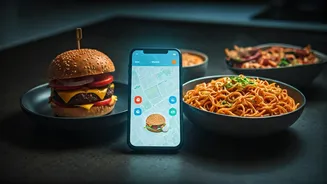
When hunger strikes after midnight, consumers overwhelmingly reach for comfort food. According to data from Swiggy, pizzas and burgers are the most-ordered items during the 11 p.m. to 3 a.m. window. Biryani and wraps are also incredibly popular choices. However, the growth story isn't limited to main courses. Desserts are a booming category, with late-night orders for items like ice cream and cake growing by 25-35% annually in major urban markets. This is driven by a culture of 'affordable indulgence', where a small treat serves as a reward after a long day. Even packaged goods are seeing a spike, with demand for items like ice cream and frozen snacks on quick-commerce platforms jumping by up to 40% during late-night hours.
The Economic Reality
This trend is more than just a convenience; it's a significant economic driver. For restaurants, extending hours allows them to better utilize fixed assets and significantly improve profitability with minimal extra cost. It creates new revenue streams in what was once a dead period. The entire ecosystem benefits, from the cloud kitchens adding shifts to the delivery partners who can earn more and work on less-congested roads. While late-night deliveries still form a moderate share compared to daytime volumes and face logistical challenges like rider availability, the growth is undeniable. With India's overall food services market projected to grow from $84 billion in FY25 to as much as $131 billion by FY30, the after-hours segment is a crucial part of that expansion.