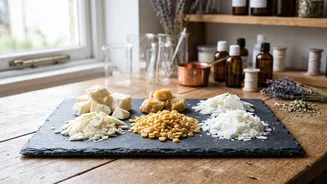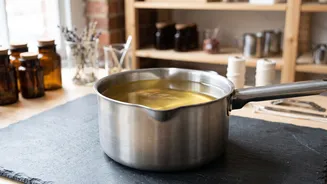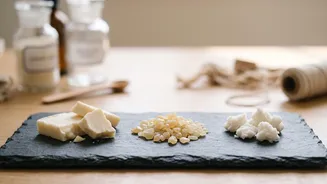




The magic of a homemade scented candle lies in its glow and fragrance. But the secret to a perfect creation is choosing the right wax. This single ingredient dictates burn time, scent strength, and appearance, forming the very foundation of your candle.
Paraffin Wax: The Traditional Performer
Paraffin has been the go-to candle wax for over a century for good reason: it delivers consistent results and a powerful fragrance. As a byproduct of petroleum refining, it is affordable and widely available in various melt points, making it suitable for everything from container candles to detailed pillars. Its main strength is its excellent scent throw, as its molecular structure can hold a high concentration of fragrance oil and release it effectively when burned. This makes it a favorite for those who prioritize a strong, room-filling aroma. However, its origin as a fossil fuel byproduct is a significant drawback for eco-conscious creators, and it can produce more soot than natural waxes if not wicked properly.
Soy Wax: The Popular Natural Choice
Developed in the 1990s as an alternative to paraffin, soy wax is made from hydrogenated soybean oil, a renewable resource. It has become a favorite in the DIY community for its clean and slow burn, often lasting longer than paraffin candles of the same size. Soy is biodegradable and known for producing minimal soot, which appeals to health and environment-conscious consumers. While it has a good scent throw, it's generally considered more subtle than paraffin, releasing fragrance more gently and gradually. Beginners should be aware that soy wax can be sensitive to temperature, sometimes resulting in a cosmetic issue known as 'frosting' (white patches) or rough tops after burning.
Beeswax: The Luxurious Classic
As one of the oldest materials used for candles, beeswax is a completely natural product harvested from beehives. It is prized for its uniquely long, slow, and clean burn, producing a bright, warm flame with very little smoke or soot when wicked correctly. Unfiltered beeswax has a beautiful natural honey scent all on its own. Its high melting point contributes to its extended burn time, often lasting significantly longer than other waxes. The main downsides are its high cost and the fact its natural aroma can compete with added fragrances. Its dense structure also means it doesn't hold and release added scents as strongly as other waxes, making its fragrance throw more modest.
Coconut Wax: The Premium Modern Option
A relative newcomer, coconut wax is celebrated for its creamy, smooth appearance and excellent performance. Derived from hydrogenated coconut oil, it is a sustainable, renewable resource that offers a clean, slow burn. Its biggest advantage is its superior scent throw, both when the candle is cold and when it's burning. Coconut wax binds exceptionally well with fragrance oils and releases scent effectively. However, pure coconut wax is very soft with a low melting point, so it is almost always sold as a blend with other, harder waxes (like soy or apricot) to give it structure. This premium performance comes at a higher cost, making it one of the more expensive options on the market.
A Note on Blends and Palm Wax
Many of the best waxes for beginners are actually blends, such as a mix of coconut and soy wax. These are formulated to combine the best properties of each wax—for instance, the clean burn of soy with the excellent scent throw and smooth tops of coconut wax. Another wax you might encounter is palm wax, which creates a unique crystalline or feathered finish. While it's a plant-based wax that burns cleanly, it is highly controversial due to its link to deforestation and habitat destruction in Southeast Asia. Many candle-making suppliers have discontinued it due to these sustainability concerns. If you choose to explore palm wax, it is critical to seek out sources certified by the Roundtable on Sustainable Palm Oil (RSPO) to ensure it comes from a more responsible supply chain.