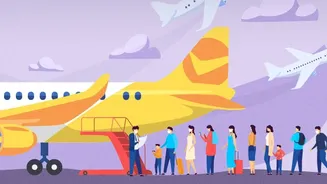







The Deplaning Race You Can't Afford to Lose
We’ve all been there: your plane lands, but your journey is far from over. You have another flight to catch, and the clock is ticking. In this high-stakes race, the first hurdle is simply getting off the aircraft. The process of deplaning can feel agonizingly
slow, as passengers in the rows ahead slowly gather their belongings from overhead bins and shuffle down the aisle. When your connection time is under an hour, this delay isn’t just an inconvenience; it can be the difference between continuing your journey smoothly and finding yourself stranded at the customer service desk trying to rebook a missed flight. Especially in large hub airports in India and abroad, where your next gate could be a terminal-wide sprint away, every single minute saved is invaluable. Those initial moments after the seatbelt sign turns off are often the most critical.
The Simple Math of the Aisle
The advantage of a forward seat isn't just a feeling; it's a measurable benefit. While the exact time varies based on the aircraft size and how quickly people move, a common rule of thumb among frequent travellers is that it can take about 30 seconds per row to deplane. If you are sitting in row 30, you could be waiting for 15 minutes after the doors open just to get into the aisle. Some analyses suggest that being at the very back can add as much as 20 minutes to your exit time compared to those in the front. When your layover is tight, saving 10 to 15 minutes is a game-changer. That’s extra time to navigate a confusing airport, clear a security checkpoint, or make it to the boarding gate just before it closes. For international flights, getting off the plane first also means you are one of the first to arrive at the immigration and customs queues, potentially saving you even more time.
How to Secure Your Spot
Getting a seat near the front doesn’t always happen by chance. The best strategy is to select your seat as early as possible when you book your ticket. Many airlines charge a fee for advance seat selection, especially for preferred spots at the front of the economy cabin. If you are facing a short connection, consider this small fee a valuable investment in your peace of mind. If you are unable to book a forward seat initially, don't lose hope. You can keep checking the seat map on the airline’s app leading up to your flight, as better seats may open up if other passengers change their plans. As a final attempt, you can politely speak with the gate agent before your first flight. Explain your situation and ask if it's possible to be moved to an unoccupied seat closer to the front. If the flight isn't full, they are often willing to help passengers in a tight spot.
More Than Just a Seat
While a forward seat is a powerful tool, it works best as part of a broader strategy for navigating tight connections. The single most effective tactic is to travel with carry-on luggage only. This eliminates the risk of your checked bag not making the transfer and saves you from waiting at the baggage carousel at your final destination. Another pro tip is to discreetly inform a flight attendant about your tight connection. They might be able to offer assistance, and in some cases, flight crews will make an announcement asking other passengers to remain seated to allow those with connections to deplane first. Finally, use technology to your advantage. Before you even land, use the airline and airport apps to check your connecting gate number and familiarize yourself with the airport map. Knowing whether you need to take a shuttle or just walk down the concourse can save you precious minutes of confusion.
The Checked Luggage Caveat
It’s important to note one major exception to this rule: checked baggage. If you have bags checked through to your final destination on a single ticket, then getting off the plane quickly remains a huge advantage. However, if you are on separate tickets or on an itinerary that requires you to collect your luggage and re-check it, the time you save deplaning might be lost waiting at the baggage claim. This is why travelling with only a carry-on is the gold standard for short layovers. If you absolutely must check a bag, ensure your flights are booked on a single itinerary with one airline or partner airlines. In this case, the airline is responsible for transferring your bag and rebooking you if a delay causes you to miss your connection. But when it comes to the physical act of you making the flight, that forward seat remains your best bet.