






A Voyage to an Ocean World
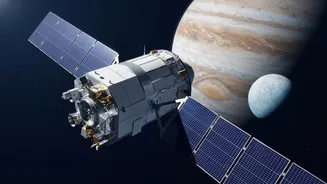
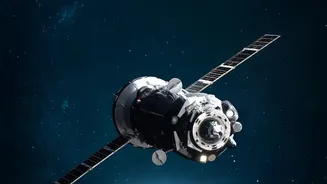
Launched in October 2024, the Europa Clipper is currently two years into its five-and-a-half-year trek to the Jupiter system. As of September 2026, the spacecraft is hurtling through space, preparing for a critical manoeuvre. In December 2026, it will
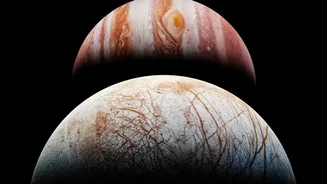
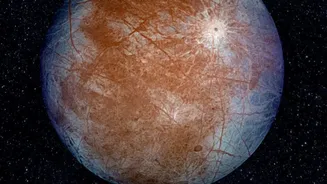
swing by Earth for a gravity assist—a slingshot manoeuvre that will give it the final burst of speed needed to reach its destination by April 2030. This mission represents NASA's most advanced effort to explore an ocean world. Europa, slightly smaller than Earth's moon, is one of the most compelling targets in our solar system because scientists have strong evidence that a vast, salty liquid water ocean is hidden beneath its frozen crust. This ocean may contain more than twice the amount of water as all of Earth's oceans combined.
Why This Icy Moon Captivates Scientists
The allure of Europa lies in its potential for habitability. For life as we know it to exist, three key ingredients are required: liquid water, essential chemical elements (organics), and a source of energy. Europa appears to have all three. Data from previous missions, like Galileo, hinted at the presence of a conductive fluid—likely a salty ocean—beneath the ice. The energy could come from tidal forces exerted by Jupiter's immense gravity, which flexes and heats the moon's interior, potentially creating hydrothermal vents on the seafloor similar to those on Earth that teem with life. The final ingredient, chemistry, could be supplied by materials from the surface mixing with the ocean below. The Clipper mission is designed to investigate each of these aspects in unprecedented detail.
A Toolkit for Cosmic Discovery
To peer beneath Europa's icy shell, Clipper is outfitted with a sophisticated suite of nine scientific instruments. Perhaps most crucial is an ice-penetrating radar called REASON, which will act like a geological sonar, mapping the thickness of the ice shell and searching for pockets of liquid water, or even the ocean itself. Spectrometers will analyze the composition of the moon's surface and tenuous atmosphere, looking for the chemical signatures of salts and organic molecules. A magnetometer will measure the magnetic field around Europa with high precision, which will help confirm the existence, depth, and salinity of the subsurface ocean. These instruments, protected within a radiation-proof vault, will work in concert to build a comprehensive picture of this mysterious world.
Searching for Habitability, Not Life
It is important to note that Europa Clipper is not a life-detection mission. Its primary goal is to determine if the conditions for life could exist. It will assess the moon’s potential habitability. The spacecraft will not land but will instead perform nearly 50 close flybys of Europa once it settles into orbit around Jupiter. During these passes, some as low as 25 kilometres above the surface, it will scan almost the entire moon. Scientists are particularly hopeful that the spacecraft might be able to fly through and sample plumes of water vapor that are believed to erupt from the surface, offering a direct taste of the material churning beneath the ice. Analyzing these plumes could provide invaluable clues about the chemistry of the hidden ocean.