
Nepal: The Himalayan Neighbour
Thanks to the 1950 Indo-Nepal Treaty of Peace and Friendship, Nepal is one of the most accessible international destinations for Indians. No visa is required for Indian citizens to enter Nepal by road. The primary requirement at land border crossings
is a valid document proving your Indian nationality. While a passport is the most reliable, an original Voter ID card is also widely accepted. Some sources suggest an Aadhaar card may also be accepted at land borders, but it is best to carry a passport or Voter ID to be safe. For children under 15, a school ID card can suffice. The most popular land border crossing is Sonauli in Uttar Pradesh, which provides excellent connectivity to Pokhara and Kathmandu. Other major crossings include Raxaul in Bihar and Panitanki in West Bengal. If you're taking your own car, you'll need its registration certificate, your driving license, a pollution certificate, and insurance papers. At the border, you will have to obtain a temporary vehicle permit, known as a 'Bhansar', for a nominal fee.
Bhutan: The Land of the Thunder Dragon
Bhutan offers visa-free entry to Indian citizens, but the process requires a permit instead of a visa. To enter Bhutan by road, you must obtain an 'Entry Permit' from the Immigration Office of the Royal Government of Bhutan at Phuentsholing, the border town adjacent to Jaigaon in West Bengal. The required documents are a valid Indian Passport with at least six months of validity or an original Voter ID card. Aadhaar and PAN cards are not accepted for entry. This entry permit allows travel to Thimphu and Paro. To travel to other areas like Punakha or Bumthang, you will need a separate 'Route Permit' from the Immigration Office in Thimphu. Indian tourists are also required to pay a Sustainable Development Fee (SDF) of INR 1,200 per person, per night. Children between 6 and 12 get a 50% concession, while those below 5 are exempt. For self-drive trips, you'll need a vehicle permit from the transport office in Phuentsholing, which requires your car's original registration, insurance, and your driving license.
Myanmar: The Golden Land Awaits
Unlike Nepal and Bhutan, Myanmar requires Indian citizens to obtain a visa before travel. However, the exciting development is the opening of land borders for tourists. The India-Myanmar Friendship Bridge connects Moreh in Manipur, India, to Tamu in Myanmar, making overland entry possible for those with a valid visa. The Rih Khaw Dar-Zokhawthar crossing is another option. Indian tourists can apply for an e-Visa online, which is a relatively straightforward process. Once you have your e-Visa, you can enter through these land checkpoints. Previously, special permits and packaged tours were often necessary, but recent updates suggest that independent travel by road is becoming more feasible for those with the correct visa. The Free Movement Regime (FMR) allows tribes residing near the border to travel 16 km into either country without a visa, but this does not apply to tourists travelling further into the country. Always check the latest border status before your trip, as conditions can change.
Planning Your Budget Road Trip
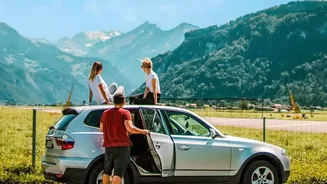
A cross-border road trip requires careful planning to stay within budget. Fuel is a major expense, so choose a fuel-efficient vehicle. For accommodation, look for homestays and budget guesthouses, which are plentiful in Nepal and Bhutan. Eating at local restaurants instead of tourist-focused establishments will not only save you money but also offer a more authentic culinary experience. In Nepal, a thali can be a hearty and inexpensive meal. When preparing your vehicle, ensure it is in excellent condition. Carry a basic toolkit, a puncture repair kit, and a first-aid kit. While major routes are generally in good shape, mountain roads can be unpredictable. It is also wise to have comprehensive travel insurance that covers road travel in your destination country. Finally, carry enough local currency for areas where digital payments may not be available, but also be aware of any restrictions on the amount of cash you can carry across the border.