




Anxiety, Not Disobedience
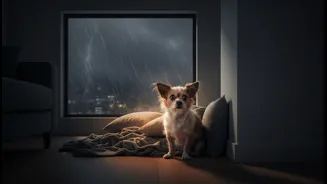
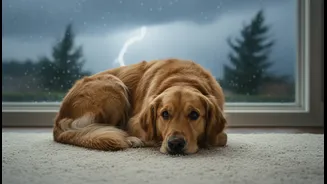
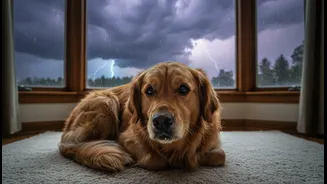
The first thing to understand is that your dog isn't misbehaving; they're terrified. Storm phobia, or astraphobia, is a genuine panic response affecting up to a third of dogs. It’s triggered by a sensory onslaught that humans barely notice: dropping barometric
pressure, the smell of ozone, and the buildup of static electricity in the air that can cause uncomfortable shocks on their fur and sensitive noses. These signals often begin long before we hear the first thunderclap, which is why your dog might show signs of distress—pacing, panting, hiding, or trembling—while the sky is still clear. This isn't a choice; it's an overwhelming physiological response to a perceived threat.
Why Punishment Makes Fear Worse
When you punish a dog for showing fear, you don't eliminate the fear itself. You simply add a new threat to the equation: you. Scolding, yelling, or physically correcting your dog only confirms their belief that something terrible is happening. From their perspective, the storm makes them feel scared, and now the person they trust for safety is also acting scary. This creates a powerful and damaging association. The dog learns that storms not only bring frightening sounds and sensations but also the anger and disapproval of their owner. This erodes trust and can significantly worsen their overall anxiety, making future storms even more stressful for everyone.
The Science of Negative Association
This process is rooted in a psychological principle called classical conditioning. The storm is the initial trigger that creates a fear response. When punishment is added, the dog's brain links the storm, the fear it feels, and the owner's reaction into one negative package. Instead of learning not to be afraid, the dog learns that storms are an event to be doubly feared. Animal behaviorists stress that you cannot reinforce an emotion like fear with comfort. Petting a scared dog or speaking in a calm voice doesn't reward the anxiety; it provides reassurance and security. Punishment, on the other hand, inhibits behavior through stress, which looks like calm but is actually a state of high alert and distress.
What to Do Instead: Create a Safe Haven
Instead of punishment, experts advise creating an environment of safety and comfort. Allow your dog to retreat to a place where they feel secure. This could be a crate (with the door left open), a closet, a basement, or even a bathtub, where porcelain and tile may help ground static electricity. You can make this space more appealing by adding soft bedding and playing calming background noise like classical music, a television, or a white noise machine to help muffle the thunder. Your calm presence is also a powerful tool. Sit with your dog, offer gentle petting if they seek it, and act as if everything is normal. Your relaxed demeanor signals to them that there is no real danger.
Long-Term Solutions: Counter-Conditioning
For a long-term fix, behaviorists recommend a strategy called counter-conditioning. The goal is to change your dog's negative emotional response to a positive one. This involves pairing storm-related triggers with something your dog loves, like high-value treats or a favorite game. You can practice this during the off-season by playing recordings of thunderstorms at a very low volume. As the sound plays, offer treats or start a fun game. Over many short sessions, you can gradually increase the volume, always ensuring your dog remains calm and happy. Over time, this process helps rewire their brain to associate the sound of thunder with positive experiences, reducing their fear.
When to Seek Professional Help
While these strategies can be highly effective, severe phobias may require extra support. If your dog's anxiety is extreme, leading to destructive behavior or self-harm, it's important to consult your veterinarian or a certified animal behaviorist. They can rule out any underlying medical issues and recommend a comprehensive plan. This might include anxiety-reducing garments like a Thundershirt, calming pheromone diffusers, or, in some cases, anti-anxiety medication to help your dog cope safely during storms while you work on behavior modification.