

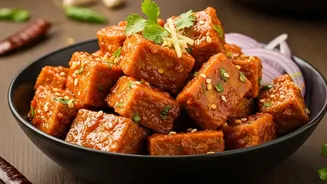

The Soul of Rajasthan on a Plate
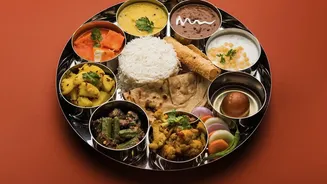
The Rajasthani thali is not just a meal; it is a complete culinary map of the region. Shaped by an arid climate and a history of warrior kings, the cuisine relies heavily on lentils, gram flour (besan), milk, and ghee. Due to the scarcity of fresh vegetables,
many dishes were ingeniously created to last longer without refrigeration. This results in a platter that is rich, diverse, and deeply satisfying. A traditional thali is a balanced feast, offering a spectrum of flavours—spicy, sweet, tangy, and savoury—all on one plate, reflecting the colourful culture of the land itself.
Deconstructing the Vegetarian Thali
At the heart of any authentic Rajasthani thali is Dal Baati Churma. The 'baati' is a hard, unleavened wheat ball baked over coals until crisp, which is then broken and drenched in ghee. It is served with 'dal', a flavourful mix of different lentils. 'Churma' completes the trio; it is a sweet, crumbly powder made from crushed baatis mixed with ghee and sugar or jaggery. Other essential dishes you will find include Gatte ki Sabzi, where steamed gram flour dumplings are simmered in a tangy yoghurt-based curry. You might also encounter Ker Sangri, a unique dish made from dried desert beans and berries, offering a tangy, peppery taste that is distinctly Rajasthani.
Beyond the Thali: The Market Maze
While the thali offers a wholesome, sit-down meal, the streets and markets of cities like Jaipur, Jodhpur, and Udaipur hold another world of flavour. Here, food is fast, fresh, and fried to perfection. Exploring the market snacks, or 'namkeen', is essential for a complete Rajasthani food experience. These snacks are often enjoyed in the evenings, served with various chutneys that cut through the richness. The bazaars of the old cities, like Johari Bazaar and Bapu Bazaar in Jaipur, are treasure troves where shopping for local crafts and sampling street food go hand in hand.
Must-Try Savoury Market Snacks
No food tour of Rajasthan is complete without Pyaaz Kachori. This deep-fried pastry, filled with a spicy onion mixture, is a beloved breakfast item and evening snack, especially famous in Jodhpur and Jaipur. Another fiery favourite is the Mirchi Vada, a large green chilli stuffed with a spiced potato filling, coated in batter, and fried. For something a little different, look for Kadhi Samosa, where a hot samosa is crushed and dunked into a tangy kadhi, then topped with onions and chutneys. These snacks are designed to be an explosion of texture and flavour in every bite.
Sweet Endings and Refreshing Sips
Rajasthanis have a profound love for sweets, and the markets are filled with them. Ghevar is a disc-shaped sweet made from flour and soaked in sugar syrup, often prepared during festivals. Mawa Kachori is another decadent treat, a pastry filled with a sweet mixture of solidified milk (khoya) and nuts. To wash it all down, there is nothing better than a tall glass of Makhaniya Lassi. Particularly famous in Jodhpur, this is a rich, creamy buttermilk drink, often topped with a thick layer of malai (cream) and flavoured with saffron. It’s a cooling and delicious counterpoint to the spicy snacks.
Tips for an Authentic Experience
To find the most authentic food, follow the locals. Look for the small, bustling eateries known as 'bhojanalayas' rather than flashy tourist restaurants. These places often specialise in home-style thalis and have been serving the same recipes for generations. When in the markets, don't be afraid to try the food from street carts that have a steady stream of customers. Ask for dishes to be 'medium spicy' if you are not accustomed to the heat. Embracing the local way of eating—whether it's dipping your baati in dal with your hands or enjoying a kachori standing by the roadside—is all part of the unforgettable experience.