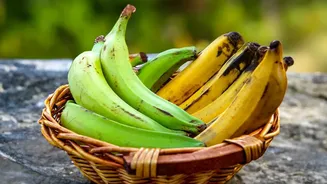






That bunch of bananas on your counter tells a fascinating story of transformation. As they shift from green to yellow to spotty brown, they aren't just changing colour—their nutritional profile is changing, too. So, which one is best for you?
The Green Banana: A Starchy Start
An unripe,
green banana is firm, a little waxy, and not very sweet. This is because its carbohydrates are mostly in the form of resistant starch. Think of resistant starch as a type of dietary fibre. It bypasses digestion in the small intestine and travels to the large intestine, where it becomes food for your beneficial gut bacteria. This fermentation process is great for your gut microbiome. Because it's digested so slowly, it leads to a much slower, lower rise in blood sugar levels, making it a good choice for those managing blood sugar. The high resistant starch content can also help you feel fuller for longer. The downside? For some people not used to high amounts of this starch, green bananas can cause a bit of gas or bloating.
The Yellow Banana: Sweet, Soft, and Simple Energy
As a banana ripens to a vibrant yellow, a natural enzymatic process kicks in, converting the resistant starch into simple sugars like glucose, fructose, and sucrose. This is why yellow bananas are noticeably sweeter, softer, and easier to digest for most people. While the fibre content decreases slightly, a medium yellow banana is still a good source of potassium, vitamin B6, and vitamin C. The sugars are more readily available, making a yellow banana an excellent source of quick energy, perfect for a pre-workout or post-workout snack. It has a higher glycemic index than a green banana, meaning it will raise blood sugar more quickly, but for most people without diabetes, this isn't a concern.
The Spotted Banana: Peak Sweetness and Antioxidants
When a banana develops brown spots, it's at its sweetest. At this stage, nearly all the starch has been converted to sugar. These bananas are soft and intensely flavoured, making them ideal for baking things like banana bread. While the sugar content is at its peak, the ripening process also increases the levels of certain antioxidants. These compounds help protect your body's cells from damage. Some research also suggests that the brown spots indicate the formation of a substance called Tumor Necrosis Factor (TNF), which may help in boosting the immune system. However, because they are almost pure sugar at this point, they have the highest glycemic index and will cause the quickest spike in blood sugar.
How Starch and Sugar Affect Digestion
The transition from starch to sugar directly impacts how your body handles a banana. The resistant starch in green bananas acts like a prebiotic, fuelling your gut but potentially causing digestive rumbles for some. As that starch turns into simple sugars in yellow and brown bananas, they become much easier and quicker for your digestive system to process. People with sensitive stomachs may find ripe bananas gentler and less likely to cause issues like bloating. Conversely, the higher fibre and resistant starch in green bananas can promote regular bowel movements and add bulk. The choice often comes down to your individual digestive comfort and health goals.
Which Banana Should You Choose?
There is no single 'healthiest' banana—the best choice truly depends on your needs. For blood sugar management, sustained energy, and gut health benefits from prebiotics, a green or slightly-green banana is your best bet. For a quick energy boost before exercise or an easily digestible snack, a perfectly yellow banana is ideal. And for maximum sweetness in baking or a potential antioxidant boost, don't shy away from those spotty, overripe bananas. Ultimately, all bananas offer valuable nutrients like potassium and vitamin B6. You can even buy them green and eat them throughout the week, benefiting from each unique stage of ripeness.