




A New Vision for the Final Frontier
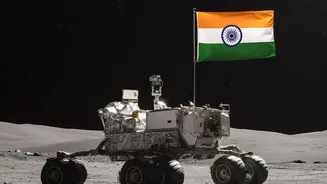
For decades, the Indian space program has been a symbol of national pride and self-reliance, using space technology for the country's development. From humble beginnings in the 1960s, ISRO has earned global acclaim for its cost-effective and groundbreaking
missions, including sending a probe to Mars on its first attempt. Now, India is entering a new era. The focus is expanding from purely utilitarian applications to ambitious goals like human spaceflight, deep space exploration, and establishing India as a major commercial player in the global space economy. This shift is powered by a dual strategy: ISRO spearheading complex, exploratory missions while new government policies empower a booming private sector.
The Flagship Missions on the Horizon
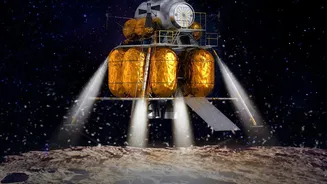
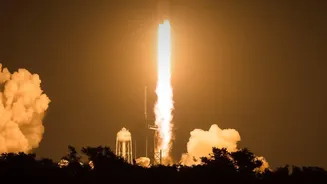
Headlining ISRO's ambitious schedule is the Gaganyaan programme, India's first human spaceflight mission. The goal is to send a crew of Indian astronauts into a 400 km orbit for three days and return them safely to Earth. While the crewed flight is now anticipated around 2027, a series of crucial uncrewed test flights are planned to begin in late 2026. These tests are vital for validating the crew module, life support systems, and safety protocols to ensure astronaut safety above all else. Beyond low Earth orbit, ISRO is setting its sights on our planetary neighbors. Shukrayaan-1, India's first mission to Venus, is planned for a 2028 launch. It aims to study the planet's dense atmosphere and map its surface, seeking to understand why a planet so similar to Earth turned into a scorching hothouse. Other major projects include Chandrayaan-4, a mission to bring back samples from the Moon, and the NISAR satellite, a powerful Earth-observation mission developed jointly with NASA that launched in July 2025 to monitor changes in Earth's land and ice.
Fueling the Fire: The Private Sector Takes Flight
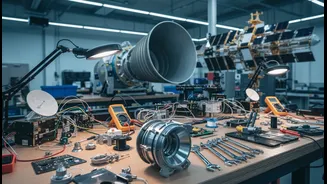
Perhaps the most significant shift in India's space story is the rise of a vibrant private sector. The Indian Space Policy of 2023 was a game-changer, formally opening the doors for private companies to participate in everything from building satellites and rockets to operating them. This policy, along with the establishment of IN-SPACe as a regulatory body, has unleashed a wave of innovation. Since the sector was opened in 2020, the number of space startups has surged from a handful to over 400. Companies like Skyroot Aerospace and Agnikul Cosmos are making headlines. Skyroot recently became the first Indian private company to launch a rocket into orbit with its Vikram-1 vehicle, a historic achievement. Agnikul has developed 3D-printed rocket engines and established India's first private launchpad. Other startups like Pixxel are building constellations of advanced Earth-observation satellites, while Dhruva Space offers full-stack satellite solutions. This private ecosystem is not just a sideshow; it's a core component of India's strategy, attracting hundreds of millions of dollars in investment and creating a high-tech job market that is even drawing experienced talent from ISRO itself.
The $44 Billion Ambition
The end goal of this public-private synergy is to dramatically expand India's slice of the global space pie. Valued at around $8.4 billion today, the Indian government aims to grow the nation's space economy to $44 billion by 2033 and capture 8% of the global market. By having ISRO focus on pioneering R&D and deep-space missions, the private sector can take over the more routine (but commercially lucrative) work of building satellites and launching them into low Earth orbit. This division of labor is designed to make India a global hub for space manufacturing and launch services, leveraging its long-standing reputation for cost-effective engineering. The plan includes building a second spaceport in Kulasekarapattinam to handle the expected increase in launch frequency.