





The Ancient Spiritual Path
The origins of yoga stretch back thousands of years in India, long before the first mats were unrolled in a commercial studio. The earliest mentions are found in ancient sacred texts like the Vedas, which date back to around 1500 BCE. These early practices
were not about physical postures but were intertwined with spiritual rituals, chants, and a deep philosophical quest to unite the individual consciousness with a universal one. The very word 'yoga' comes from the Sanskrit root 'yuj', meaning 'to unite'. This classical period was defined by Sage Patanjali, who, around 400 CE, compiled the Yoga Sutras. This text of 196 verses serves as a philosophical guide, outlining the 'eight limbs of yoga' as a path to spiritual enlightenment, with physical postures (asanas) being just one part of a much larger system for mastering the mind.
The First Steps To The West
For centuries, yoga remained a practice largely confined to spiritual seekers in India. Its journey to the West began not with a physical pose, but with philosophy. In 1893, Swami Vivekananda delivered a powerful speech at the Parliament of Religions in Chicago, introducing the core tenets of Indian spiritual thought, including yoga, to a captivated Western audience. He presented yoga as a 'science of the mind', focusing on its meditative and philosophical aspects rather than the physical exercises which were viewed with some suspicion at the time. This laid the intellectual groundwork for yoga to be received in the West, framing it as a universal spiritual path rather than a foreign ritual.
The Fathers Of Modern Asana
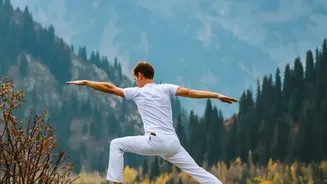
The 20th century saw the focus shift dramatically towards the physical practice of asana, thanks to a few key figures. Tirumalai Krishnamacharya, often called the 'father of modern yoga', was a pivotal teacher in Mysore. Two of his most influential students, B.K.S. Iyengar and K. Pattabhi Jois, would go on to popularise their own distinct styles globally. Iyengar developed a method focused on precise alignment and the use of props like blocks and belts, making difficult poses accessible and therapeutic. Jois, on the other hand, developed the dynamic and physically demanding Ashtanga yoga, a set sequence of flowing postures. Their teachings formed the foundation of much of the yoga practiced in studios around the world today.
The Wellness Boom and Commercialization
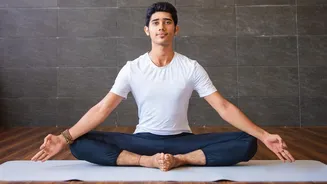
By the late 20th century, yoga had been firmly adopted by the West, but it was repackaged. Stripped of much of its overt spiritual context, it was promoted as a secular form of exercise, stress relief, and physical fitness. This shift made it incredibly accessible and appealing to a mass audience. The fitness industry embraced yoga, leading to a proliferation of studios and classes. This was followed by a massive wave of commercialization, creating a global yoga industry worth billions. Today, the market includes everything from expensive yoga pants and eco-friendly mats to luxury yoga retreats and teacher training programs, a stark contrast to its non-commercial, spiritual origins.
Reclaiming Heritage in a Global Era
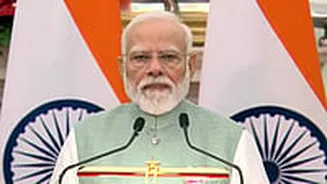
The explosive growth and commercialization have led to a complex debate about authenticity and cultural appropriation. In response, there has been a growing movement from India to reclaim and highlight yoga's heritage. A significant step in this direction was the United Nations' declaration of June 21st as the International Day of Yoga in 2014, a proposal initiated by Indian Prime Minister Narendra Modi. The resolution, which recognized yoga's holistic benefits for health and well-being, was co-sponsored by a record 177 member states. This annual celebration aims to raise global awareness of yoga's true origins and its comprehensive approach to uniting mind, body, and spirit.