







The Age-Old Problem of Festival Fog
Every seasoned festival-goer has a story. It might be about missing a favourite artist due to a last-minute schedule change, spending an hour searching for a food truck that moved, or losing friends in a sprawling, poorly-marked crowd. For decades, the
primary tools for navigation were a crumpled paper map and a prayer. Communication relied on word-of-mouth or finding a static information board. This information gap creates what can be called 'festival fog'—a state of confusion that can undermine an otherwise incredible experience. Common pain points include not knowing which entrance has the shortest queue, being unaware of a delayed set time, or struggling to find basic amenities like water stations or first-aid tents. These issues not only cause frustration but can also create safety risks, especially concerning dehydration, heat exhaustion, and crowd management.
The Rise of the Festival App
The single most powerful tool in cutting through this fog is the official festival mobile app. Once a simple digital version of the paper schedule, these apps have evolved into sophisticated command centres for the entire attendee experience. The most crucial feature is the ability to send real-time push notifications. An alert that a headliner is running 15 minutes late, that a specific gate is temporarily closed, or that a surprise guest is appearing on a smaller stage is invaluable. This direct line of communication from organisers to attendees manages expectations and prevents mass confusion. A study showed that nearly seven in ten music event-goers want to be notified about schedule changes via an app, highlighting the clear demand for this feature. Beyond simple alerts, these apps now often allow attendees to create their own personalised schedules, ensuring they get a reminder before their must-see acts begin.
Smarter Navigation and Crowd Control
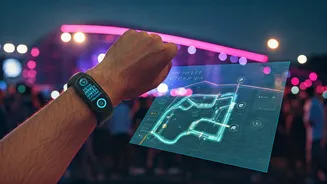
Getting lost at a large festival is almost a rite of passage, but it doesn’t have to be. Static PDF maps are being replaced by interactive, GPS-enabled versions within festival apps. These maps allow attendees to see their own location in real-time, making it far easier to navigate between sprawling stages, vendor villages, and campsites. Some festivals are even experimenting with Augmented Reality (AR) maps, where you can point your phone's camera and see digital overlays showing directions to the stage, toilets, or your friends' last known location. This technology also provides a huge benefit to organisers. By tracking anonymised location data, they can identify crowd bottlenecks in real-time. If a certain area becomes dangerously overcrowded, they can send out a notification suggesting an alternative route or temporarily divert traffic, significantly enhancing site safety.
Beyond the Schedule: A Seamless Experience
Modern festival tech aims to solve more than just confusion; it streamlines the entire event. RFID (Radio Frequency Identification) and NFC (Near Field Communication) wristbands have become commonplace at major festivals. Linked to a credit card or a pre-loaded account, these wristbands allow for cashless payments for food, drinks, and merchandise, drastically reducing time spent fumbling for cash or waiting in line. This technology also speeds up entry, as wristbands can be scanned much faster than paper tickets, easing congestion at the gates. Some apps now even provide real-time estimates for queue lengths at popular food stalls or bars, allowing attendees to make smarter choices about where to go and spend less time waiting and more time enjoying the music.
What This Means for Your Next Festival
For festival attendees, this shift means that the quality of an event’s digital infrastructure is now as important as its lineup. Before purchasing a ticket, it’s worth investigating what kind of app and on-site technology the festival offers. Do they provide real-time schedule updates? Is there an interactive map? Do they use a cashless system to speed up payments? A festival that invests in these tools is investing in a smoother, safer, and more enjoyable experience for everyone. While some may long for the days of being completely 'off-grid', the reality is that poor cell service is a major source of frustration for modern attendees. A well-designed app that works even with low connectivity, providing essential offline maps and schedules, is a sign of a well-run event.