







In the quest for a healthy, mobile body, many of us wonder where to focus our efforts. Is a brisk jog enough to keep us limber, or is dedicated stretching the only true path to improving flexibility? Let's settle the debate.
Understanding the Goal: What is Flexibility?
Before we can compare jogging
and stretching, it’s important to understand what physical flexibility is. Flexibility refers to the ability of your joints to move through their full, available range of motion without pain or stiffness. It's a key component of physical fitness, helping with everything from daily movements to athletic performance. Good flexibility can improve posture, reduce the risk of injury, and decrease muscle soreness. It’s not just about being able to touch your toes; it’s about having healthy, unrestricted movement throughout your body.
The Impact of Jogging on Your Muscles
Jogging is a fantastic cardiovascular workout that strengthens the heart, improves endurance, and builds lower-body strength. However, when it comes to flexibility, its role is complex. The repetitive motion of running can actually lead to muscle tightness, particularly in the hamstrings, calves, and hip flexors. This happens because running doesn't require the muscles to move through their entire range of motion, which can cause them to adaptively shorten over time. So, while jogging warms up muscles and increases blood flow, it does not, by itself, improve your range of motion. In fact, without a complementary routine, regular jogging can decrease flexibility.
Stretching: The Direct Path to Flexibility
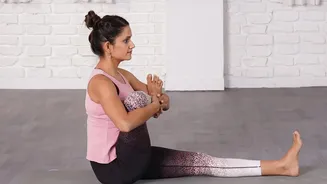
Stretching is the most direct and effective way to increase physical flexibility. When you stretch, you are intentionally elongating muscle fibres and the surrounding connective tissue. This process, done consistently, helps to increase your joints' range of motion and reduce muscle stiffness. Research consistently shows that a regular stretching routine leads to measurable gains in flexibility. The primary mechanisms involve both changes in the muscle tissue itself and adaptations in your nervous system, which learns to tolerate a deeper stretch over time.
Dynamic vs. Static: The Right Stretch at the Right Time
Not all stretching is the same, and timing is crucial. The two main types are dynamic and static stretching. Dynamic stretching involves active, controlled movements that take your body through a full range of motion, like leg swings or walking lunges. This type is ideal for a warm-up before a jog, as it increases blood flow, activates muscles, and prepares your body for exercise without decreasing power. Static stretching, on the other hand, involves holding a stretch for a period, typically 15-60 seconds. This is the type of stretching that truly improves longterm flexibility. However, it's best performed after a run or as a separate session when your muscles are already warm and pliable. Performing static stretches on cold muscles before a workout can temporarily reduce muscle strength and may even increase injury risk.
The Verdict: A Partnership, Not a Rivalry
So, which exercise 'truly' improves flexibility? The clear winner is stretching. Jogging alone will not make you more flexible and can contribute to tightness if not balanced with mobility work. However, the debate shouldn't be framed as 'versus.' The most effective approach is to view jogging and stretching as partners in a well rounded fitness routine. A proper warm up including dynamic stretches prepares your body for a run. The run itself provides cardiovascular benefits and warms your muscles. Afterwards, a cool down featuring static stretching capitalizes on those warm muscles to improve your long term flexibility, aid recovery, and counteract the tightness caused by the run. This synergistic approach ensures you gain the benefits of endurance training without sacrificing mobility.